




NPS Photo Ranging from approximately 5,600 feet - 9,500 feet in elevation, the montane ecosystem includes meadows along with Ponderosa pine, Lodgepole pine and douglas Fir forested areas. These areas of Rocky Mountain National Park provide habitat that support a wide variety of vegetation and wildlife year-round. 
NPS Dry, south-facing slopes of the Montane often have open stands of large ponderosa pines. Spacing of ponderosa pines is somewhat related to available soil moisture. Grasses, other herbs and shrubs may grow between the widely spaced trees on dry slopes. As the pines become old, their bark changes from gray-brown to cinnamon-red, and the bark releases a pleasant fragrance when warmed by the sun. The long needles of ponderosa pines are attached to the stems in groups of two's and three's. North-facing slopes of the Montane escape some of the sun's drying action, so their soils contain more available water. As a result, the trees grow closer together and competition for sunlight produces a tall, slender growth form. The trees may be a mixture of Douglas fir, lodgepole pine, ponderosa pine and an occasional Engelmann spruce. A few shade-tolerant plants grow on the floor of the forest. 
NPS Montane soils with high moisture content may support groves of quaking aspen, whose leaves turn golden-yellow in the autumn and whose whitish bark is easy to recognize. Along streams or the shores of lakes, other water-loving small trees may be found. These include various willows, mountain alder, and water birch with dark-colored bark. In a few places, blue spruce may grow near streams and sometimes hybridize with Engelmann spruce. Flat Montane valleys may frequently have water-logged soil and be unable to support growth of evergreen forests. Did you know the following areas in Rocky are located in the montane lifezone?
Moraine Park
Located on Bear Lake Road, Moraine Park in summer 
Horseshoe Park
Located on the east side of RMNP near Fall River Entrance, Horseshoe Park is a great place for wildlife viewing! 
Kawuneeche Valley
Located on the west side of Rocky, the Kawuneeche Valley has meadows and riparian wetlands that support a wide range of wildlife 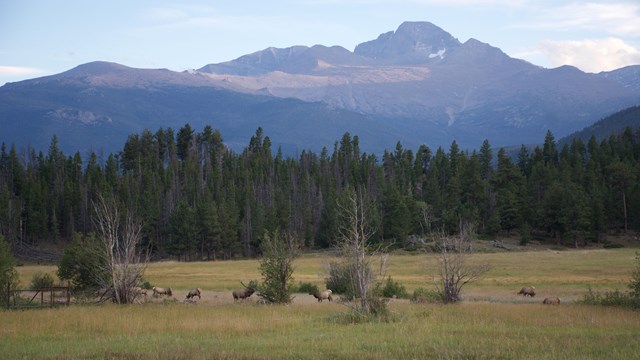
Upper Beaver Meadows
Located on the east side of RMNP, the turn to Upper Beaver Meadows is approximately 1 mile from Beaver Meadows Entrance. Want to learn more? Click on links below to learn about different plants and wildlife that live in the Montane ecosystem.
Mountain Iris
Found in moist montane meadows, Mountain Iris bloom in early summer 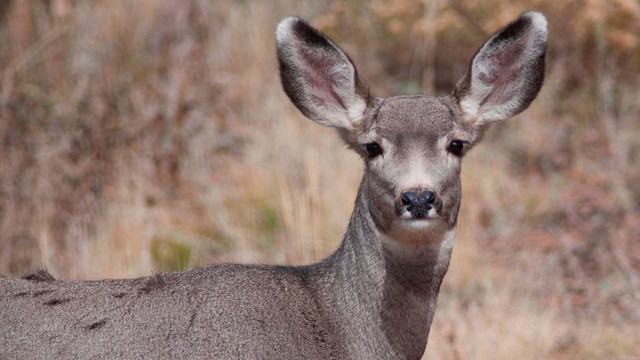
Mule Deer
Mule Deer are usually found in small groups in the trees. 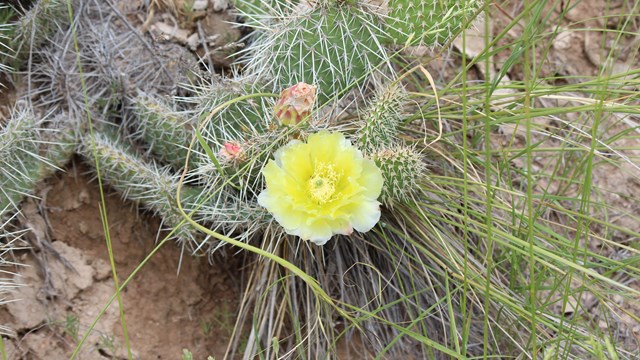
Plains prickly pear
Plains prickly pear cactus bloom even up here in the Rocky Mountains. 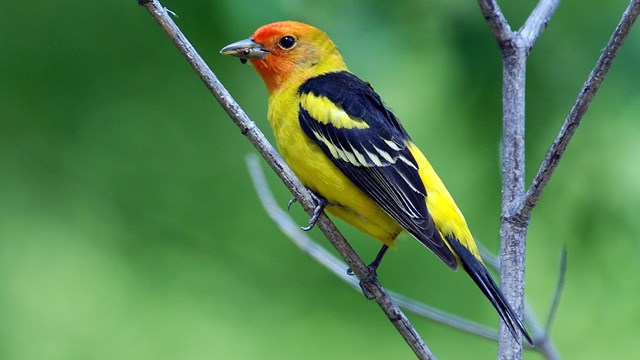
Western Tanagers
Western Tanagers breed in the park each summer and migrate south in the winter. 
Ponderosa Pine Trees
Found mostly in the montane ecosystem of Rocky, mature Ponderosa pines are often large with open rounded or flat-topped crowns. 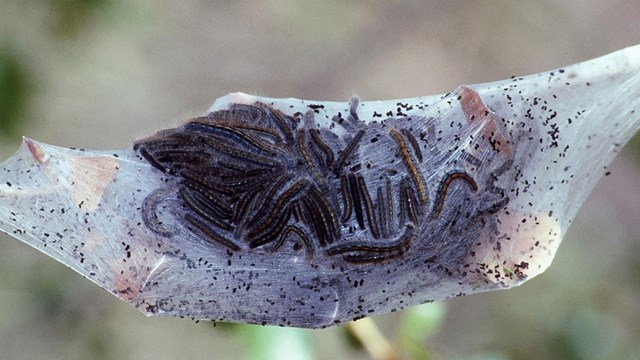
Tent Caterpillars
Insects like these tent caterpillars are plentiful in the montane.
| ||||||||||||||||||||||||||||||||||||||||||||||||||||||||||||||||||||||||||||||||||||||||||||||||||||||||||||
Last updated: December 19, 2024