




NPS Photo 
NPS Access to "the land above the trees" is the most distinct aspect of Rocky Mountain National Park. Trail Ridge Road, the highest road in any national park, transports you to this realm of open sky where you'll find tiny but brilliant flowers and a harsh climate. Approximately one-third of this national park is above the limit where trees may grow in northern Colorado. The Alpine Tundra Ecosystem starts between elevations of 11,000 to 11,500 feet, depending on exposure. This is truly a land of extremes. Strong, frequent winds and cold temperatures help limit what plants can grow there. Most alpine plants are perennials. Many plants are dwarfed, but their few blossoms may be full-sized. Cushion plants look like ground-hugging clumps of moss. They escape the strong winds blowing just a few inches above them. Cushion plants may also have long taproots that extend deep into the rocky soil. Many flowering plants of the tundra have dense hairs on stems and leaves to provide wind protection or red-colored pigments capable of converting the sun's light rays into heat. Some plants take two or more years to form flower buds, which survive the winter below the surface and then open and produce fruit with seeds in the few weeks of summer. Grasses and sedges are common where tundra soil is well-developed. Non-flowering lichens cling to rocks and soil. Their enclosed algal cells can photosynthesize at any temperature above 32 degrees Fahrenheit, and the outer fungal layers can absorb more than their own weight in water. Adaptations for survival amidst drying winds and cold temperatures may make tundra vegetation seem very hardy, but in some respects it remains very fragile. Tread LightlyRepeated footsteps often destroy tundra plants, allowing exposed soil to blow away. Recovery may take hundreds of years, so please use designated trails when exploring this unique area. It's the Year of the Tundra at Rocky Mountain National Park!Learn more about the significance of alpine tundra, and how you can help protect this beautiful and unique environment. Explore our frequently asked questions through the Year of the Tundra Story Map, or the list of questions below. Year of the Tundra Frequently Asked Questions:Tundra is a biome, or type of environment, which is characterized as treeless, cold, and relatively dry. Across the globe, there are two types of tundra—alpine and arctic. Alpine tundra, the type found in RMNP, occurs at high elevations where temperatures are colder, winters are longer, and growing seasons are shorter. RMNP’s tundra starts between 11,000 and 11,500 feet. This transition zone, or ecotone, is where the forested subalpine zone shifts to the treeless tundra and is often referred to as ‘treeline’. Permafrost, an area with a permanently (year-round) frozen subsurface soil layer, is common and widespread in arctic tundra, but patchier within alpine tundra. While models suggest that permafrost was historically prominent throughout RMNP, recent research indicates that areas with permafrost are now very limited. Approximately one-third of RMNP is tundra, making it one of the largest examples of this type of ecosystem protected in the contiguous United States. Large patches of tundra like this are rare in the lower 48 states.
Cold temperatures and strong winds make the tundra a harsh yet spectacular place to be. Summer on the tundra is short; snow is prominent on the landscape into June with a few isolated snow patches remaining through the summer. July is generally the warmest month with an average high temperature of 52°F (11°C). Wind across the tundra is common and can make even a warm, sunny day feel cold. Research conducted in the summer of 1980 documented an average summer (June-August) wind speed of 20.2 mph (32.5 km/h) at the Alpine Visitor Center, with a peak gust of 79 mph (127.1 km/h). Afternoon rain and lightning storms are common in summer.
The tundra is a severe place to be in the winter. Winds rip across the mountains, and windy conditions redistribute snow creating highly variable snow depth and snow cover. Wind measurements taken at an alpine site within the park during the winter of 1973-74 recorded monthly peak gusts ranging from 98-122 mph (157.7-196.3 km/h) from December through May. In the spring of 2019, RMNP’s road crew documented snow drifts along Trail Ridge Road as high as 21 feet (6.4 meters) as they worked to open the road for the summer season. You have to be tough to live on the tundra! Cold and windy conditions and a short summer season mean that it takes some special adaptations to make a living on the tundra. Plant species are generally low to the ground and can live for years (possibly decades to more than 100 years old!). Each summer, they have a very short window in which to green up, flower, and produce seeds. Forbs (herbaceous flowering plants) and grasses are found wherever there is soil is cling to, and lichens can be found on the surfaces of exposed rocks. Blue alpine forget-me-nots bloom in late May and are one of the first flowers to appear in the alpine. Yellow alpine avens begin flowering in June, but their dark green leaves turn bright red in August, providing brilliant colors throughout the season. Cushion plants, like moss campion with their small star-like purple flowers, resemble mosses with their tightly packed leaves. A long taproot, common to tundra plants, helps them remain anchored in the soil and get nutrients and water. Many plants are covered in tiny hairs to help protect them from the wind. Tundra wildflowers bloom from late May through early August.
Animals need to make the most of the summer months to get the food they need for the winter. Some animals, like the yellow-bellied marmot, feed all summer long but then hibernate during the winter months, while others, such as the American pika, gather all the food they need for the winter, store it in hay piles, and stay active in winter below the insulating snow. Other species undergo phenological changes—the white-tailed ptarmigan’s plumage turns white and their large feathery feet help them travel on snow. Bighorn sheep are also well adapted for high country living—their hooves are designed for climbing around in the tundra’s rocky terrain. Other species, such as RMNP’s iconic elk, make forays into the tundra during the summer months to keep cool and feed on forbs, grasses, and alpine willow shrubs. Rocky Mountain National Park contains rare and exceptional glimpses into the earliest connections between people and the Rocky Mountain environment. The area encompassed by the park has been used by Native Americans continuously for over 10,000 years. The high elevation alpine tundra provides important and nutritious plant and animal species that remain critical to the survival and lifeway of affiliated Native Americans. Mountains, and high places in particular, have been important to Native Americans since time immemorial. The Ute Trail represents one of the earliest evidences of human travel over the mountains—the start of a continuum of human visitation that continues today.
Routes across the Continental Divide at Forest Canyon Pass (Ute Trail, Fall River Road, Trail Ridge Road) and their associated structures (Lake Irene mess hall, for example) provide an exceptional example of transportation and engineering through the years across what would become our nation’s highest continuous paved highway. Tourism, starting in the early 1900s, brought a new wave of human interest and experiences of the tundra. Construction of Old Fall River Road between 1913 and 1920, provided tundra access to the new burgeoning tourism industry. Trail Ridge Road, completed in 1932, opened opportunities for tourists to explore the tundra and play in the persistent snow fields. Listed on the National Register of Historic Places, the Beatrice Willard Alpine Tundra Research Plots represent one of the United States’ first efforts to incorporate science into long-term management. Data collected from these plots continues to influence the experience of visitors today. Today, Trail Ridge Road, scenic viewsheds, and historic alpine trails continue to attract visitors to this unique environment. Scenic drives along Trail Ridge Road and Old Fall River Road are a great first step in seeing RMNP’s alpine tundra. Paved pull-offs and formal trails give access to spectacular mountain vistas, opportunities to view wildlife, and a chance to get up close to the short, hardy vegetation that covers the ground. Interpretive exhibits at the Alpine Visitor Center, located along Trail Ridge Road at 11,796 feet, provides insight into plants and animals that make the tundra home. For the intrepid visitor, multi-day hikes and wilderness camping can provide an intimate tundra experience.
Trail Ridge Road is only open seasonally, generally from Memorial Day weekend until mid-October, and is closed to vehicular traffic in the winter. Visitors can still access the road by foot, ski, and snowshoe, in the winter months. Human visitors to RMNP can negatively impact the alpine tundra. Vegetation trampling and social trailing can hinder vegetation growth and lead to soil erosion, as can driving and parking vehicles on unpaved roadsides. Non-native plant species can then take advantage of denuded areas and may outcompete native plants that wildlife depends on. It can take hundreds of years for the alpine tundra to recover from seemingly minor impacts.
Human impacts to the alpine tundra extend beyond visitors. Airborne pollutants from industry and development, as well as natural events, can come into the park through rain and snow. Recent algal blooms in alpine lakes are likely a result of nitrogen deposition interacting with warmer water temperatures. If nitrogen deposition increases, it may lead to a shift in alpine plant communities, including fewer wildflowers. Air quality presents a unique challenge in mitigating risks, as pollutants can come from hundreds and thousands of miles outside RMNP. Climate change is another concern to long-term preservation of RMNP’s alpine tundra. Warmer average temperatures mean less precipitation in the form of snow, earlier seasonal melting of snow and ice, more evaporation of water during the growing season, and thawing of soils. These all result in drier conditions that can lead to desiccation of sensitive plant species and loss of habitat for wildlife. Earlier snow melt and less snow also means less water later in the summer season which may lead to future water shortages—a concern for neighboring human communities. Although not an issue currently, drier conditions and changing vegetation may lead to spread of fire across the tundra in the future. Changes in seasonal snow can lead to changes in phenology (the timing of biological events). For example, RMNP’s white-tailed ptarmigan initiate nesting an average of 12 days earlier than they did in the 1960s. Chicks feed on insects, and if hatching begins to happen before insects are available, RMNP’s ptarmigan populations could be in jeopardy. Earlier springs could also mean that plants flower before or after pollinators are present. This and other mismatches in phenology can have cascading effects on plant and wildlife populations. There are several research projects at RMNP that are specific to the alpine tundra and species that rely on this environment.
The Global Observation Research Initiative in Alpine Environments (GLORIA) is an international program for long-term monitoring of alpine vegetation and soils across the globe. The NPS’ Inventory and Monitoring Program’s Rocky Mountain Network (ROMN) established GLORIA monitoring in RMNP in 2009. Field crews visit the sites every five years to identify vascular plant species and evaluate non-native species, human disturbance, and herbivore activity. Soil temperature loggers, buried just under the ground, take measurements year-round and provide insight on snow melt timing. Since 2015, Dr. Sarah Schliemann from Metropolitan State University of Denver, has been investigating the release of carbon dioxide from alpine soils, also known as ‘soil respiration’. Carbon dioxide is released when soil organic matter decomposes. Results reveal that both soil moisture and soil temperature, in combination, influence the rate of soil respiration. Drying conditions may mitigate carbon release from the alpine. Further study will investigate the chemical characteristics of carbon found in RMNP’s alpine soils, and the relationship between soil moisture and snowpack. In 2010, the NPS collaborated on the Pikas in Peril Project, which investigated how expected changes in climate would affect the American pika, an animal that needs access to cool microclimates and is recognized as an indicator species of the ecological effects of climate change. Using simulation models, the project estimated that by 2099 pikas would be limited to 20% of their present range in RMNP. A key investigator in that project at RMNP was Dr. Chris Ray of University of Colorado-Boulder. Dr. Ray continues to study pika in and around RMNP and works with the Front Range Pika Project to engage citizen scientists in gathering data on the presence of pika within appropriate habitat throughout the park. There are several other recent and current research projects happening within RMNP’s alpine tundra, including long-term monitoring of white-tailed ptarmigan, visitor use studies, long- term monitoring of nitrogen deposition and its impacts on alpine lakes, and paleoecological and archeological investigations of retreating ice fields. RMNP is mindful of research needs within the alpine environment and works with academic and agency partners to answer management-relevant research questions. RMNP is working to protect the tundra in a number of ways. Public education through visitor contacts in visitor centers, the wilderness office, and in the field, give visitors information on the sensitive tundra environment and empowers them to make decisions that minimize their impacts. The Tundra Guardians, a group of dedicated volunteers, regularly interact with visitors at high use areas along Trail Ridge Road providing information about the park and its resources. In an effort to improve air quality, RMNP works with federal and state agencies on policy development and voluntary best management practices. RMNP also continues to work with researchers to learn more about changes to the tundra environment to inform management decisions related to the continued preservation of the tundra and species that inhabit it.
In some cases, trail and area closures are instituted to allow for resource protection and tundra rehabilitation. In 2019, RMNP removed the paved “Trail to Nowhere” east of Rock Cut, because of the high intensity and extent of trampling that was occurring in adjacent areas. The park revegetated the trail using native tundra plants grown in the park’s greenhouse. The park has designated six Tundra Closure Areas to restrict use and protect the alpine tundra in high traffic areas. Within these areas, off-trail hiking is prohibited within 100 yards of trails and parking lots. Everyone has a role to play in protecting RMNP’s alpine tundra. Understanding the unique and fragile tundra environment, and the impact that people can have on it, are a first step to minimizing visitor impacts to this sensitive resource. Road-based visitors can avoid parking on unpaved shoulders along the roadside. Visitors that explore Trail Ridge Road’s pull-offs and short trails can be active participants in tundra protection by staying on hardened trail surfaces, obeying area closure signs, and not creating or using social trails. Backcountry visitors should follow Leave No Trace principles when exploring the wilderness and pack out all trash, including human waste. Visitors can also take the Rocky Pledge.
Energetic visitors and local area residents can also support science and research by becoming citizen scientists through the Front Range Pika Project (FRPP). Data collected through this project is used by the park to evaluate the status of the American pika, an important indicator species of tundra health. Ultimately, everyone can do their part to protect RMNP’s alpine tundra, both while in the park and at home. Follow the links below to learn about life in the tundra.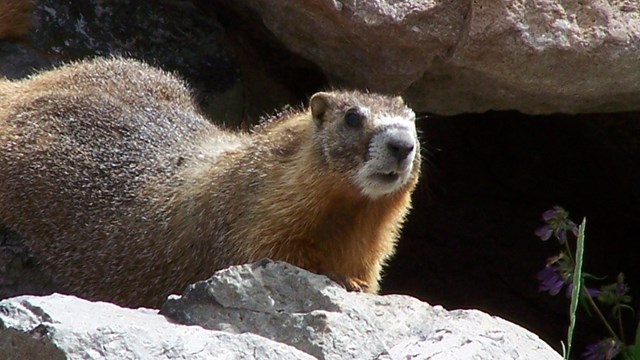
Yellow-bellied marmots
Marmots are commonly seen soaking up the sun. 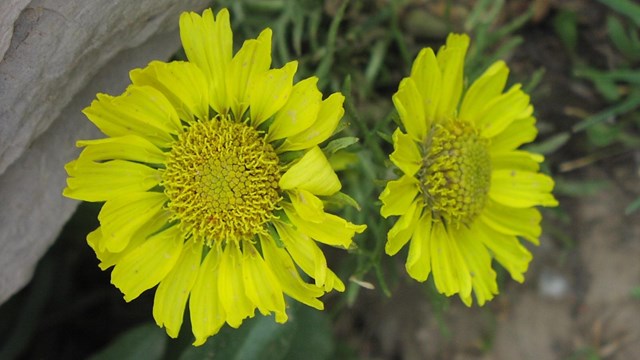
Alpine Sunflowers
Alpine Sunflowers tower above other tundra flowers. 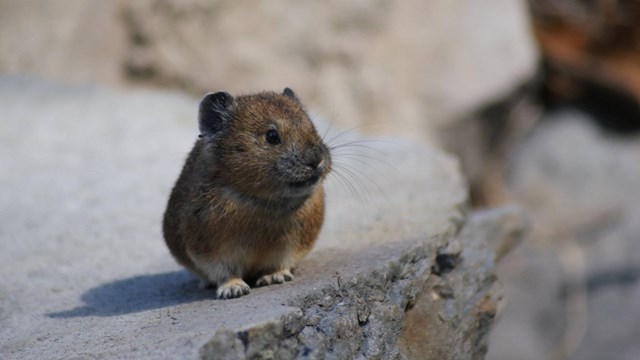
Pikas
Pikas scurry around rocks and talus slopes in search of food. 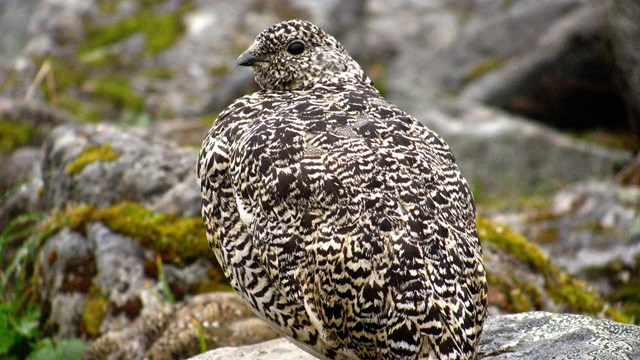
White-tailed Ptarmigan
White-tailed Ptarmigan's mottled feathers act as camouflage against the rocks. 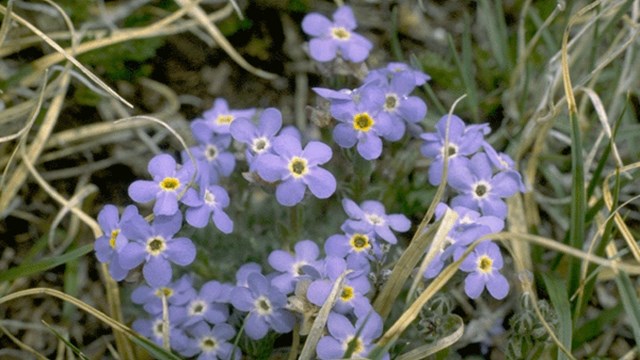
Alpine Forget-me-nots
Alpine Forget-me-nots definitely leave an impression. 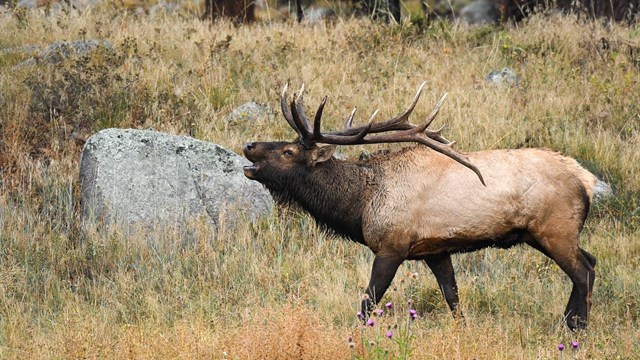
Elk
Elk bugling in meadow during fall rut.
| |||||||||||||||||||||||||||||||||||||||||||||||||||||||||||||||||||||||||||||||||||||||||||||
Last updated: July 22, 2020