

NPS photo Richmond National Battlefield Park is made up of a variety of habitats that support many native mammals. Protected forests, meadows, and wetlands afford mammals the space and safety to live and raise young within Richmond's urban and suburban landscapes. Managed fields provide Whitetail Deer with optimal foraging and bedding areas, while keeping them close to the security of nearby forest boundaries. The dense undergrowth of emergent forests creates cover for smaller mammals such as the Eastern Cottontail Rabbit. Grey and Flying Squirrels rely on hardwood trees in the park's old-growth forests for food and nesting habitats. Streams and wetlands within the park serve as excellent foraging grounds for the park's Raccoon population, while roadside clearings are favored by Groundhogs. Grey Foxes can be found throughout the park, although sightings are most likely around dawn and dusk when they are most active. 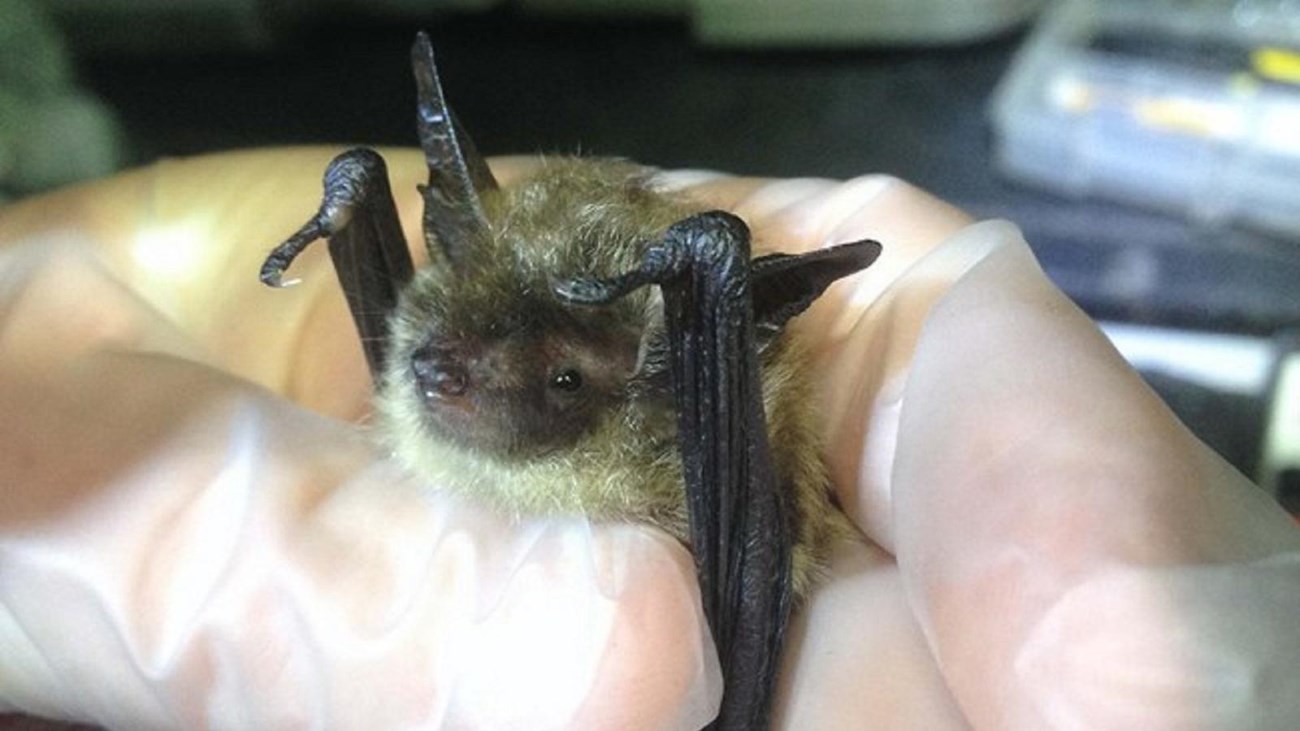
Bat Population Monitoring
Biologists are studying how local bat populations are changing and keeping a careful eye on rare and endangered bat species in the park. |
 |
|
Last updated: January 22, 2022