
National Park Service LogoU.S. Department of the InteriorNational Park ServiceNational Park Service
National Park Service:  U.S. Department of the InteriorNational Park Service Arrowhead
Petrified Forest National Park Petrified Forest antique postcard
view map
text size: largest larger normal
printer friendly
Petrified Forest National Park
People
carved image on a rock surface of a person with a bow and arrow

NPS/Marge Post

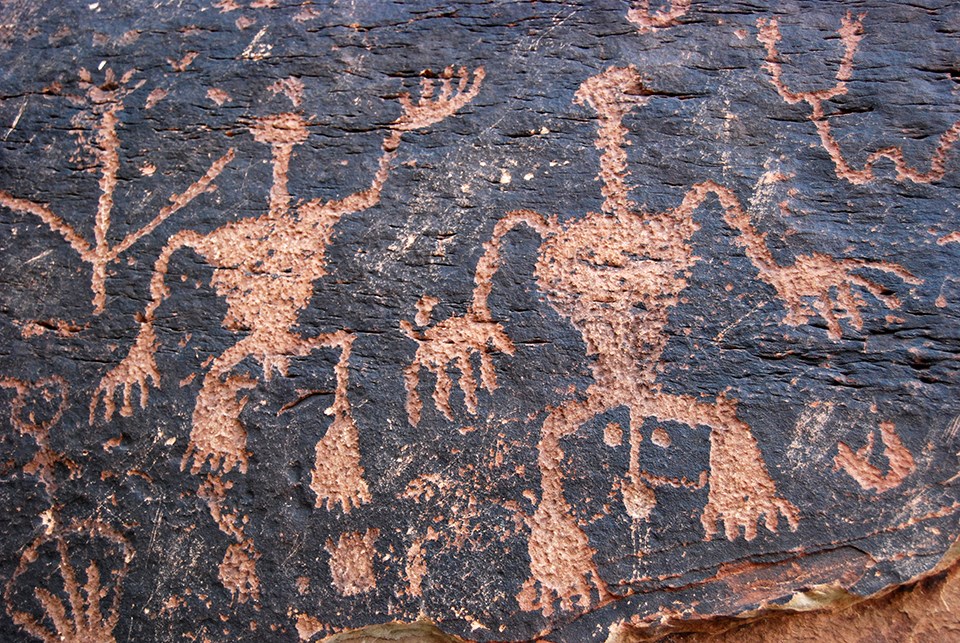
Petroglyphs may tell stories, mark events, be prayers, or simply represent symbols important to the ancient culture.

A favorite question asked by some visitors is, “Who discovered the Petrified Forest?” This question is tricky. Of course, people have known about the Petrified Forest for over 13,000 years, so it was discovered by nomadic hunters and gatherers, possibly those of the Clovis Culture. Some of the visitors who asked the initial question, say, “No, who discovered Petrified Forest?” The first publication about this place was from the Whipple Expedition of 1853, in a book by artist/naturalist Balduin Möllhausen. Whatever the question, people have explored Petrified Forest for a very long time.

People are what make archeological and historic places interesting. Who were they, what did they leave behind? Why did they go? Through examination of the physical remnants of ancient walls, artifacts, traces of roads, and even symbols on rock and paper help researchers pull together a story of the past. Petrified Forest National Park has a remarkably diverse and long human history.

Timeline to come...

You are exiting the National Park Service website

Thank you for visiting our site.

You will now be redirected to:

We hope your visit was informative and enjoyable.

spiral petroglyph marks the summer solstice

Did You Know?
Petroglyphs are sometimes calendars, marking events like the summer solstice with interactions between the glyph, the sun, and natural landscape features.

Last Updated: August 18, 2011 at 17:22 MST