




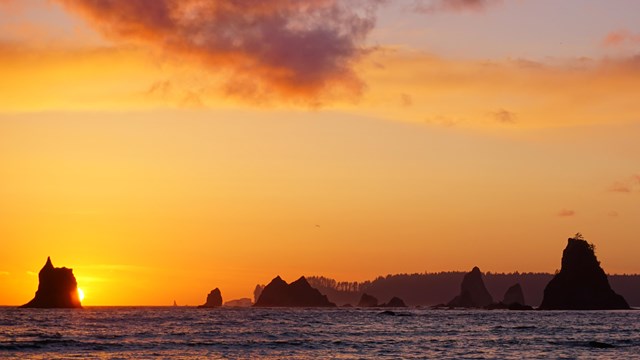
Olympic National Park's 73-mile long wilderness coast is a rare treasure in a country where much of the coastline is prime real estate. The rocky headlands, beaches, tidepools nurturing a living rainbow of colors and textures, off shore sea stacks topped by nesting seabirds and wind-sheared trees-all are a remnant of a wilder America. In fact, in 1988, Congress added much of the narrow coastal strip of the park (and much of the rest of the park) to a national system of designated wilderness. Sharing Protection A Layer Cake of Life This tidal layering is separated into four main zones: the Splash or Spray Zone, the High Tide Zone, the Mid Tide Zone, and the Low Tide Zone. These zones each see varying levels of water cover and exposure, which leads to a variety in both the animal and plantlife that can thrive within. 
NPS Photo The Dance of Life and Rock A lumbering bear sleeps away the winter months in a warm den; with a whistle of warning, a marmot hurries underneath the talus of a scree slope; a mountain goat clings to life hundreds of feet in the air with nothing more than a knife's blade thinness to grip to. Throughout nature, animals have relied on natural rock formations for safe harbor, and the coastline is no different. Along Olympic's shores, a direct connection can be made between biology and geology--living organisms and solid stone.
Visit our keyboard shortcuts docs for details
As the climate changes, many early signs will appear along our ocean shorelines. This twelve minute film takes you to Olympic National Park’s wild Pacific Coast and follows marine ecologist Dr. Steve Fradkin as he studies its rocky intertidal zone. 
|
 |
Tidal Safety Page
Is your beach route currently under water? Timing and planning are key for coastal trips. Check out our Tides & Safety page to learn more. 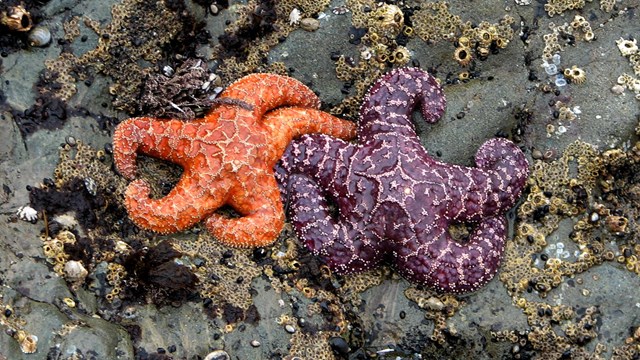
Tidepooling
Olympic's rugged shoreline is rich with life. Where to go, when to go and tidepooling etiquette. 
Live Blue
Whether or not you live on the coast, the state of the ocean affects us all. Help protect our oceans by living blue. 
Fishing Regulations
Olympic National Park supports some of the most extensive runs of wild salmon, trout, and char remaining in the Pacific Northwest. 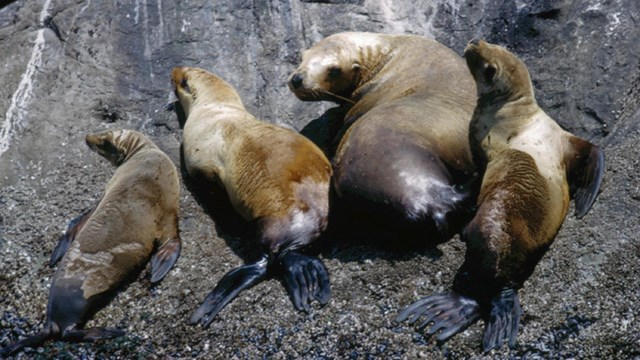
Marine Mammals
The cold northern Pacific Ocean on the Olympic Coast provides a rich feeding ground for 29 marine mammal species. 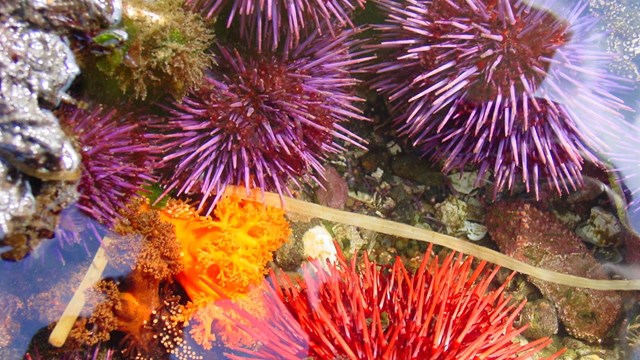
Invertebrates of Tidepools
Many of Olympic's invertebrate species live in tidepools. |
Last updated: March 28, 2025