 12 12  Pacific Treefrog Pacific Treefrog
The ponds, lakes, streams and forests of Olympic National Park provide the ideal habitat for 13 species of frogs, toads, and salamanders. |
 12 Winter in Sol Duc 12 Winter in Sol Duc
Old-growth forest, subalpine lakes, and snowy peaks populate the Sol Duc landscape, while the Sol Duc River serves as a key highway for coho salmon, running through the valley and ascending to the lakes and headwaters in the surrounding mountains. |
 15 Nudibranch 15 Nudibranch
Cold, nutrient-rich waters upwelling from the Pacific Ocean floor feed a food chain extending from tiny invertebrates to many-ton whales. |
 20 Fisher 20 Fisher
These members of the weasel family are related to minks, weasels, badgers, and otters. A thick, glossy coat of dark brown fur allows fishers to survive harsh winters. Their long, thin body, and short legs, like that of the weasel, makes them agile hunters, climbing trees and scurrying into burrows in pursuit of prey. |
 15 Lake Crescent Sunrise 15 Lake Crescent Sunrise
Nestled in the northern foothills of the Olympic Mountains, Lake Crescent lies about 18 miles west of Port Angeles. The pristine waters of this deep, glacially carved lake make it an ideal destination for those in search of natural beauty. |
 12 Sol Duc Falls 12 Sol Duc Falls
For those looking to spend anywhere from a few hours to an entire day in the Sol Duc, the walk through old-growth forest to the Sol Duc Falls overlook is just a mile from the parking lot. |
 20 Eagle Fishing 20 Eagle Fishing
Species such as the threatened marbled murrelet and bald eagle depend on forest habitat and feed on salmon. |
 12 Hummingbird Nest 12 Hummingbird Nest
Ever wonder where a humingbird takes a break? Complete this puzzle to capture a glimpse! |
 24 Fall in the Hoh Rain Forest 24 Fall in the Hoh Rain Forest
The trees in the Hoh Rain Forest create a canopy that covers the majority of the forest. Mosses and ferns that blanket the surfaces add another dimension to the enchantment of the rainforest. |
 6 Hoh Rainforest 6 Hoh Rainforest
Fog often rolls in after sunset and lingers until late morning. Heavy fog can add over 30 inches of moisture to the forest yearly, nearly as much as Seattle receives in a year of rain. |
 12 Elk Herd on Gravel Bar 12 Elk Herd on Gravel Bar
Elk are relatively versatile, and often occupy a range of habitats, from montane meadows and forests down to the lowland rain forests, where there is ample food. An excellent place to see elk is the Hoh Rain Forest. |
 12 Olympic Marmot 12 Olympic Marmot
Nuzzling, playing, chirping, feeding together; the Olympic marmot is quite possibly one of the most social and gregarious mammals on the peninsula. They are endemic to the Olympic Peninsula, meaning they are found no where else in the world. |
 24 Forest Floor 24 Forest Floor
Fallen trees, known as "nurse logs", provide extra room and the emergence of sunlight for seedlings to grow in the understory of the temperate rain forest. |
 6 Bald Eagle 6 Bald Eagle
Over 300 species of birds live in the area at least part of the year, from tiny penguin-like rhinoceros auklets offshore to bald eagles soaring over the peaks. |
 12 Columbia Blacktail Buck 12 Columbia Blacktail Buck
Blacktail deer may be the park's most graceful mammal. They may be seen just about anywhere within Olympic National Park, from subalpine forests and meadowlands down to river valleys. |
 20 Black Bear 20 Black Bear
The black bear is a common inhabitant of Olympic National Park, and North America, in general. They are smaller and darker than the grizzly bear and the brown bear. |
 24 Raccoon 24 Raccoon
Often known as the 'masked bandit,' raccoons have gray fur, with what looks like a black mask around their eyes. Their bushy tails are ringed with black and white stripes. Raccoons are expert climbers and are able to open doors and raid garbage cans if given the opportunity. |
 24 Cougar 24 Cougar
Cougars are one of the most reclusive, elusive, and stealthily creatures of the forests. They are rarely seen by people. They are the fourth largest cat of the feline family, behind lions, tigers, and jaguars. Remember, if you see a cougar, do NOT approach it and call the ranger station to report it. |
 24 Winter at Hurricane Ridge 24 Winter at Hurricane Ridge
During the winter months, snow enthusiasts enjoy the winter scenery, along with snowshoeing, cross-country skiing and sledding. |
 12 Salmon in the Hoh River 12 Salmon in the Hoh River
Salmon are anadromous fish, they migrate from freshwater rivers to the ocean and back to spawn in their natal streams. Bears, otters, eagles, and many others feast on salmon carcasses. Their life cylce facilitates the transportation of key nutrients to lakes, rivers and streams. |
 12 Stonecrop 12 Stonecrop
From massive conifers over 20 stories tall, to minute clumps of pink Douglasia prying a life out of rocky peaks, the Olympic Peninsula and Olympic National Park boast an amazing diversity of plant life. |
 12 Urchins and Sea Cucumber 12 Urchins and Sea Cucumber
Spiny purple and red sea urchins share a tide pool with the frilly orange feeding tentacles of a sea cucumber. Peer into a tidepool and your view may take in hundreds of animals crowded into an area the size of a dinner plate. |
 24 Purple Crab 24 Purple Crab
Olympic National Park's 73-mile long wilderness coast is a rare treasure in a country where much of the coastline is prime real estate. The rocky headlands, beaches, tidepools nurturing a living rainbow of colors and textures, off shore sea stacks topped by nesting seabirds and wind-sheared trees-all are a remnant of a wilder America. |
 24 Roughskin Newt 24 Roughskin Newt
Rough-skinned newts use their bright orange underbellies as well as a poison secreted from their skin to protect themselves. They breed in ponds but usually live in the lowland forest. The ponds, lakes, streams and forests of Olympic National Park provide the ideal habitat for 13 species of frogs, toads, and salamanders |
 24 Humpback Whale Flukes 24 Humpback Whale Flukes
If you stand on the rugged coast of Olympic National Park and scan the Pacific Ocean, you might spot seals, sea lions, a spouting whale, or sea otters frolicking amid the kelp. These waters are part of the Olympic Coast National Marine Sanctuary, an area about twice the size of the park. |
 20 Gray Whale 20 Gray Whale
Gray whales often navigate the coastal waters of the Olympic Peninsula. Some even enter the Strait of Juan de Fuca and stay to feed for days or weeks. They can be seen feeding off the coast in late spring and summer, or feeding on bottom sediments at the mouths of the Hoh and Quillayute rivers in the summer. |
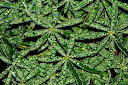 12 Fabaceae Leaves 12 Fabaceae Leaves
Here you will find Pacific Ocean beaches, rain forest valleys, glacier-capped peaks and a stunning variety of plants and animals. Roads provide access to the outer edges of the park, but the heart of Olympic is wilderness; a primeval sanctuary for humans and wild creatures alike. |
 15 Sea Otter 15 Sea Otter
Sea otters were hunted to extinction off the Washington coast by the early 1900s, but a reintroduction in 1969 and 1970 began a recovery that continues today. Over 800 otters are now at home again in the kelp forests and waters off the park. |
 20 Fiddleheads 20 Fiddleheads
Epiphytes are plants that grow on plants, use tree limbs as props. In doing so, they do not harm the trees. More than 130 species of mosses, lichens, liverworts and ferns costume the trees, adding to the forest's character. |
|


