National Park Service LogoU.S. Department of the InteriorNational Park ServiceNational Park Service
National Park Service:  U.S. Department of the InteriorNational Park Service Arrowhead
National Park of American SamoaSamoan awa ceremony at Pago Pago
view map
text size:largestlargernormal
printer friendly
National Park of American Samoa
Plants
 
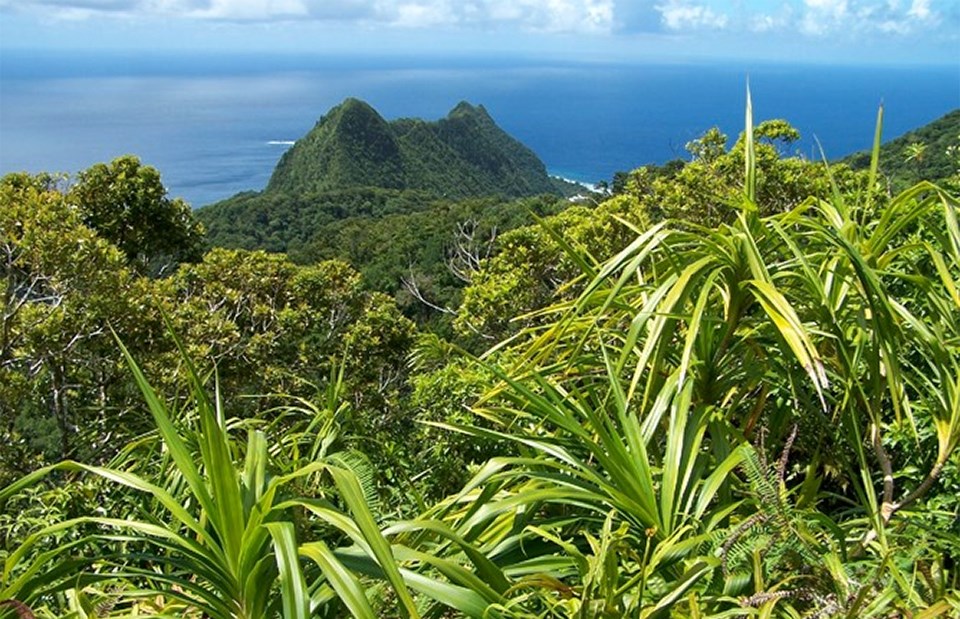
Rainforest opening on Tutuila.
NPS photo by Bryan Harry.
Rainforest opening on Tutuila.
 

Plant communities of the park, from the mountaintops down to the ocean, are largely tropical rainforest. It is an evergreen forest and the climax vegetation of the equatorial climate. Unlike the temperate forests of North America dominated by one, or only a few tree species, tropical rainforests have high species diversity and the climax forest is dominated by many species.

Samoa, as a geologically young ocean island, lacks any earlier land connection to continental land masses. Because its native species got here by chance its species diversity is not as rich as Southeast Asia, the source of the islands' plant dispersals.

 
Thespesia
Plant Inventory
Checklist of higher plants with some illustrations
more...
noddy tern
Natural History Guide to the Park
The on-line version of our latest book
more...
Pacific Islands Network
Inventory & Monitoring Program
Pacific Island Network webpage
more...
Pola Islands are a dominant feature of Tutuila Island’s rugged north coastline  

Did You Know?
American Samoa, the only U.S. territory south of the equator, consists of five rugged, highly eroded volcanic islands and two coral atolls. The land area of the territory is 76 square miles.

Last Updated: August 10, 2006 at 15:44 EST