
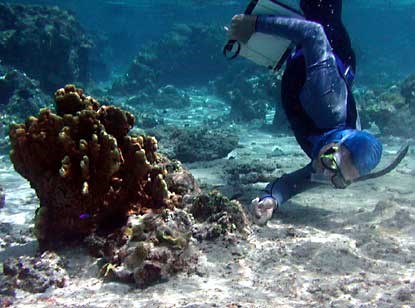
NPS photo by Larry Basch. Inventory and Monitoring in the Pacific Islands The Natural Resources Inventory and Monitoring (I&M) Program provides an opportunity to improve the quantity, quality and availability of natural resources data for park managers and the public. It is a two-phase program. The first phase involves baseline inventory, or an extensive point-in-time effort to determine the location and condition of selected biologic resources. Inventory may involve both acquisition of new information and the compilation of existing information from disparate sources. The second phase is monitoring, or the collection and analyses of repeated observations over time to evaluate changes in the condition of a resource. To reduce costs, the I&M program clusters individual parks with biological, physical and geographic affinities into networks. The Pacific Islands Network includes all the National Park units in the central and far Pacific-Hawaiian Islands, American Samoa, Guam and the Northern Marianas. The network concept offers efficiencies in designing and conducting inventory and monitoring work, and improved opportunities for exchange or ideas and information among parks. View the Pacific Islands Inventory and Monitoring Program website. Articles: |
Last updated: February 13, 2024