
National Park Service LogoU.S. Department of the InteriorNational Park ServiceNational Park Service
National Park Service:  U.S. Department of the InteriorNational Park Service Arrowhead
National Park of American SamoaSamoan awa ceremony at Pago Pago
view map
text size:largestlargernormal
printer friendly
National Park of American Samoa
Home Stay Activities
 
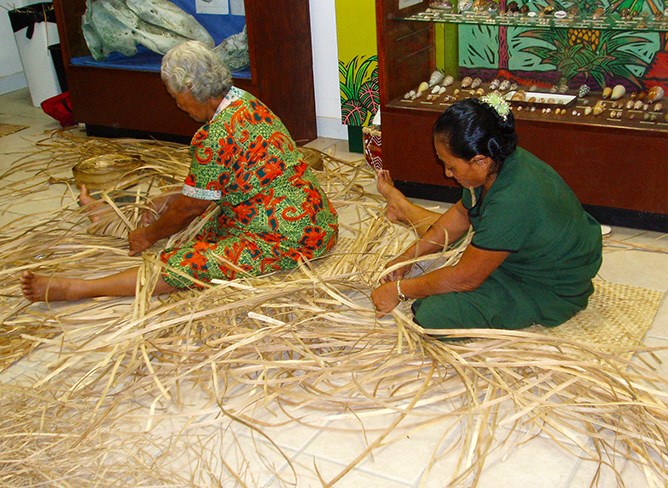
Artisans weaving pandanus
An NPS Photo
Artisans weave Pandanus (laufala) tree leaves into mats. Add to your weaving knowledge by learning simple methods, like weaving fans from palm leaves.
 

Some artisans may dry and paint the bark of the Mulberry tree. Weavers use pandanas leaves to create fine mats, baskets and hats. Samoans tend plantations and gardens by clearing brush, planting taro and bananas, and tending mango, and papaya trees. Some villagers may climb coconut and breadfruit trees to gather food. You may even have a chance to fish, Samoan style. Samoans use poles and nets to fish, or walk along the reef to collect giant clams and spear octopus. At certain times of the year, villagers catch fish with palm leaves. These and other cultural experiences may be a memorable part of your visit to American Samoa.

 Samoan family in Vatia, Tutuila
Home Stay Program
Several Samoans offer home stay programs with their families.
more...
Samoan homestay bedroom.
The Hosts
Samoan bedroom in a homestay setting.
more...
A homestay house at Fiti'uta village.
The Details.
There are several homes to rent from the Homestay Program.
more...
 Samoan chief at meeting in the village fale.
Samoan customs.
Many Samoan activities require Samoan etiquette.
more...
A humpback whale breaches almost entirely out of the water  

Did You Know?
During the warm months of the southern hemisphere, Samoa’s humpback whales feed in the rich Antarctica waters, 3,200 miles to the south. When Antarctic's bitter winter sets in, humpbacks seek warmer waters, migrating northward, towards Australia and Tonga. At least some migrate onward to Samoa.

Last Updated: November 19, 2009 at 18:38 EST