

NPS Photo/Kristen Maxfield An array of Great Plains mammals is recorded in the Niobrara Valley. Most species thrive unmanaged, though larger species such as bison and elk occur in fenced enclosures on the Fort Niobrara National Wildlife Refuge and The Nature Conservancy's Niobrara Valley Preserve. A free-ranging moose has also been seen on the Fort Niobrara National Wildlife Refuge. Federally endangered species like the black-footed ferret once inhabited the area, but have since been extirpated from the region. River otter, a state threatened species, is native to the Niobrara. A reintroduction program was conducted by Nebraska Game and Parks Commission biologists from 1986 to 1992, with a release site near the Sheridan-Cherry County line in northwestern Nebraska. Since then river otter sightings have occurred throughout the Niobrara Valley, including several observations in the 76-mile scenic river reach.

NPS photo The scenic river is distinctive in that it supports three mammal species that are uniquely associated with the Niobrara River. Bailey's eastern woodrat, a southern species, is now found as an isolated population in the central Niobrara Valley. The olive-backed pocket mouse, a western species, is also found in the valley and occurs at the eastern limits of its range in the valley. The southern bog lemming, a rare mammal of northeastern origin, occurs within the Niobrara Valley at its interface with the Sandhills. Bats are also documented in the Niobrara River valley and represent an important component of the biodiversity of the area. Keen's bat and the Brazilian free-tailed bat have only been found in the central Niobrara Valley in Nebraska. Keen's bat is associated with moist, eastern-type habitats, while the Brazilian free-tailed bat ordinarily has an affinity for southern, sub-tropical habitats. When canoeing or tubing the river, visitors may also encounter white-tailed deer, raccoons, coyotes, squirrels, eastern cottontail rabbits, mink, and beaver. Hunting and trapping are popular activities in Nebraska, especially along the Niobrara River. Public land is available for hunting, but it is somewhat limited along the Niobrara. The majority of hunting and trapping occurs on private property. Individuals who wish to hunt on private property must be granted access by the landowner. If private access cannot be obtained several wildlife management areas (WMA's) are available for public use including the Borman Bridge WMA and Fred Thomas WMA. All state hunting and trapping regulations apply on public and private property. Nebraska's hunting guide, regulations, and state hunting areas can be found on the link below. 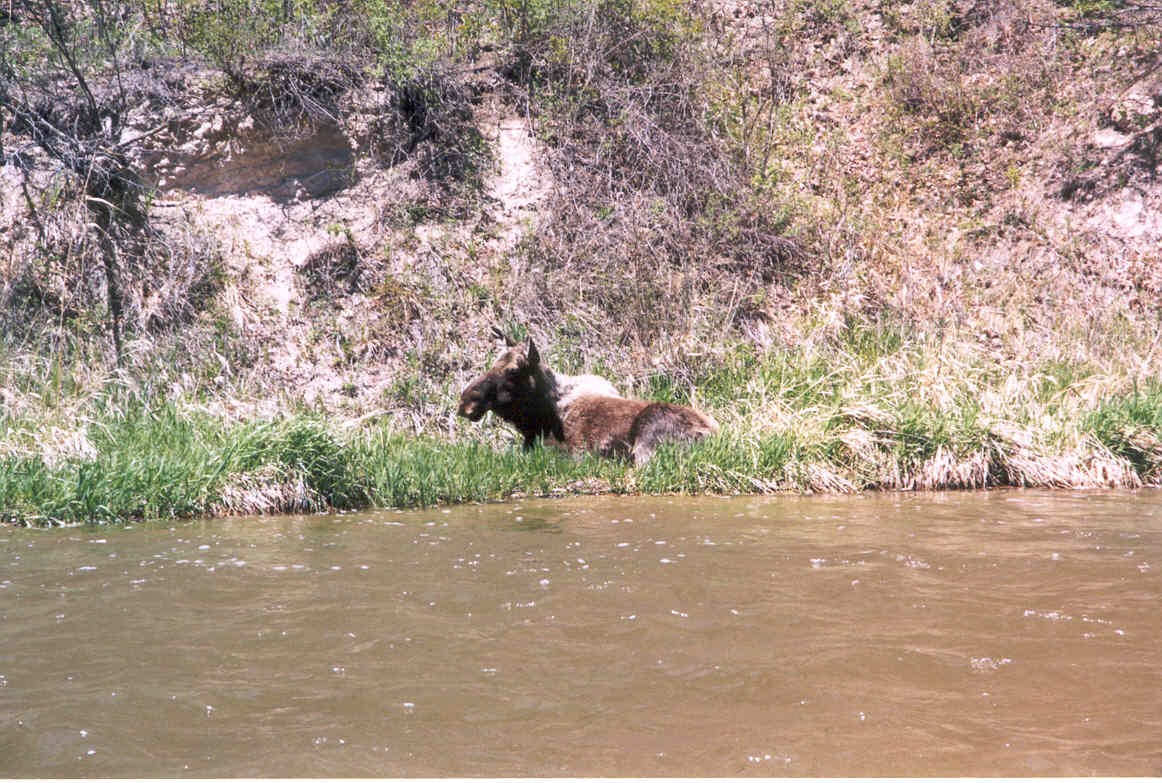
NPS photo |
Last updated: March 9, 2017