




Nez Perce National Historical Park Historically, in the summer months the Nez Perce would come to the prairies to harvest roots and berries and to hunt. Nestled against the foothills of the Bitterroot Mountains, Weippe Prairie played host to several Nez Perce bands. In mid-September 1805, Lewis and Clark made contact with the Nez Perce for the first time. Unprepared for the arduous trek over the Bitterroot Mountains, Captain Clark and a small group of hunters went ahead of the main party in search of food. When they entered Weippe Prairie, they encountered three frightened Nez Perce boys hiding in the grass. Clark gave them small presents and "sent them forward to the village." The Nez Perce people were nervous over the intentions of these strangers but accepted them onto their land. After Lewis and Clark reunited on September 22, 1805, they spoke with a Nez Perce head man known as Twisted Hair: trading gifts, passing the pipe, and acquiring information about the country. You can read what Lewis and Clark wrote in their journals as a web page, MSWord document (26.5 kb) or Adobe pdf (19.3 kb). 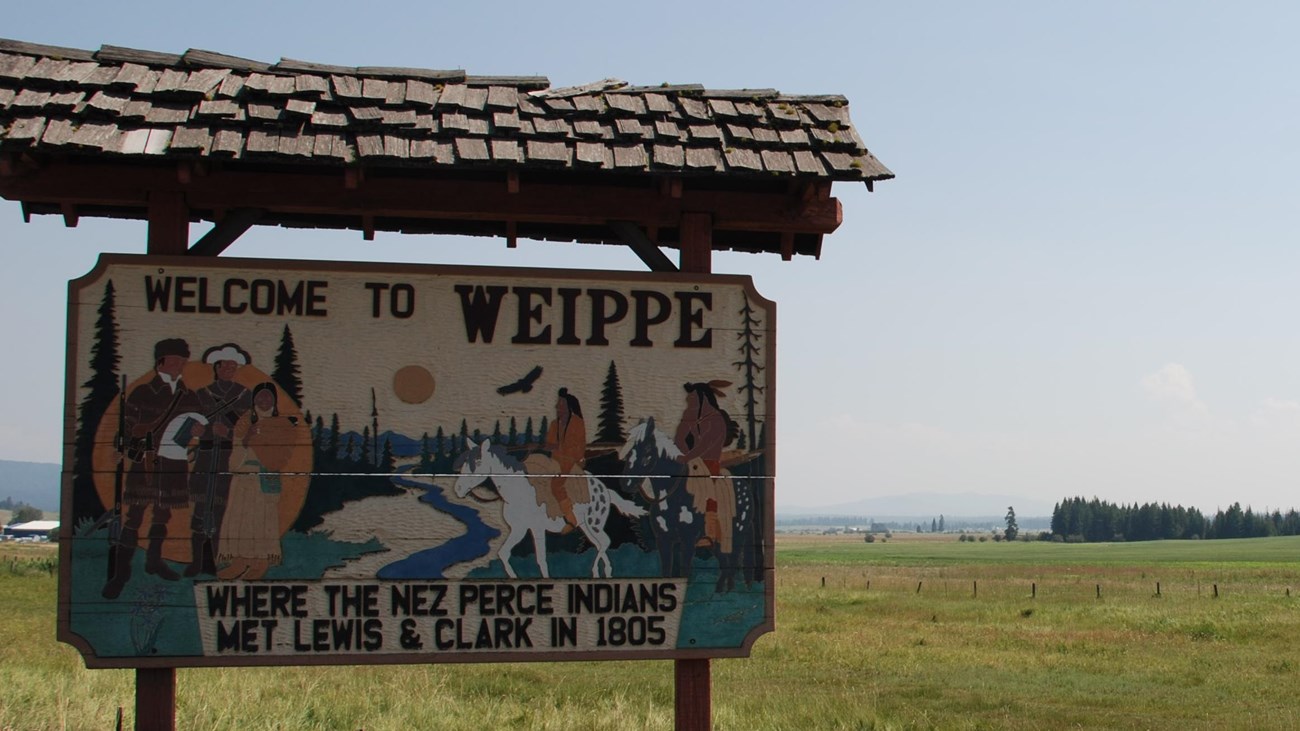
Visit Weippe Prairie
Plan your visit to the site where the Nez Perce met Lewis and Clark in 1805. |
Last updated: February 13, 2024