



|
Just as the smell of fresh cut grass tells you what is growing in the yard nearby, your sense of smell can help you identify some of the plants at Mount Rushmore. Some wildflowers have evolved to have very pleasant and sweet smells to attract pollinators like bees and butterflies. Other plants smell sour or rotten to attract different pollinators like flies. Trees and grasses can have distinct smells also. Smell can help you to discover something new. The Black Hills is a unique ecosystem where several plant ranges overlap. You can find northern, southern, eastern and western plants growing together in the Black Hills. The ponderosa pine is common in the western United States. Using your sense of smell you can easily identify the ponderosa pine trees that dominate the landscape in the Black Hills. Look for a tall pine tree with reddish bark. If it has long needles you may be looking at a ponderosa pine. Now walk right up to the tree and smell the bark. Does it smell sweet like vanilla or butterscotch? You have a ponderosa pine! Your sense of smell can help you identify plants at home and elsewhere. 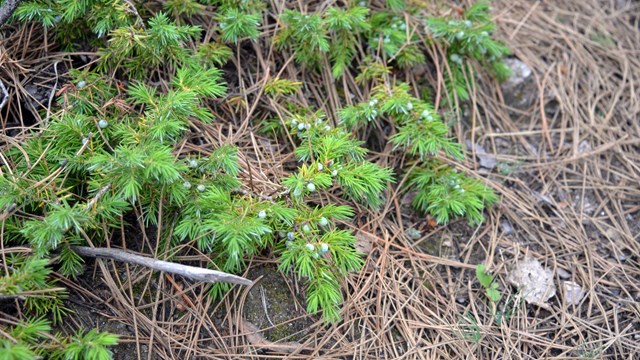
Trees and Shrubs
Explore some of the trees and shrubs found at Mount Rushmore National Memorial. 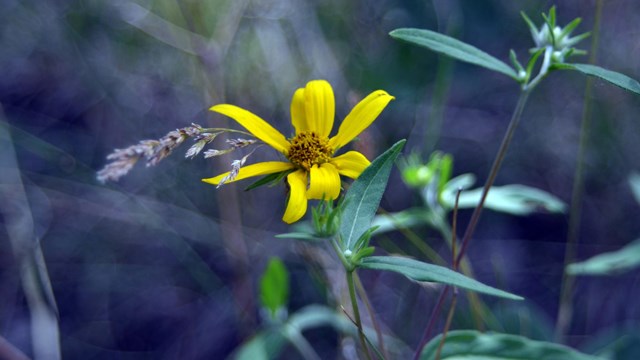
Wildflowers
Learn about traditional uses for some native plants and view a photo gallery of some of the common wildflowers found at Mount Rushmore. Select a Park:Select a Species Category (optional):
Search results will be displayed here.
Monitoring Plant Populations |
Last updated: February 28, 2021