Mammals
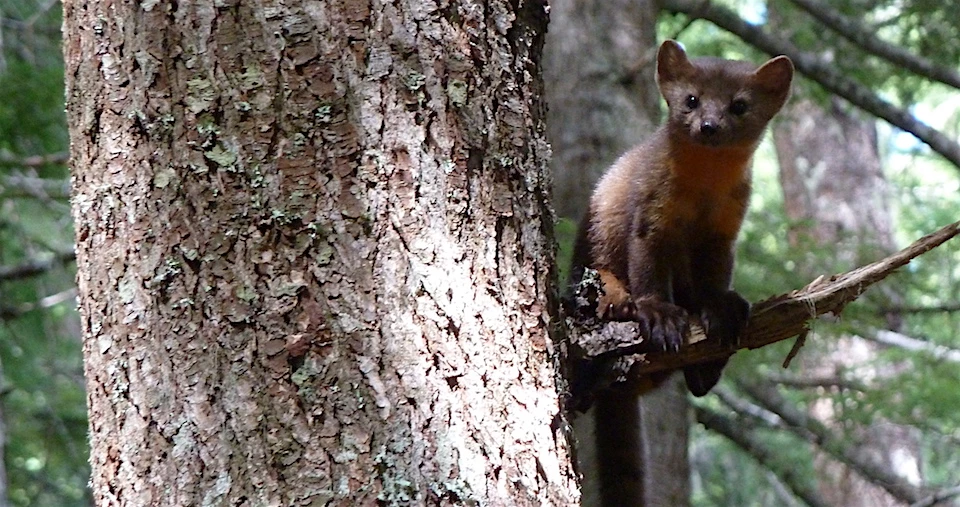
The elusive American Marten (also called a Pine Marten) is a member of the weasel family. Martens prefer mature coniferous forests, where they hunt primarily for voles, but also opportunistically feed on whatever strikes their fancy, including bird eggs, insects, squirrels, carrion, and even some berries and other vegetation.
NPS, Dan Font
Mammals and Life Zones Imagine taking a very long walk from the edge of the park up to the summit of the mountain. What kinds of life zones would you see? What kinds of mammals would you find in each one? Looking at life zones can help us better understand and appreciate mammal adaptations and the struggle to survive- a trait all living things share.
Mount Rainier's slopes support several different life zones, from old-growth lowland forest to colorful subalpine meadows to a snowy alpine peak. NPS, Steve Redman Lowland Forest Zone (LFZ) - You're in the lowland forest when you enter the park and find yourself sheltered by giant trees, dense shrubs and brush. The old-growth forests of this zone have trees towering 250 feet (76 m) or more, reaching diameters of 100 inches (2.54 m). Found between 2,000 and 3,000 feet in elevation (610-914 m), this zone is crowded with Douglas fir, western hemlock, and western red cedar. Pacific Silver Fir Zone (PSFZ) - A subtle change in the types of trees and thickness of forest undergrowth might clue you in when you arrive at the edge of the Pacific silver fir zone. It stretches between 3,000 and 4,500 feet (914-1372 m) in elevation. The climate here is slightly cooler and wetter than in the lowland forest. You'll recognize Pacific silver fir, noble fir, western white pine, western hemlock, and Douglas fir trees all around you. Subalpine Zone (SZ) - You know you've entered this zone when you see mountain hemlock trees. They have short, stubby needles like their cousins in the lowland forest, but these needles form beautiful star-shaped bundles on the branch. You'll still see a few Pacific silver fir, mixed in with whitebark pine. Stands of subalpine fir, Alaska yellow cedar, and Engelmann spruce will begin to appear as you climb higher. The subalpine zone is generally found between 4,500 and 6,500 feet (1372-1981 m). As you climb into this colder, snowier zone, the continuous forest gives way to patches of trees surrounded by meadows of colorful wildflowers, where deer and elk come to graze and browse in the sunshine. Alpine Zone (AZ) - Here's one zone you can't miss- no trees grow here. Some parts of the alpine zone are covered with flowers and grasses in the summer; others are blanketed by snowfields that never melt and glaciers of blue ice. This zone starts between 6,000 and 7,500 feet (1828-2286 m) and goes all the way to the 14,410-foot (4392 m) summit of Mount Rainier!
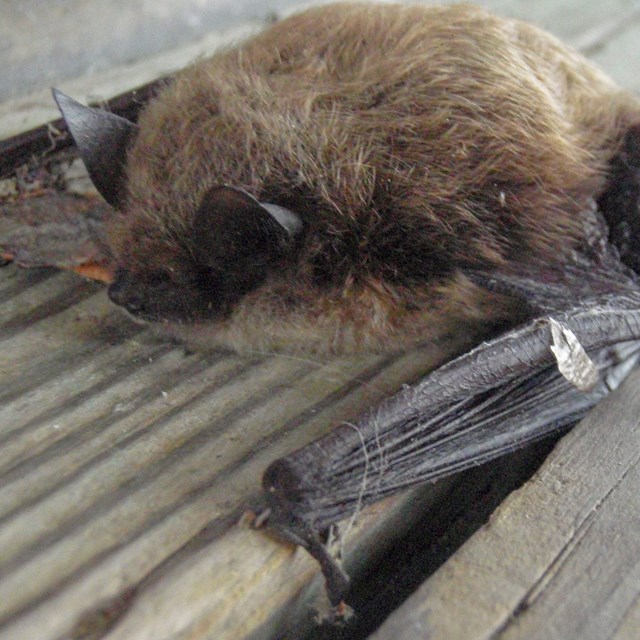
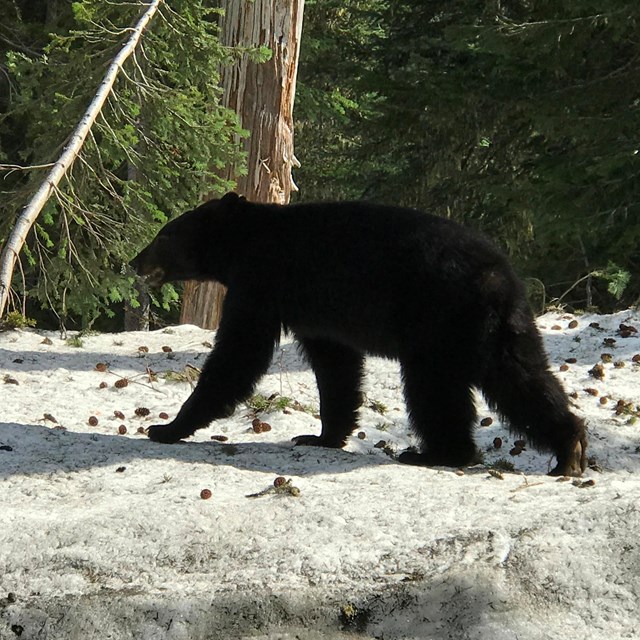
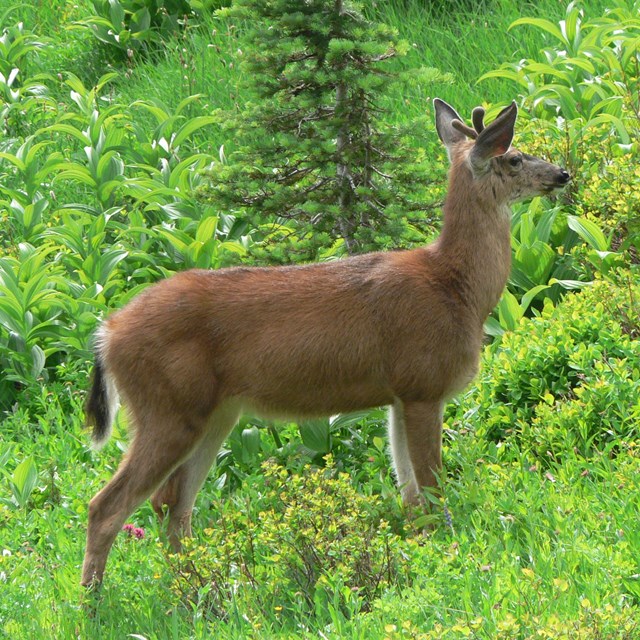
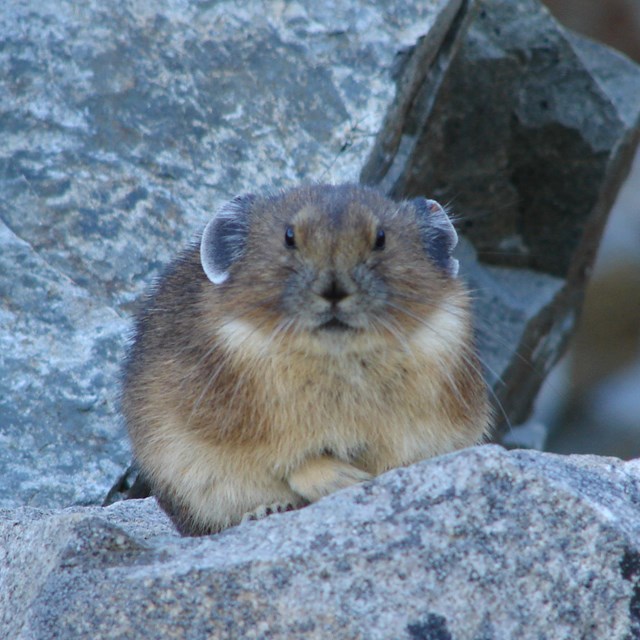
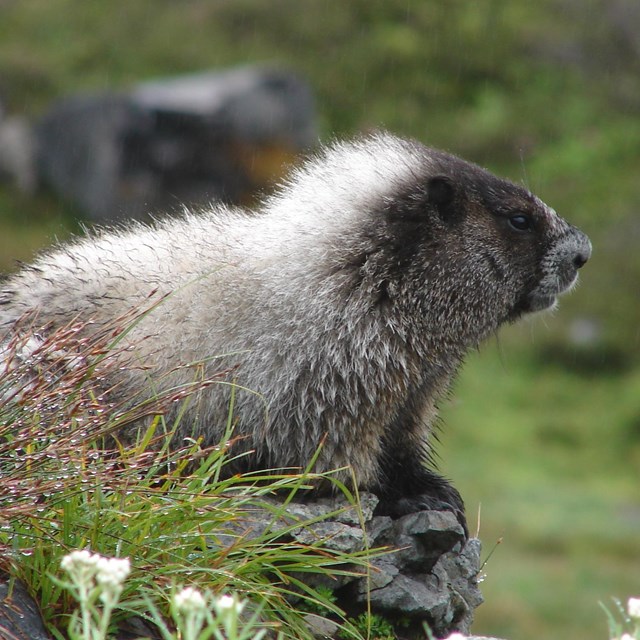
A few of the mammals found at Mount Rainier. Top, from left to right: Beaver, Black Bear, & Black-tailed Deer. Bottom: Golden-mantled Ground Squirrel, Hoary Marmot, & Pika.
NPS Photo
Mammal Species
Additional References:
|
Did You Know?
For many years, the Paradise Ice Caves were a popular attraction at Mount Rainier. Until the 1980s, visitors could explore passages within the Paradise Glacier which had formed due to seasonal melting of the ice. By the early 1990s, climate change had melted away the last traces of the caves. More...
Wildlife Safety