
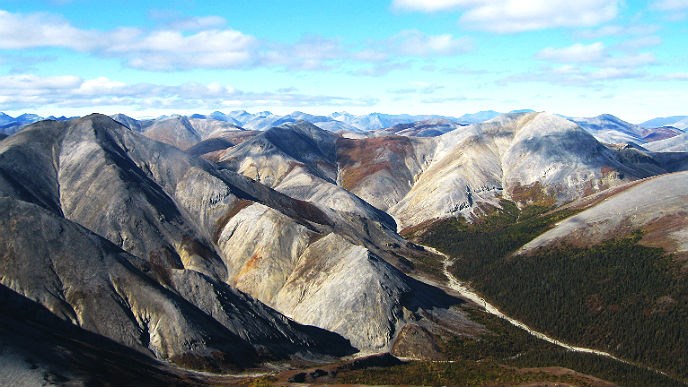
One of our biggest challenges is finding a way to share the Kobuk Valley experience with those who do not have the opportunity to visit the park in person. We have created a Flickr website as a way to extend the virtual park boundary to encompass all those who love and support our national parks, wherever they may be. Any visitor who would like to volunteer a sample of a trip to Kobuk Valley National Park is encouraged to join the park group on Flickr to post photos, video clips and journal entries to share with others.
Running Herd… on Fieldwork in the Western Arctic National Parklands is a blog highlighting some of the work being done by archaeologists, wildlife biologists, ecologists, and rangers in northwest Alaska's Noatak National Preserve, Bering Land Bridge National Preserve, Kobuk Valley National Park, and Cape Krusenstern National Monument.
A trip to the Great Kobuk Sand Dunes takes some effort, but the scenery and solitude makes it worth the work. There are no roads or trails, so plan to hire a pilot to get there. You can do an overflight, or land and stay a while. This video will help you start planning the logistics for a backcountry trip of a lifetime.
Fifty miles above the arctic circle, the world’s northern-most dune fields rise up, like a mirage, out of the vast green expanse of Alaska’s boreal forest. This juxtaposition of dunes and trees creates spectacular contrasts of color, texture and form. Created by wind and the slow grinding of ancient glaciers, the shifting sands record the passing of animals like bears, caribou, foxes and wolves.
Hi, I’m Linda Jeshke at Kobuk Valley National Park.
The Great Kobuk Sand Dunes are a very magical place. For people with some backcountry experience, a trip to the dunes could be the trip of a lifetime.
Even getting here is part of the adventure. While no permit is required, you will need to hire a bush plane to bring you in. Bush planes cost several hundred dollars an hour to haul three or four people with gear. Several authorized companies provide flights into the park. Most leave from Kotzebue, Alaska: a gateway village to much of the arctic’s backcountry.
A twohour scenic flight can take you to the dunes and back for a taste of the area. Planes can even land on the dunes so you can walk barefoot in the warm sand or spend the night. Boaters on the Kobuk River can also make a three-mile, cross-country hike to visit the dunes. There are no trails or signs out here, so make sure to bring a topographic map and compass...and know how to use them. A GPS unit works too, just be sure to pack extra batteries.
If you decide to camp on the dunes, there are several things you won’t want to forget. Before you arrive for your trip, know how to protect yourself in bear country. You should store all your food, toiletries and garbage in an animal-resistant food container. Look for one reviewed by the Interagency Grizzly Bear Commitee. Pepper spray is recommended to deter bears that might get too close.
While it might be a little less buggy on the dunes, two steps into the forest and it’s the same, old story: mosquitos, especially in June and July. Insect repellant, long sleeves and pants are critical to maintaining your sanity. For true piece of mind, bring a head net or bug jacket.
Even though it looks a little like the Sahara out here, it’s still the arctic, and weather can change on a dime. Hypothermia is always a hazard. You can also expect wet, sloppy hiking in the forest around the dunes. Extra socks, rain gear, a warm hat and layered clothing will keep you toasty and dry. Weather in northwest Alaska can change anyone’s plans. Fog and rain can ground planes for days. So pack extra food, a good book and be prepared to settle in and wait if you have to. Cell phones won’t work in Kobuk Valley, but you can bring your own satellite phone to call your pilot if plans change.
Alone in this wild landscape, you may feel like you’re the only one to have stepped foot on these dunes. Practicing Leave No Trace ethics will help others feel the same. A trip to the Kobuk Sand Dunes is as unique as the dunes themselves. While it might take a little extra effort and selfsufficiency, the solitude of this remote wilderness makes it all worthwhile.
I’m Linda Jeshke, and I hope to see you soon at Kobuk Valley National Park.
Did You Know?
River drainages on the north side of the Kobuk River in Kobuk Valley National Park support a healthy chum salmon run. River drainages on the south side of the Kobuk are better suited for whitefish species such as sheefish that can weigh 60 pounds.