




Joe Lapp Kenilworth Aquatic Gardens has seen a lot of change over time. The park is on the ancestral homelands of the Nacotchtank people. Long before the arrival of the first European explorers, there has been vibrant cultures, with fishing, farming, hunting, and trading. The Nacotchtank utilized the resources on the Anacostia River for more than just food. From the cattail alone, people derived food, medicine, and the raw materials for household goods and shelter. Kenilworth Aquatic Gardens General History
1875 - Lucy Helen Shaw was born. The second child and only daughter of Walter Shaw, she would marry James Marion Fowler, be widowed, and become the partner, then proprietor of the Shaw Gardens 1921 - Shaw dies. The Shaw gardens were a commercial enterprise run by his widowed daughter, Helen Shaw Fowler, an avid promoter of water gardens and a member of the International Water Lily Society. 1912 - Dredging project begins on the Anacostia River, reaches the Shaw gardens in the 1930s. Mrs. Fowler receives notice of condemnation of land. 1930-1938 - Helen fought for the Shaw Gardens, and Congress authorized payment in 1938 of $15,000 for 8 acres. The gardens, saved from being filled, were added to Anacostia Park. 1950's - Mr. Fred Lundy, a gardener for the National Park Service, learned about water lilies from Helen Fowler who continued to live on the property for fifteen years until she died. Mr. Lundy continued the tradition of caring for the flowers. 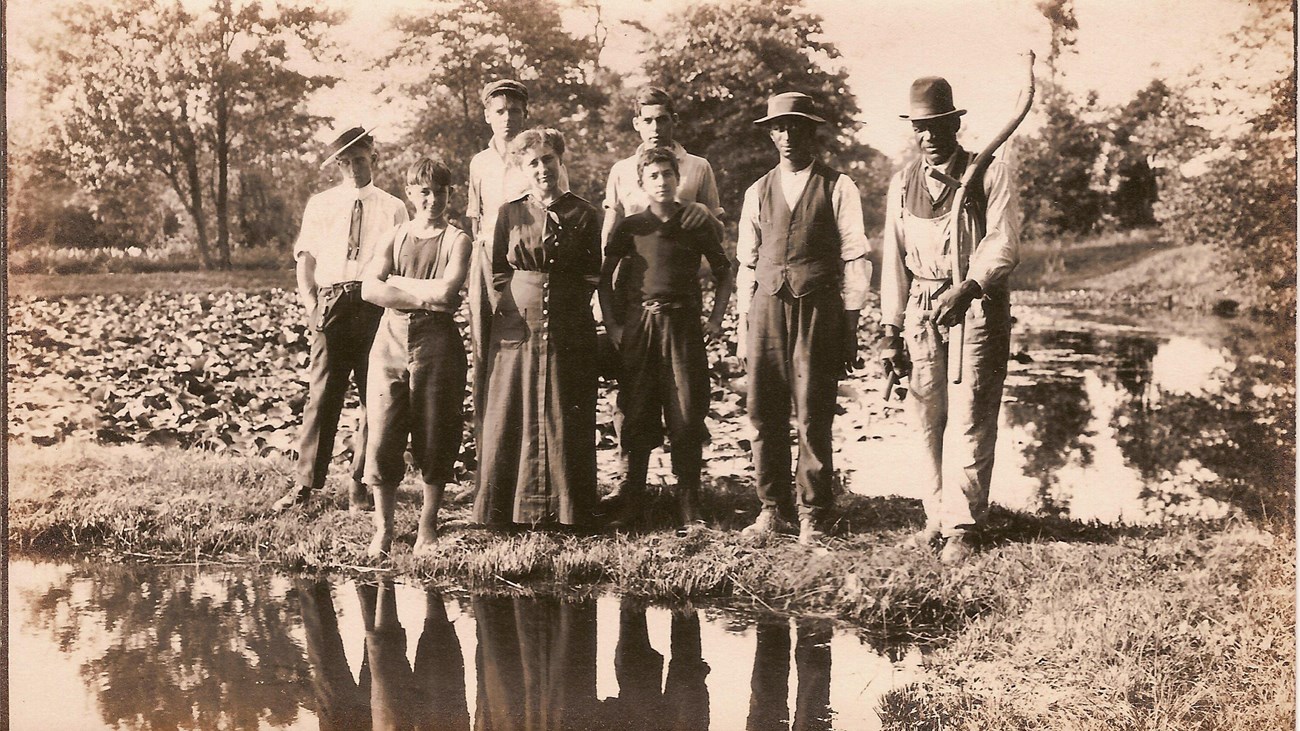
People of Kenilworth Aquatic Gardens
Learn more about the people who shaped the aquatic gardens into the park it is today! |
 |
|
Last updated: July 11, 2025