



|
Kalaupapa National Historical Park is home to an abundance of geological, terrestrial, aquatic, and marine resources. Over 30 federally listed threatened and endangered species call Kalaupapa home. Marine life includes monk seal, humpback whale, green sea turtle, and well-preserved coral reef communities. Geological resources within the park include Molokai north shore cliffs, some of the world's highest sea cliffs. The valleys, volcanic crater and crater lake, lava tubes, caves, and offshore islets provide numerous habitats. Ecosystems include ohiʻa rain forests, coastal spray areas, and freshwater streams.
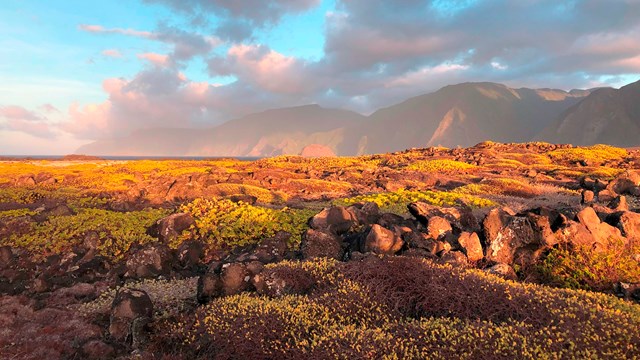
Ecosystems
The park protects habitats ranging from the ocean to the upland rain forest. 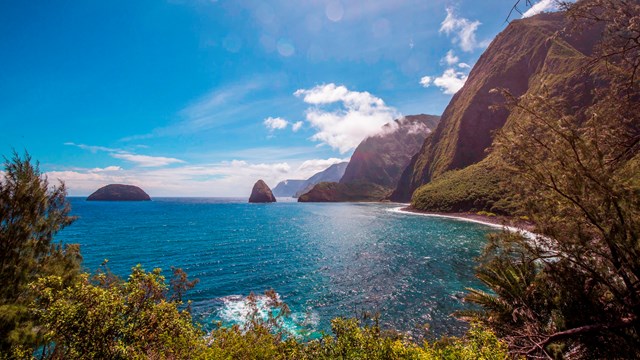
Geology
Over millions of years, several episodes of volcanic and geologic activity created the peninsula and its towering cliffs. 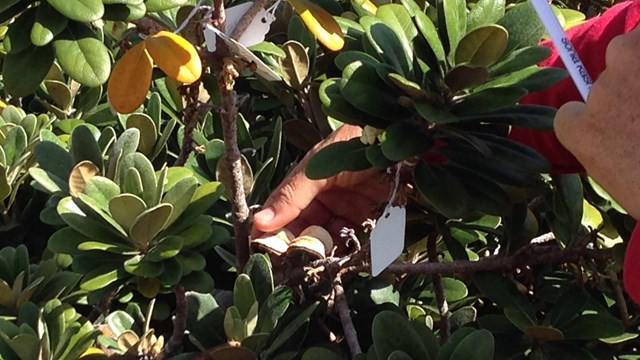
Plants
Kalaupapa protects hundreds of native and cultural plant species. 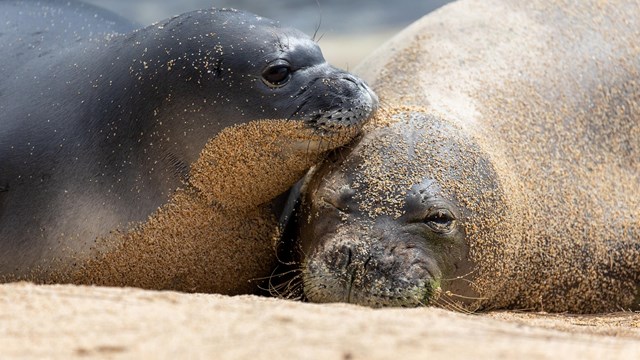
Animals
Kalaupapa peninsula is rich with marine and terrestrial wildlife. 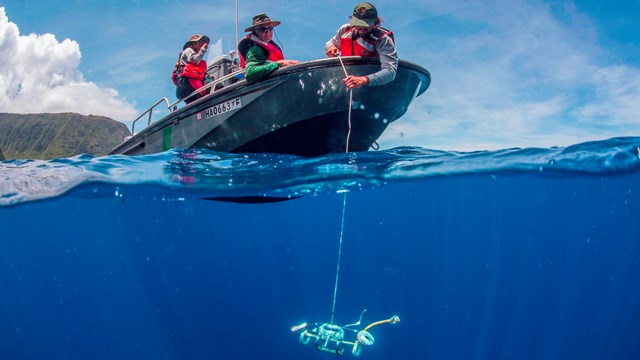
Science and Research
Learn about the science and research ongoing in the park! |
 |
|
Last updated: December 5, 2022