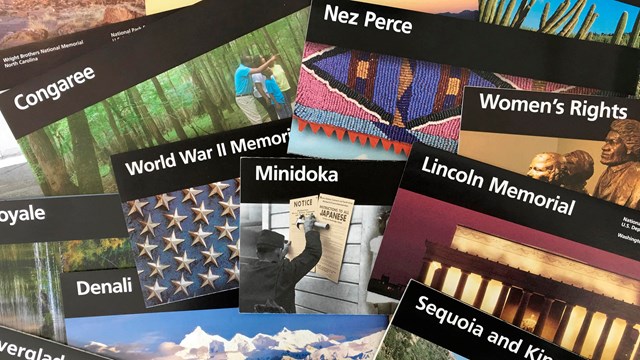
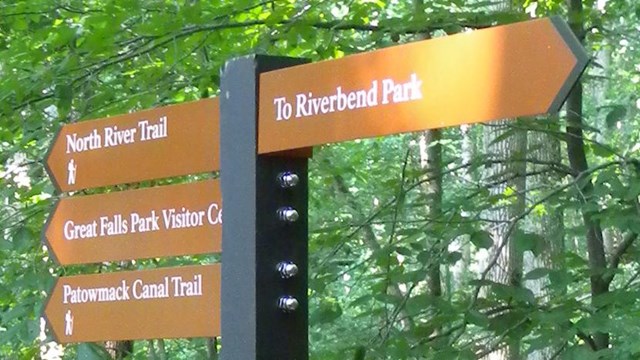
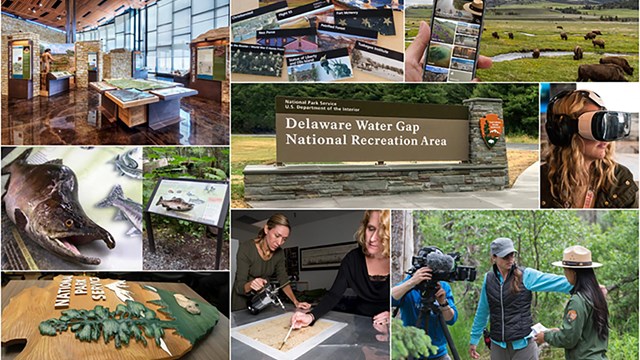
Harpers Ferry Center designer Betsy Ehrlich discusses design elements
and typography of the new NPS Graphic Identity standards, and how
they might be applied to wayside exhibits.
NPS Graphic Identity » |
|
Universal Design: The design of products and environments to be
usable by all people, to the greatest extent possible, without the
need for adaptation or specialized design.
These guidelines were established to guide a wide range of design
disciplines including environments, products, and communications.
The seven principles may be applied to evaluate existing designs,
guide the design process, or educate both designers and consumers
about the characteristics of more usable products and environments.
Principle One: Equitable Use
The design is useful and marketable to people with diverse abilities.
Guidelines:
- Provide the same means of use for all users: identical whenever
possible; equivalent when not.
- Avoid segregating or stigmatizing any users.
- Provisions for privacy, security, and safety should be equally
available to all users.
- Make the design appealing to all users.
Principle Two: Flexibility in Use
The design accommodates a wide range of individual preferences
and abilities.
Guidelines:
- Provide choice in methods of use.
- Accommodate right- or left-handed access and use.
- Facilitate the user's accuracy and precision.
- Provide adaptability to the user's pace.
Principle Three: Simple and Intuitive Use
Use of the design is easy to understand, regardless of the user's
experience, knowledge, language skills, or current concentration
level.
Guidelines:
- Eliminate unnecessary complexity.
- Be consistent with user expectations and intuition.
- Accommodate a wide range of literacy and language skills.
- Arrange information consistent with its importance.
- Provide effective prompting and feedback during and after task
completion.
Principle Four: Perceptible Information
The design communicates necessary information effectively to the
user, regardless of ambient conditions or the user's sensory abilities.
Guidelines:
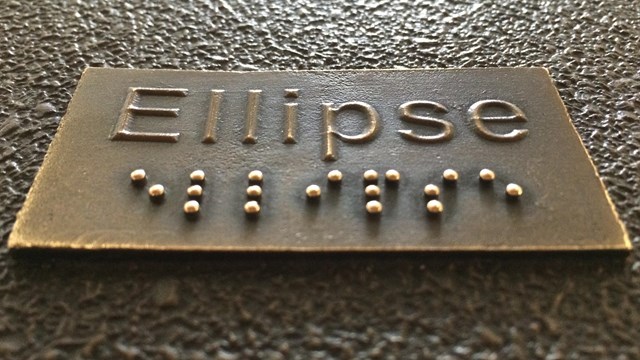
- Use different modes (pictorial, verbal, tactile) for redundant
presentation of essential information.
- Provide adequate contrast between essential information and
its surroundings.
- Maximize "legibility" of essential information.
- Differentiate elements in ways that can be described (i.e.,
make it easy to give instructions or directions).
- Provide compatibility with a variety of techniques or devices
used by people with sensory limitations.
Principle Five: Tolerance for Error
The design minimizes hazards and the adverse consequences of accidental
or unintended actions.
Guidelines:
- Arrange elements to minimize hazards and errors: most used elements,
most accessible; hazardous elements eliminated, isolated, or shielded.
- Provide warnings of hazards and errors.
- Provide fail safe features.
- Discourage unconscious action in tasks that require vigilance.
Principle Six: Low Physical Effort
The design can be used efficiently and comfortably and with a minimum
of fatigue.
Guidelines:
- Allow user to maintain a neutral body position.
- Use reasonable operating forces.
- Minimize repetitive actions.
- Minimize sustained physical effort.
Principle Seven: Size and Space for Approach and Use
Appropriate size and space is provided for approach, reach, manipulation,
and use regardless of user's body size, posture, or mobility.
Guidelines:
- Provide a clear line of sight to important elements for any
seated or standing user.
- Make reach to all components comfortable for any seated or standing
user.
- Accommodate variations in hand and grip size.
- Provide adequate space for the use of assistive devices or personal
assistance.
Please note that the Principles of Universal Design address only
universally usable design, while the practice of design involves
more than consideration for usability. Designers must also incorporate
other considerations such as economic, engineering, cultural, gender,
and environmental concerns in their design processes. These Principles
offer designers guidance to better integrate features that meet
the needs of as many users as possible.
Copyright © 1997 North Carolina State University,
The
Center for Universal Design, Raleigh, NC. |
|
RELATED LINKS:
NPS Graphic Identity »
The
Center for Universal Design »
|