| Listed here are categories of specialized knowledge
and skills needed by those involved in museum exhibit development,
and categories of requirements based on law, policy, or professional
practice.
1 Exhibit Planning. Museum planning is a profession
requiring many specialized skills. Planner KSAs are outlined in
position descriptions for Staff Curator (Museum Design).
2 Exhibit Design. Exhibit design is a profession
requiring many specialized skills. Designer KSAs are outlined in
position descriptions for Visual Information Specialists.
3 Exhibit Production. Exhibit production management
is a career field requiring many specialized skills. Producer KSAs
are outlined in position descriptions for Exhibits Specialist.
4 Graphics Research. Planners need to know how
to locate graphics and film footage, and how to acquire suitable
copies for reproduction. Relationships with source institutions
must be fostered.
5 Audiovisual Development. Often requires coordination
with the Harpers Ferry Center Audiovisual Arts group or contract
AV specialists.
6 Use Rights and Copyright Law. Knowledge of copyright,
trademark, and licensing laws are vital for media planners. The
advent of digital graphics and web access has made. U.S.
Copyright Office »
7 Exhibit Lighting. Lighting is critical to success
of exhibitions, and is a career field in itself. The Federal government
issues regulations regarding lawful lamps and energy conservation.
8 Writing and Editing. High quality writing and
editing has always been important in exhibit development, but is
often neglected as other quality factors gain more attention.
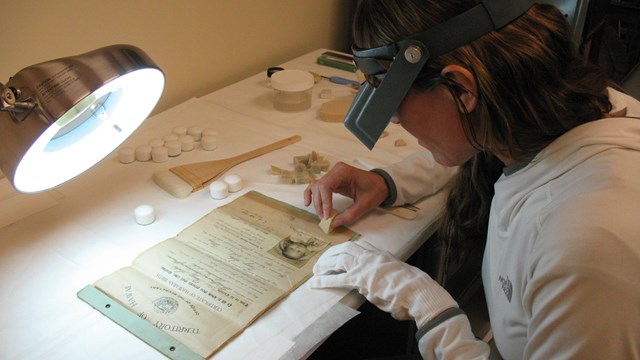
9 Object Conservation. The NPS and the profession
have standards and guidelines which heavily impact the exhibit process,
including the HFC Exhibit Conservation Guidelines available on cd-rom.
Protection of historic objects is a critical responsibility. HFC
Exhibit Conservation Guidelines »
10 Academic Standards. Information and interpretation
we present must be in line with the academic standards of various
disciplines beyond the NPS--archeology, history, biology, geology,
design, art, writing....
11 Media Evaluation. While not a regulation, evaluation
has repeatedly been noted as an important need. Seldom practiced
historically in the NPS. Evaluation is gaining acceptance in the
private sector.
12 Developing Illustrations. Must establish contracts
and be cognizant of use rights issues and implications. Art direction
requires diplomacy, knowledge of fine arts, and specialized skills.
Acquiring New Illustrations (PDF)
13 Coordination with Architects. There are many
codes affecting facilities design, with many client requirements.
These must be balanced with media quality concerns. Media staff
need to know how to read and understand drawings and designs.
14 Media Contracting. The COTR role in media projects
involves dealing with multitudes of regulations, procedures, and
barriers. Complete and well-written scopes of work are essential.
COTR role is demanding throughout the process. Specialized and recurring
training mandated.
15 Project Budgeting. Planners must work with
complicated budgets from multiple sources. Various regulations apply,
such as 17% planning/design cap, spending deadlines, varying fund
source requirements.
16 Project Tracking. Project tracking is required
for effective management, but no specific software application has
been established for NPS media work.
17 Project Management. Formal project management
is an emerging function at Harpers Ferry Center. Project management
is especially critical for large, multi-media projects. Training
is available.
18 Universal Design. Regulations regarding accessibility
are rapidly increasing in scope, effect, and complexity. They heavily
impact all phases of media work.
19 Sustainability. Exhibits and exhibit environments
must be built for long-term use and value. This means higher up-front
costs for long term value. Media in the NPS may need to be in place
20+ years.
20 Environmental Concerns. There are many regulations
affecting materials and chemicals used in exhibits and exhibit processes.
21 Energy Consumption. There are various regulations
and policies affecting energy consumption in NPS facilities and
equipment. EPA offers help with Green Energy projects, but staff
must be knowledgeable.
22 Diversity. Diverse points of view in interpretation
are essential, as is the need to be sensitive to the beliefs of
diverse audiences.
23 Value Analysis. Policies requiring Development
Advisory Board review and value analysis are impacting the exhibit
development process. Training, facilitation, and assistance by VA
specialists may be needed.
24 Cooperating Association Partnerships. VC projects
often require coordination with associations who manage sales operations.
Their requirements must be balanced with project needs/quality.
NPS Cooperating Associations »
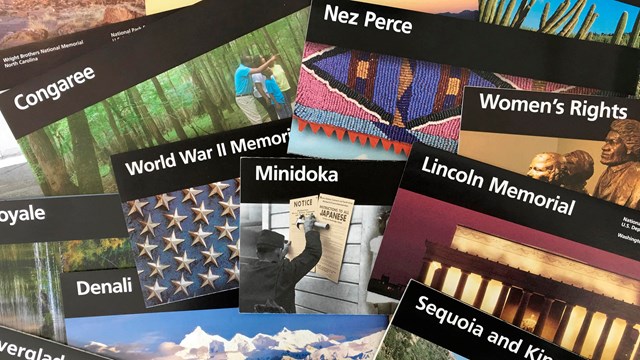
25 NPS Graphic Identity Program. The NPS Graphic
Identity Program has brought a new set of graphic design and public
relations standards into place. The design standards are paired
with a need to present consistent messages to the public about the
park and NPS as a whole. NPS Graphic Identity
Program »
26 Partnering Environment. Working with partners
often means working within their organizational requirements which
often differ with ours. Projects must be reviewed by a steadily
growing number of stakeholders.
27 Media for Education. School districts have
curriculum requirements that need to be considered. Teachers have
special needs. HFC hired its first Education Specialist in February
2003.
28 Developing Technologies. Media specialists
need to keep abreast of new technologies in interactive media, AV,
graphics, media development software, fabrication techniques…
29 Interpretive Development Program. Exhibit planners/designers
need to become familiar with the Interpretive Development Program
and its associated competencies, training modules, interpretive
theories, and vocabulary. Interpretive
Development Program »
30 NPS Thematic Framework. Developed under the
NPS Chief Historian, the thematic framework sets out themes for
developing media for historical subjects Servicewide.
31 NPS Curators Exhibit Process. NPS curators
have an exhibit development process which differs from HFC's. Coordination
with park and regional curators is important.
32 Special Constituencies. Many projects require
close cooperation with groups such as American Indian tribes, Japanese-Americans,
or African Americans. Project staff need to know how to work effectively
with these groups.
33 Limited English Proficiency. Executive Order
13166, August 2000, requires Federal agencies to make programs and
services meaningful for those who cannot speak, read, write, or
understand English. Interpretive media is covered.
34 Environmental Education. This includes more
than biology or ecology, touching on all subjects taught . It takes
an integrated and comprehensive approach, using the "environment"
as an organizing principle to include math, language arts, history,
economics, geography, etc.
35 Use of Historic Structures. Museum exhibits
are often located in historic structures. There are accompanying
issues and regulations that impact the exhibits process. Modifications
to architecture must be coordinated through State Historic Preservation
Officers.
36 Interpretive Planning. Before exhibit planning
can be done effectively, the planning team needs a Long Range Interpretive
Plan, or the information that is normally developed during this
process. HFC Interpretive Planning »
37 Safety. A museum environment can be unfamiliar
to visitors. Low lighting levels, circulation barriers, and interactive
exhibits pose hazards. Designers need to consider especially the
needs of children and seniors.
38 Security. Especially in light of recent terrorist
threats, security of visitors and park resources against attacks,
vandalism, and theft is of high importance. High profile artifacts
must be protected.
39 Visitor Surveys. Government regulations restrict
the ability of project staff to solicit feedback from park visitors.
Required approval processes can cause delays and added cost.
40 Cartography. Exhibits feature maps to help
visitors visualize landscapes and geographic areas. Exhibit maps
should conform to NPS and industry standards for colors, type, symbols,
line weights, USGS naming conventions, and many other criteria.
NPS Maps »
41 Natural History Specimens and Models. Three
dimensional representations of plants, animals, and other natural
features have long been key elements in museums. There are many
technical, ethical, interpretive, and maintenance issues involved.
42 Facilitation. Group facilitation is a social
science skill that project leaders need for creative problem solving,
especially in large or partner-based projects. It is often require
to mitigate unproductive communication patterns.
43 Project Audits. The Department of the Interior's
Inspector General and the GAO sometimes audit projects, requiring
project staff to keep and submit very detailed records of all project
work, including memos and trip reports.
44 Database Management. Increasingly, database
programs are being used for managing labels, graphics, artifacts,
equipment, and digital layouts. This increases efficiency, but requires
coordination with software managers and specialized computer skills.
Museum Exhibit Planner »
45 NAGPRA Compliance. The Native American Graves
Protection and Repatriation Act addresses the rights of lineal descendants,
Indian tribes, and Native Hawaiian organizations to cultural items.
Complex laws and policies impact museum planning and the management
of existing museums.
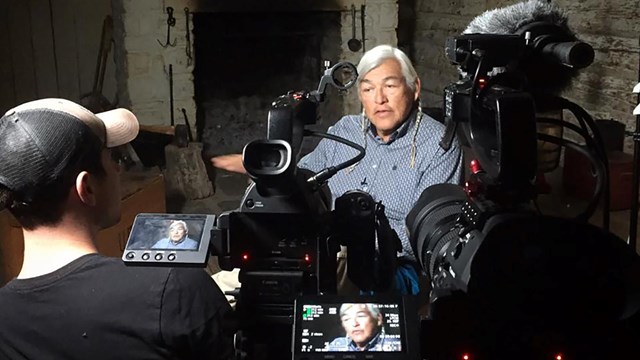
46 Oral/Video Histories. Project staff often need
to know how to conduct interviews, and techniques for capturing,
archiving, and accessing the histories. Issues related to informed
consent, intellectual property rights, and privacy must be addressed.
47 Civic Engagement. All NPS units and offices
must adopt civic engagement and public involvement as the essential
foundation for creating plans and developing programs. Many regulations
and policies apply. Ref.: Director's
Order 75A (November 2003- PDF)
48 Museum Photography. Just as exhibit staff may
have to commission original artwork, often there is a need to photograph
subjects for exhibition purposes, or to take record photos of completed
exhibits. The large reproduction sizes of exhibit images require
specialized photographic skills and equipment.
49 Original Research. While many exhibits derive
content from familiar and easily accessed sources, some require
substantive research using primary sources. Such research requires
specialized tools and experience. Historic furnishings projects
frequently require primary research.
50 Object Research and Acquisition. At historic
sites it is often necessary to identify, locate, and acquire historic
objects for museum displays and furnishings exhibits. This involves
skills in treasure hunting, object evaluation, diplomacy, and buying
techniques. Historic Furnishings,
Research & Object Acquisition »
51 Typography. The use of type is prevalent in
all the major interpretive media, and its proper or improper use
impacts the delivery of information and the efficacy of the interpretation.
NPS work requires a high level of skill in this traditional discipline.
|