Left to right:
Congressman Harley O. Staggers (West Virginia), Senator
Jennings Randolph (West Virginia), William C. Everhart (first Manager
of Harpers Ferry Center), Secretary of the Interior Stewart Udall,
and Senator Robert C. Byrd (West Virginia) pose around a model of
the Interpretive Design Center on September 21, 1967. Construction
on the new facility began in April 1968. |
|

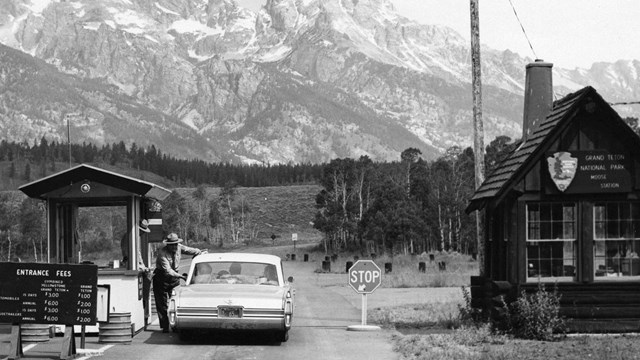
The idea for Harpers Ferry Center dates back to the early years
of George Hartzog's tenure as director of the National Park Service.
Hartzog became director in January 1964 and one month later named
Bill Everhart chief of a new Division of Interpretation and Visitor
Services. The new division's job was to bring together the various
interpretive functions – audiovisual, publications, museums
– and coordinate their activities. Everhart immediately realized
that he faced a number of problems. On paper he had all media-related
offices in the National Park Service under his control. But in reality,
they were dispersed across the country. The Museum Branch, which
enjoyed a long and distinguished history, was led by Ralph Lewis,
a respected museum professional. The branch was split between the
Eastern Museum Laboratory in an old temporary building on the Mall
in Washington, D.C., and the Western Museum Laboratory in the Old
Mint Building in San Francisco.
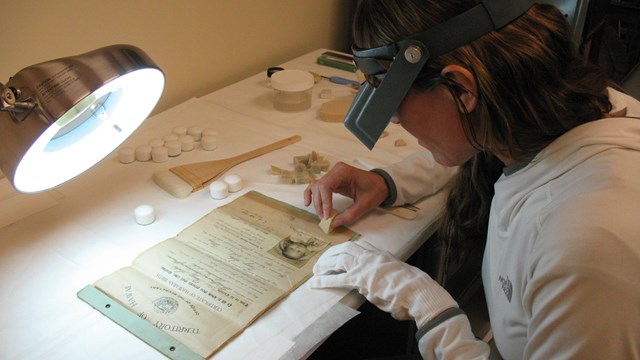
Everhart decided to separate the design and production aspects
from the preservation and curatorial side of the museum activity.
Lewis retained the curatorial end and Russ Hendrickson, at the time
the chief of Exhibit Production for the Department of Agriculture
was given the task of upgrading exhibit design. A small publications
office had space in the Interior Building in Washington, but regional
publications officers prepared material in the field and sent the
work into Washington for production. The audiovisual staff was in
its infancy, consisting of sometimes two, sometimes three, staff
members. Curatorial and research functions were equally small. |
|
RELATED LINKS
Vision, Mission, Values & Goals » |
With vision and leadership, Bill Everhart developed
this center to foster the interchange of creative ideas and bring to
park visitors, through interpretive media, a fuller understanding
and appreciation of their natural and cultural heritage.
From a placard at the entrance to Harpers Ferry
Center |
|
Creating a Center for Interpretive Media
Everhart reasoned that if the National Park Service were going
to bring its interpretive programs up to measure with all the construction
work of Mission 66 that was then nearing completion, something had
to change. In his own words:
"It seemed to me that the newly established Office of Interpretation
had two essential objectives right from the beginning. One was to
bring in some really professional talents, both to head up and to
staff the branches of publications, museums, and AV; the other was
to bring all of the people together under one roof."
Slowly this idea grew. Everhart was aided in pushing this concept
with Director Hartzog by Vincent Gleason, then chief of the Division
of Publications. Gleason, in fact, received a $500 cash award for
suggesting that all media-related personnel be brought together
into one office. Everhart was able to persuade Hartzog of the Center's
viability and the initial funds were requested in the FY67 budget.
The cost for the Center was estimated to be between $1,000,000 and
$1,250,000. The first funds, $600,000, were appropriated July 1,
1966.
A Site is Chosen
Harpers Ferry, West Virginia, was chosen because the Mather Training
Center was just getting started as an interpretive training center.
Everhart believed that "a site on this campus would provide
for excellent communications between the people who were producing
interpretive programs in the new design center and the interpreters
for whom these programs were being produced who would be taking
courses at Mather." It was hoped as well that both West Virginia
senators, Jennings Randolph and Robert Byrd, would support the proposal.
Randolph had been instrumental in establishing the original Harpers
Ferry National Monument and in purchasing the old Storer College
as the site for Mather Training Center. Byrd held an important spot
on the Senate Appropriations Committee.
After interviewing a number of architectural firms, the National
Park Service settled on Ulrich Franzen of New York City. Franzen
talked in Washington with the people who would be working in the
new building, and pulled together ideas of the personal and production
needs. From traveling to Harpers Ferry he became convinced that
by using brick he could tie his contemporary building to the historic
structures of the town, and that by employing arches on the river
front he would echo those found in the Armory and John Brown's Fort.
The working drawings were sent out for bids in early 1967. They
were opened later in the year, and construction began in April 1968.
In December 1969 the work ended, having cost a total of $905,000,
a relatively inexpensive building even for that time. On March 2,
1970, Harpers Ferry Center quietly opened its doors for business,
and in June of that year, an open house was held at the Center,
which served as its official launching.
HFC Grows Up
The building was originally designed to contain offices, studios,
and workshops for 80 staff members. Today, more than 100 people
call this building their workplace. But the Center has expanded
beyond its walls, and more than 60 HFC personnel are located in
several other buildings in Harpers Ferry and Charles Town, West
Virginia, and Denver, Colorado. |
|
Grounded in the National Park Service mission
and values, Harpers Ferry Center provides leadership, expertise
and support to create media that effectively communicates National
Park Service messages to the public.
Mission statement adopted by Harpers Ferry
Center, March 2002 |
|
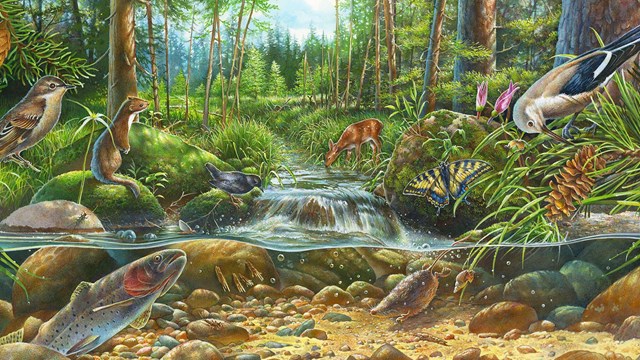
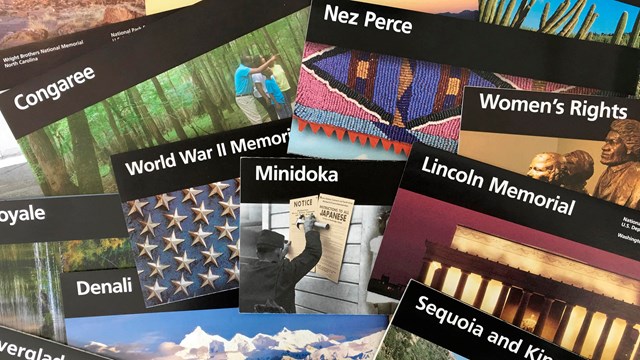
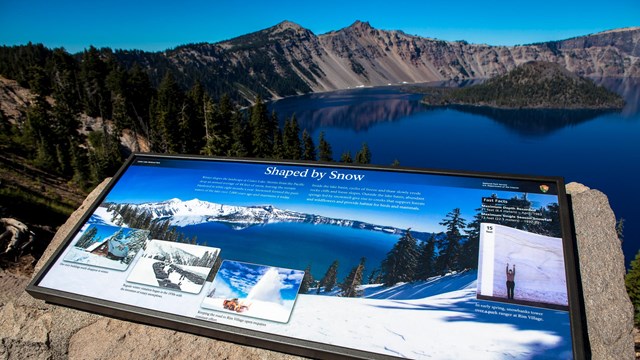
Much has changed beyond just the numbers of people
who work here. In the early years, motion pictures, sound/slide
programs, audio messages, museum exhibits, folders and other publications,
interpretive plans, and participation on Master Planning Teams were
HFC's products. Many of these same items are still produced, but
new ones have been added and all look different, for the past 30
years have seen a veritable revolution in media presentations. As
if that weren't enough, constantly increasing numbers of visitors
(1970: 172 million; 1993: 273 million) to the parks as well as the
growth in the number of parks (1970: 284; 1998: 376) have placed
tremendous demands on the staff to adequately fulfill these needs.
Not the least of the forces for change in these years was the celebration
of the national bicentennial.
The Center experienced a great burst of growth in its first five
years in response to the rapid development of these plans. A number
of visitor centers were constructed or refitted and filled with
new exhibits, films, publications. Waysides pointed out the site
of pivotal events, and historic furnishings research facilitated
the accurate presentation of a great number of interiors. And interpretive
plans suggested how the story of creating a new country be told.
The workload was intense and the Center hummed with activity. By
1977 everyone was able to assess the impact and make use of the
lessons learned in the future. One major change was the reluctant
but necessary closure of the in-house exhibit fabrication shop,
once the number one attraction on the HFC tour. All exhibits are
now constructed by outside firms.
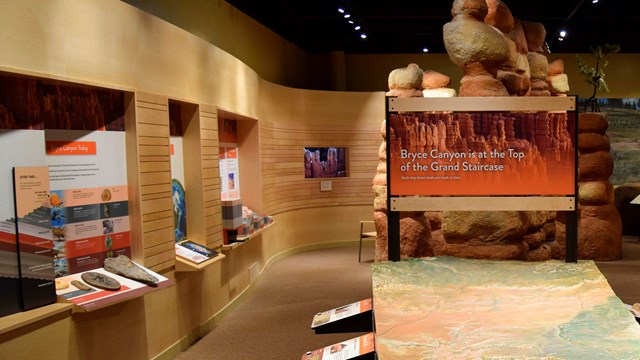
The Mission in the New Millennium
Throughout the years everyone has tried to hold true to the philosophy
behind this Center: that by employing appropriate media, professionals
can interpret the park story for the visiting public in a fashion
that is immediate and understandable and a complement to the efforts
in the park itself. The women and men of the Center have had some
great successes since the beginnings of HFC and look forward to
even more in the years to come as they and the National Park Service
prepare to move into the 21st century.
– By Robert Grogg and David Nathanson |
|