Nature & Science
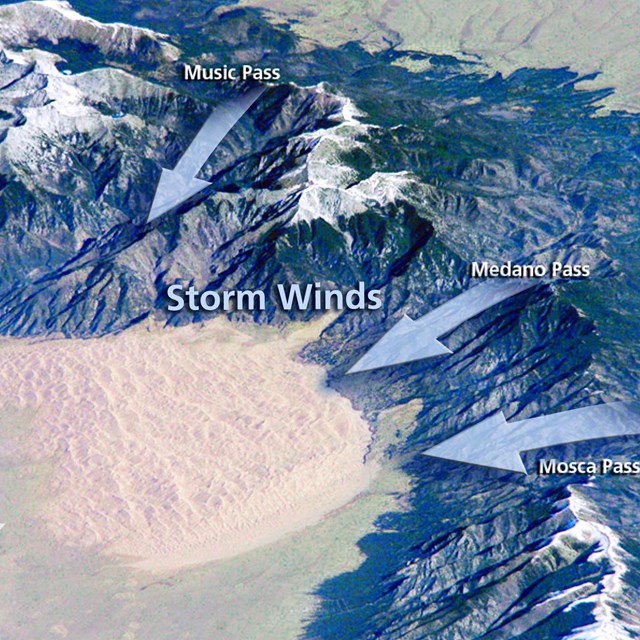
Aerial view of Great Sand Dunes NPS Photo How were the Great Sand Dunes formed? The most common question asked in the park is answered in understandable language, and in light of the most recent research. You may also learn more specifically about Great Sand Dunes hydrology.
Scientists creating avalanche to record "singing sand" phenomenon, June 2, 2011 NPS Photo Singing Sand Phenomenon
The Great Sand Dunes Tiger Beetle is one of at least six insect species endemic only to Great Sand Dunes. NPS Photo by Phyllis Pineda Bovin
A researcher explores a wetland at Great Sand Dunes as part of an amphibian survey of the park. NPS/Fred Bunch Great Sand Dunes National Park and Preserve encourages scientific research by academic, agency, and independent research scientists. A Research Permit is required to conduct scientific research or surveys in the park and preserve. |
Did You Know?
In average to wet years, Medano Creek is a popular beach environment at Great Sand Dunes. When creek flow is high, some children even raft the shallow waters. More...