




NPS/Patrick Myers 
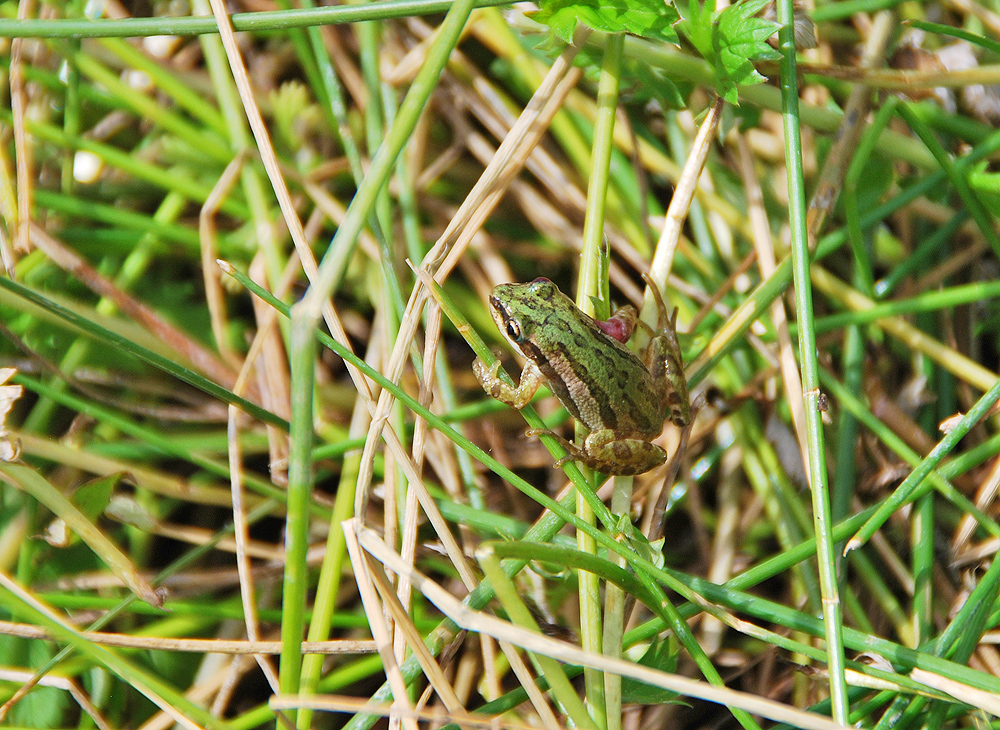
NPS/Patrick Myers Chorus frogs (Pseudacris triseriata) are usually the first amphibians to appear in spring, making loud choruses even when it is still snowing in March and April. Their loud call is similar to running a finger over the hard teeth of a comb - unexpected from a creature that is only about 1 inch (2.5cm) long when fully grown. In the park, their color varies quite a bit, from greyish brown to beige to green. Most individuals have a striped pattern on their back. Like tiger salamanders, chorus frogs have been found at high elevations in Colorado, and have the same ability to completely freeze during winter then thaw out back to activity in spring. Photo of Dark Green Chorus Frog, Twin Lakes, Great Sand Dunes National Park (NPS/Patrick Myers) 
NPS/Patrick Myers Northern leopard frogs (Rana pipiens) have declined in population over much of North America, with possible causes under investigation by biologists. Some leopard frogs are found in the wetlands of Great Sand Dunes National Park, though they are not common here. Because of their declining numbers, they are currently listed as a Species of Special Concern by the Colorado Division of Wildlife. 
NPS/Patrick Myers 
NPS/Patrick Myers 
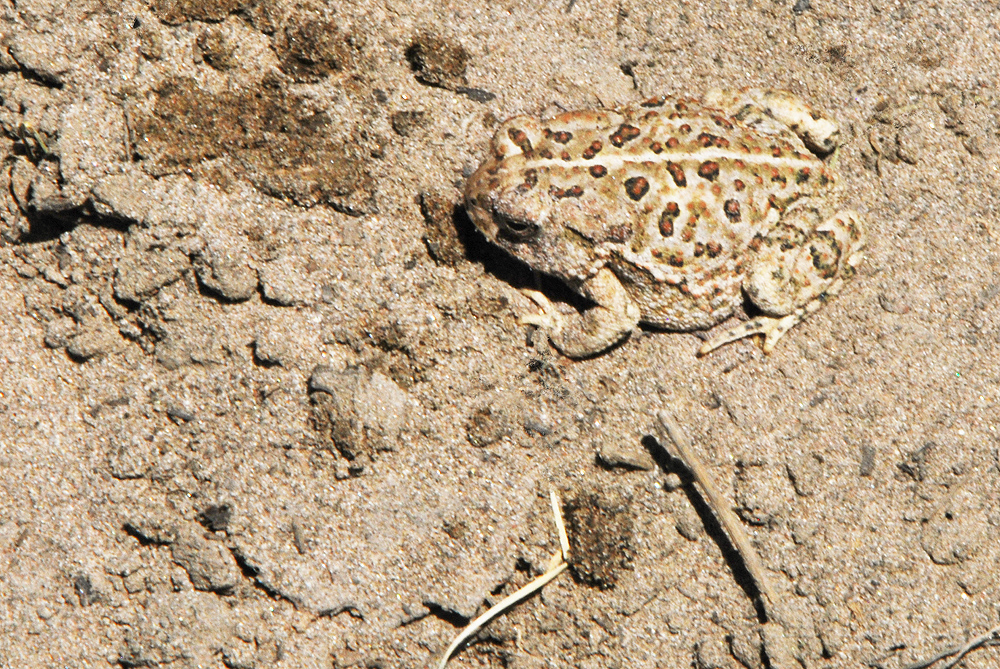
NPS/Patrick Myers 2010 Rocky Mountain toads (formerly called Woodhouse's toads) (Anaxyrus woodhousii) are the largest toad at Great Sand Dunes, sometimes growing over 4" (10cm) in length. They are occasionally seen on wet nights near the dunes parking area, but are more commonly found in somewhat remote wetlands west of the dunefield. While most Woodhouse's toads in the park are a brown-grey color, a few individuals found in open, sandy habitats have a distinctive mottled sand-camouflage color. (Photo taken east of Cotton Lake, NPS/Patrick Myers). |

Last updated: May 1, 2025