




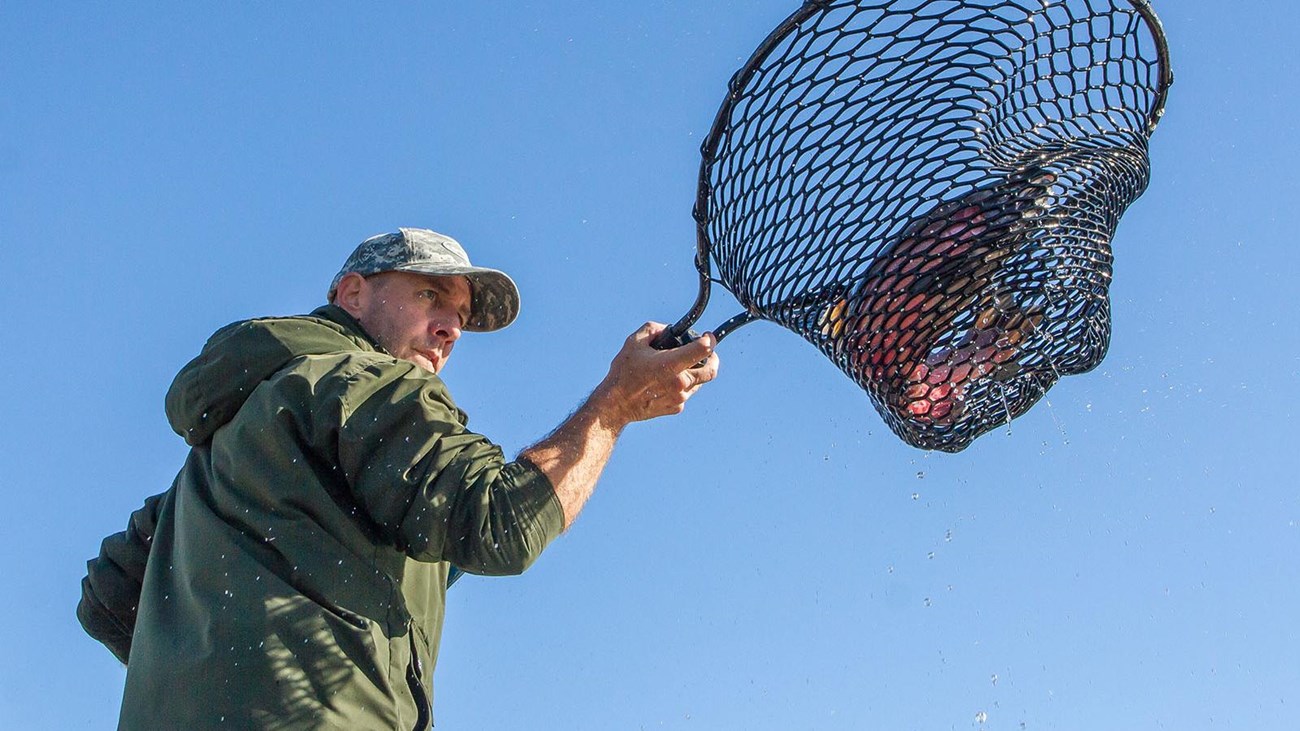
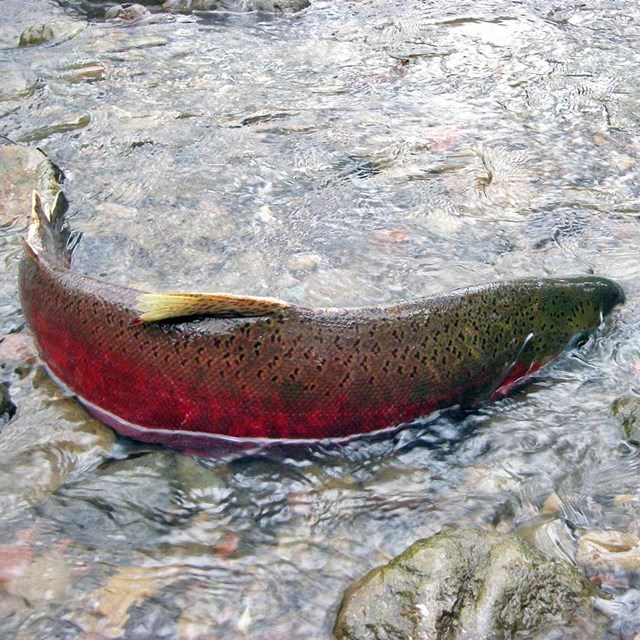
Notice the anglers lined up on park beaches or piers, and you will begin to realize the bounty of fish in the we have here. Starting from the offshore waters of the Pacific ocean, a multitude of species travel along currents past and through the Golden Gate. The San Francisco Bay is a world of its own, supporting estuarine species that can handle the fluctuating salinity levels. Intertidal areas of the park also provide important spawning and rearing habitat for fish. Commercially important species such as the Pacific herring spawn in Tomales Bay and along the rocky and vegetated shorelines of San Francisco Bay. Anchovy are the most abundant fish in the Bay, entering seasonally to forage and spawn, and are important to the economy of West Coast fisheries. The intertidal zone also supplies fishermen with surfperch, cabezons, blennies, rockfish, pricklebacks, mussels and sea urchins. Some estuarine fish caught by recreational anglers include brown smoothhound, pile surfperch and white croaker. Coho salmon and steelhead trout maintain their annual migrations up Redwood Creek, Olema Creek and Lagunitas Creek. Sturgeon can still be found in lower Lagunitas Creek, Tomales Bay, and the San Francisco Bay-Estuary. Learn More
Pacific Coast Science & Learning Center
Browse more resources on fish in San Francisco Bay Area parks. |
 |
|
Last updated: May 29, 2018