



|
The terms global warming and climate change are often used interchangeably, but the two phenomena are different.
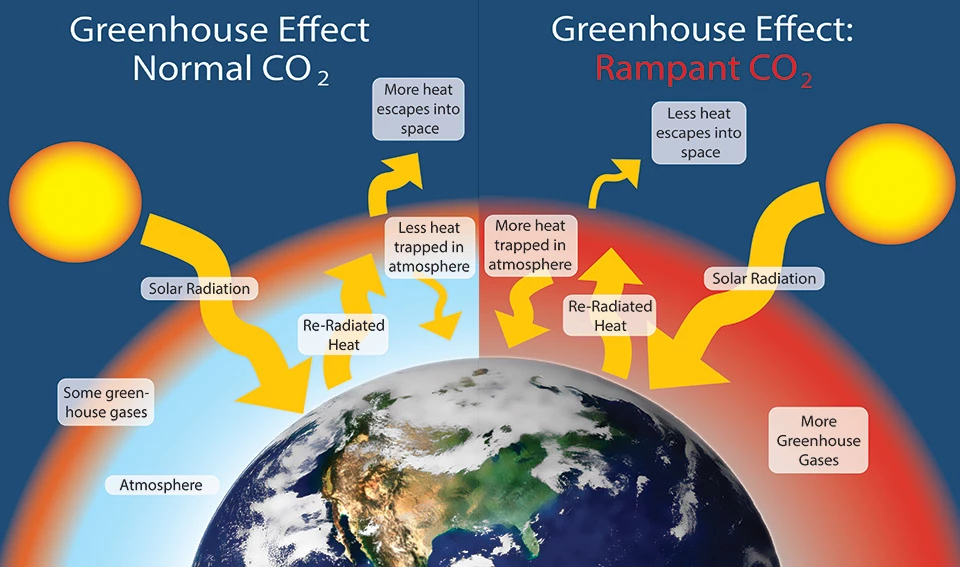
Right - The rampant emission of CO2 from burning fossil fuels traps excess heat and results in an increase in the average temperature of our planet. The solution is to reduce human activities that emit heat-trapping gases. Will Elder, NPS Welcome to the AnthropoceneThe Anthropocene is the interval of time on Earth in which key environmental processes have become dominated by human influence. There is some debate about when the Anthropocene began. According to some geologists, it began in the mid-20th century, when ice and sediment cores first demonstrated that human activities had altered the geologic record of Earth. Yet some biologists argue that humans significantly impacted biotic life long before that. These biologists view the overhunting of large, prehistoric animals as the origins of the Anthropocene. Others have adopted a more cultural approach, and propose that the first detonation of a nuclear weapon in July, 1945 was the official beginning of the newest geologic era. What do you think? When did the Anthropocene begin? What responsibility do we have, as individuals, to address it? What about as a global community? 
Learn Moreabout the causes and effects of global warming and climate change at these web sites: The Intergovernmental Panel on Climate Change U.S. Climate Change Science Program National Aeronautics and Space Administration National Oceanographic and Atmospheric Administration |
Last updated: October 16, 2020