
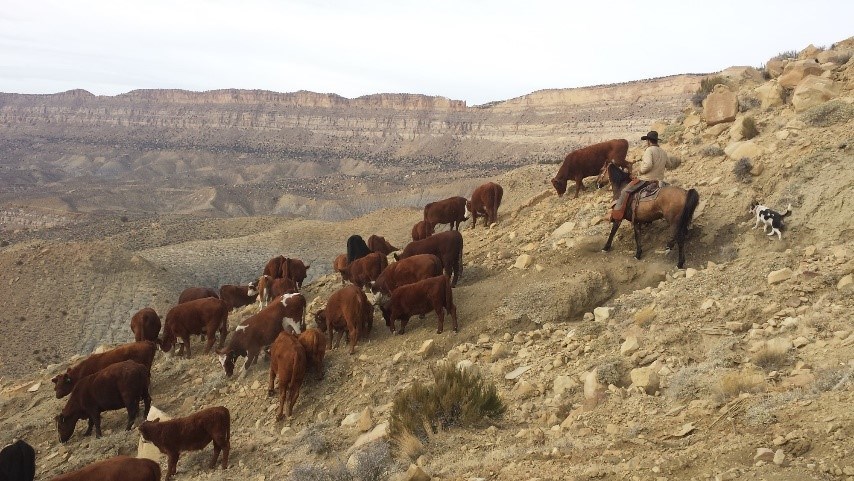
Photo Courtesy of S Westoff A History of RangelandGrazing of domestic livestock in the Glen Canyon area began in the 1860’s and was occurring region-wide by the 1890’s. Livestock grazing in the high desert environment of the Colorado Plateau is always dependent on both the amount of and timing of annual precipitation and its impacts on forage production. Market conditions for meat, wool, and hides also played a role in what breed of livestock was chosen and from the early 1900’s sheep, cattle, and combinations of the two were raised depending on which provided the best income opportunities. 
NPS Part of the PlanWhen Glen Canyon National Recreation Area was established by Congress in 1972 as a unit of the National Park Service (NPS), the enabling legislation authorized grazing, which had occurred in the area for much of the previous 100 years. Glen Canyon NRA is managed in accordance with the 1916 Organic Act which established the NPS as an agency and gave direction on how the resources of all park units should be protected for current and future generations. Although the lands of Glen Canyon NRA historically included grazing by sheep, all current grazing is by various breeds of cattle. As directed by Congress in 1972, grazing is managed jointly by Glen Canyon and adjoining Bureau of Land Management (BLM) offices. The BLM is recognized for its expertise in developing, implementing, and analyzing grazing programs on large tracts of federal lands. The BLM administers the grazing permits and implements a grazing program which integrates NPS stewardship responsibilities for the vegetation, soil, water, wildlife, cultural, paleontological, scenic, and recreational resources of Glen Canyon NRA. Five BLM offices administer the 28 grazing allotments that partially or entirely occur within Glen Canyon NRA. When permits are renewed, grazing practices are evaluated and adjustments are made where needed. About 750,000 of Glen Canyon’s 1.25 million total acres are in grazing allotments Sustainable Grazing TodayThe rangeland in Glen Canyon NRA is arid to semi-arid with annual rainfall that ranges from 4 to 12 inches year to year and also varies with the particular elevation of the grazing allotment (higher areas typically get more rain or snow). Elevations in the park range from 3,300 feet at Lees Ferry up to 7,500 feet in the Kaiparowits Plateau and Orange Cliff areas. Winters are cold, summers are hot. Vegetation includes primarily shrublands with intermixed grass and grasslands, with 8% of the park covered by pinyon-juniper woodlands. Because portions of most allotments have cliffs, slickrock outcrops, and other areas which cannot be grazed, the grazable acres are generally lower than the total acres for each allotment. Much of the grazing in Glen Canyon NRA occurs between November and May during the cooler fall, winter and spring months. There are some higher elevation areas that also have summer grazing. The cattle are moved from pasture to pasture to allow areas to rest and regrow. Many of the perennial grasses found on the Glen Canyon rangelands that sustain the livestock industry do well under current grazing levels. Glen Canyon and our grazing partners are striving to use the best science and management information and methods to constantly improve grazing practices and reduce the risk of wildfires and erosion on public lands. Glen Canyon National Recreation Area is committed to the congressional mandate to maintain sustainable grazing on the lands under the care of the NPS. Working with skilled ranchers and BLM’s expertise on public lands grazing management, Glen Canyon staff are making steady improvements in grazing practices, monitoring, sustaining local communities, and maintaining desert rangeland health |
Last updated: March 29, 2019