

NPS Photo A living historyExplorers and travelers have known of the pool by the great rock for centuries. A valuable water source and resting place, many who passed by inscribed their names and messages in the rock next to petroglyphs left by ancestral Puebloans. The large pueblo located on top of El Morro had been vacated by the time the Spaniards arrived in the late 1500s, and its inhabitants may have moved to the nearby pueblos in Zuni and Acoma. As the American West grew in population, El Morro became a break along the trail for emigrants passing through and a destination for sightseers. As the popularity of the area increased, so did the tradition of carving inscriptions on the rock. 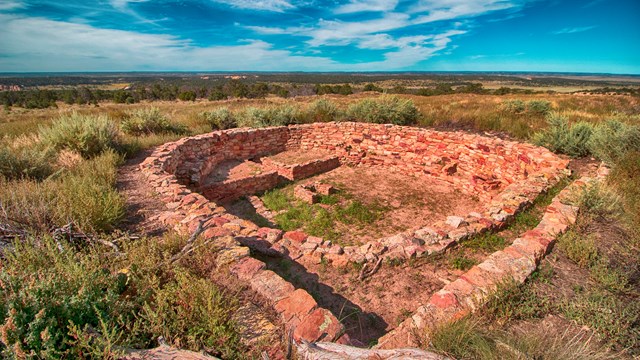
Ancestral Puebloans
Learn more about the original inhabitants of the El Morro valley. 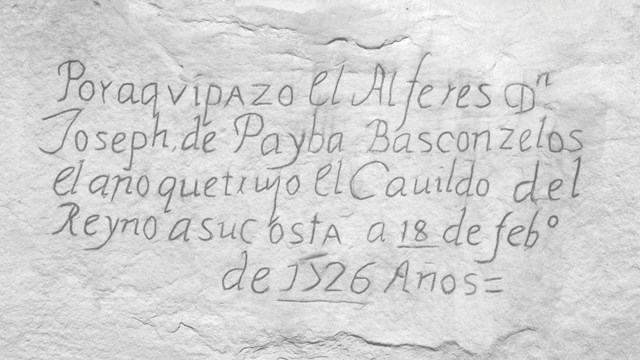
The Spaniards
On the search for the fabled cities of gold, many Spanish conquistadors and missionaries passed through El Morro. 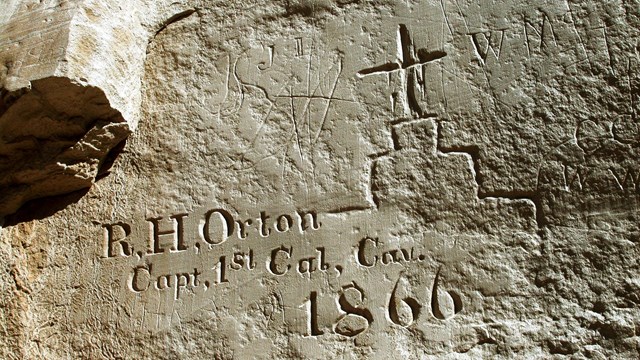
The Americans
Early American settles also passed through and left their mark on the rock. |
Last updated: November 16, 2022