




Despite its reputation as a lifeless wasteland, Death Valley National Park contains a great diversity of plants. The park covers over 3 million acres of Mojave and Great Basin desert terrain. With over 11,000 feet of elevation change, and annual precipitation varying from 1.9 inches on the valley floor to over 15 inches in the higher mountains, there are a variety of different environments within the park for a great diversity of plants to thrive! Vegetation zones include creosote bush, desert holly, and mesquite at the lower elevations up through shadscale, blackbrush, Joshua tree, pinyon-juniper, to sub-alpine limber pine and bristlecone pine woodlands. The saltpan is devoid of vegetation, and the rest of the valley floor and lower slopes have sparse cover, yet where water is available, an abundance of vegetation is usually present. Spring Blooms!Spring wildflower blooms are a popular attraction in this desert park. Most years will have at least a few flowers, while others can have spectacular "superblooms." For more information on blooms and insight into the current year's bloom predictions, visit our Wildflower Seasons page. Surviving a Harsh EnvironmentHow have plants adapted to survive the extremes of Death Valley? Here are a few broad strategies: 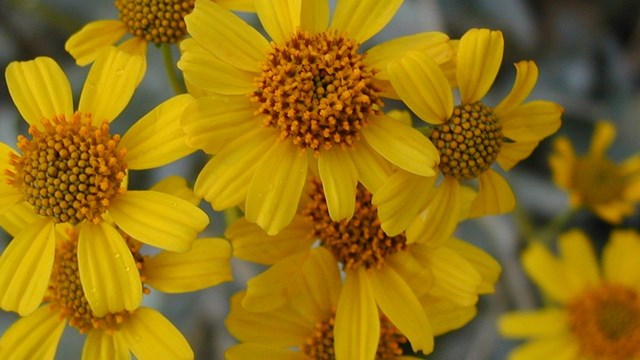
Wildflowers
Learn more about wildflowers and get an update on current blooming in the park. 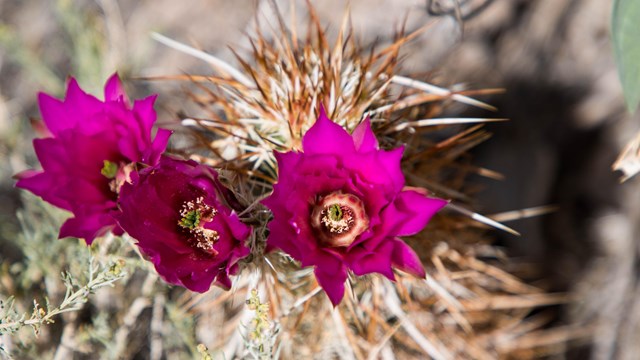
Cacti and Desert Succulents
Death Valley is home to many different types of cacti and other desert succulents- learn more about them! |
 |
|
Last updated: August 15, 2026