



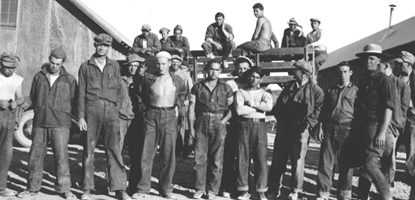
Shortly after taking office in March 1933, Franklin D. Roosevelt stormed into the presidency supporting legislation to develop the Tennessee Valley Authority, repeal prohibition and get the country back on its feet from the devastating depression that held it in check. A major part of that effort was the establishment of the Civilian Conservation Corps—or CCC for short—which took unemployed men from all over the country and put them to work on national lands under the direction of Army Reserve officers. 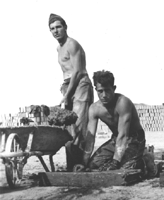
Death Valley was established as a national monument in February 1933, and by October of that year, two companies (400 men) entered Death Valley to start getting the infant monument into shape for the American public. In the next nine years, twelve companies worked in Death Valley. These crews graded 500 miles of roads, constructed an airplane landing field and installed water and telephone lines. Crews erected a total of 76 buildings for themselves, Works Progress Administration and National Park Service. They built trails in the Panamints to points of scenic interest. Additionally, these crews helped improve the visitor experience by building campgrounds, restrooms and picnic facilities. 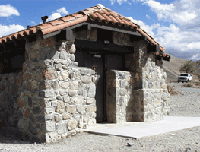
The Civilian Conservation Corps crews were housed in 3 permanent camps at Wildrose, Funeral Range and Cow Creek and spike camps at Mesquite Springs, Emigrant Canyon, Daylight Pass and Butte Valley. They were paid $25 a month of which $20 went to the family and $5 to the men. The CCC men were among the first to be called for the war effort, and by May 1942, Death Valley no longer had CCC crews. Today, you can still see their efforts in campgrounds, roads and even some buildings that are still standing. Death Valley could not have accommodated visitors in its first years without the help of the Civilian Conservation Corps. |
Last updated: October 6, 2021