• Image of Mount McKinley and the Alaska Range

    Denali

    National Park & Preserve Alaska

Wolves

Wild wolves in Denali
 

Denali is recognized as one of the best places in the world for people to see wolves in the wild.

Scroll down or click on the following topics to learn more about wolves in Denali:
Life of a Wolf, Wolf Surveys and Long-term Monitoring, Wolf Research, and Management Concerns about Wolves

 
Wolf carrying caribou remains

A wolf makes a living in Denali

NPS photo by Ken Conger

Life of a Wolf

Learn about Wolf Ecology Basics (wolf packs, pups, and the role of wolves in an ecosystem).

Learn about Wolf Ecology Basics for Wolves in Denali (specific information for Denali wolves about diet, causes of mortality, and more). In development...please check back later.

Consult this chart giving Natural History Information about Wolves (and other large mammals).

Check out these slides that explain in more detail three Wolf Ecology Concepts ("Wolves kill moose," "Wolf packs defend territories," and "Alphas lead the pack"). PowerPoint is 1.9 MB.

 
How many wolves are traveling together?

A wolf pack travels single file in winter

Gordon Haber

Wolf Surveys and Long-term Monitoring
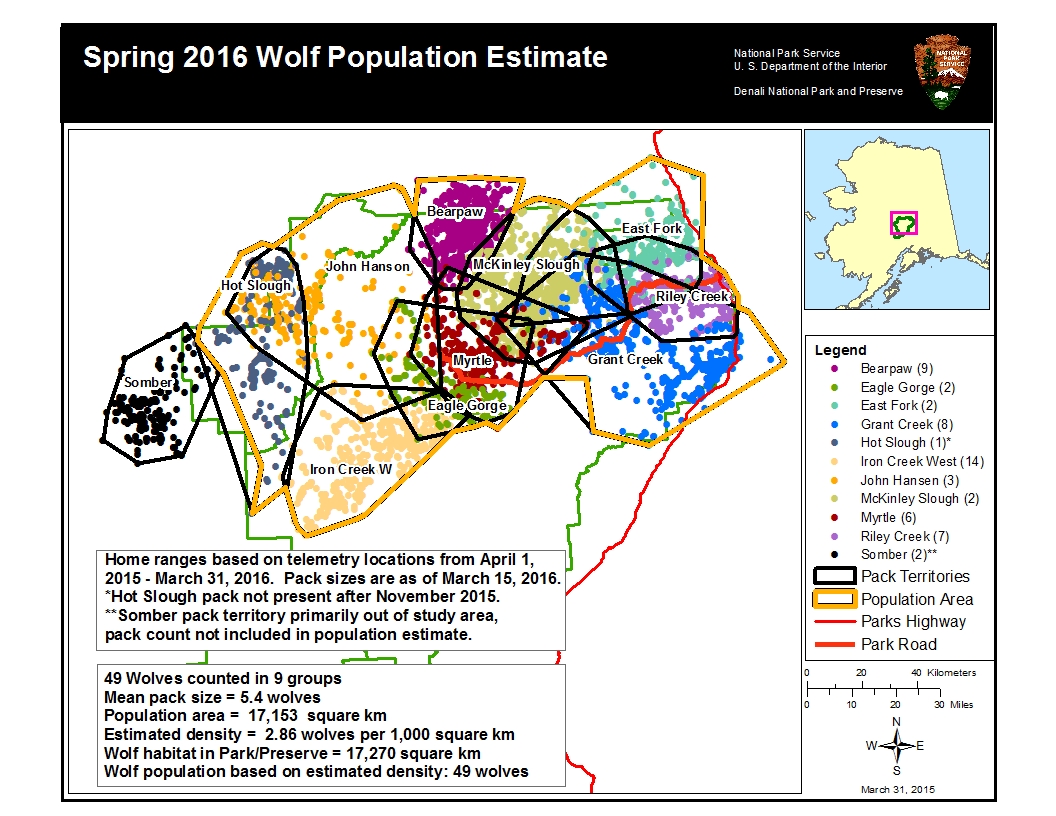
Since 1986, biologists have monitored wolf populations in Denali. Wolves is one of 18 vital signs monitored in the park as part of the Central Alaska Network (CAKN) Inventory & Monitoring Program. For the past 25 years, biologists have monitored on average 95 wolves annually (north of the Alaska Range). Fall wolf densities have ranged from 2.7 to 9.8 wolves per 1000 square kilometers (7.0 to 25.3 wolves per 1000 square miles). However, wolf densities for the past three years have been the lowest in Denali since 1987. No obvious explanation for this current low density is apparent.


Fact Sheet: Wolf Monitoring 1986-2011

Annual Report: Central Alaska Network Wolf Monitoring 2011

Wolf Territory Maps: 2013, 2012
(other years: 2005, 2006, 2007, 2008, 2009, 2010, 2011)

Wolf Survey Data 1986-2013: Spring, Fall

 
Wolf biologist at work

Biologist gathers data about a wolf while she is temporarily sedated to be fitted with a GPS collar.

NPS photo

Wolf Research in Denali

Wolf Viewing Project
Bridget Borg, a wildlife biologist at Denali and a graduate student at the University of Alaska Fairbanks, is studying what factors may be influencing the viewability of wolves in Denali.

Wolf Diets in Northwestern Denali
Dr. Layne Adams, U.S. Geological Survey, Alaska Science Center, and colleagues published their findings about salmon-eating wolves in an article in Ecological Applications (2010):
Are inland wolf-ungulate systems influenced by marine subsidies of Pacific salmon?

Interactions of Wolves and Coyotes
Kelly Sivy, graduate student at the University of Alaska Fairbanks, is currently exploring how coyote populations change in response to wolf presence, fluctuating prey (snowshoe hare and small mammals), and snowpack.

 
Wolf litters range from 2 to 10 pups

Female wolf with pups (another is out of view) near the Toklat River

Kes Woodward

Management Concerns about Wolves
Wolves are an important resource in Denali mentioned in the park's enabling legislation.

The wolves that inhabit Denali face many natural factors such as weather and availability of prey that may affect their behavior, where they travel and have their dens, and their population size. Human-related factors, such as human development or legal trapping outside the park boundary, may also affect wolves inhabiting Denali. The number of wolves in Denali has ranged from approximately 60 to 100. However, the story of wolves in Denali is not just about the numbers (population size), but also about the ability of people to view them.

Are wolf viewing opportunities at risk? (fact sheet)


Did You Know?

Image of Denali National Park in the fall

Did you know that Denali National Park and Preserve in Alaska is nearly 6 million acres and over 9,419 square miles in size?