

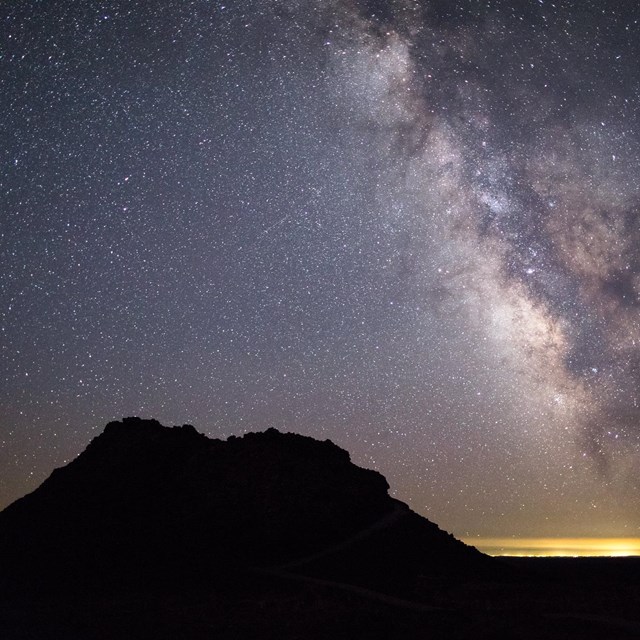
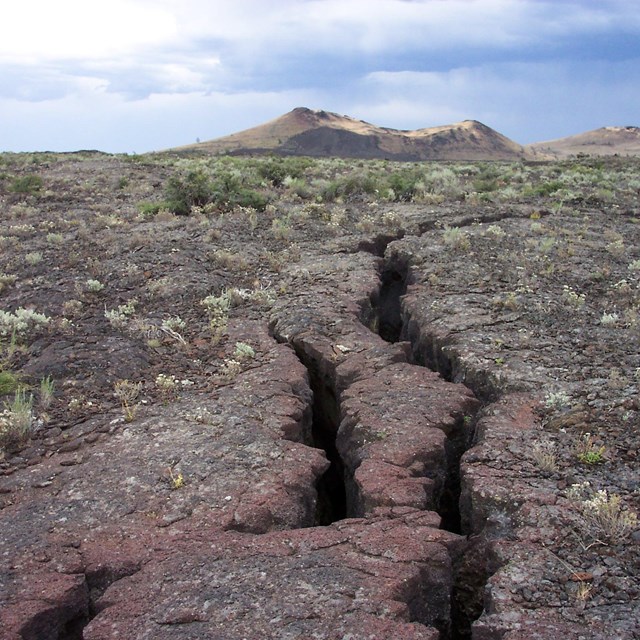
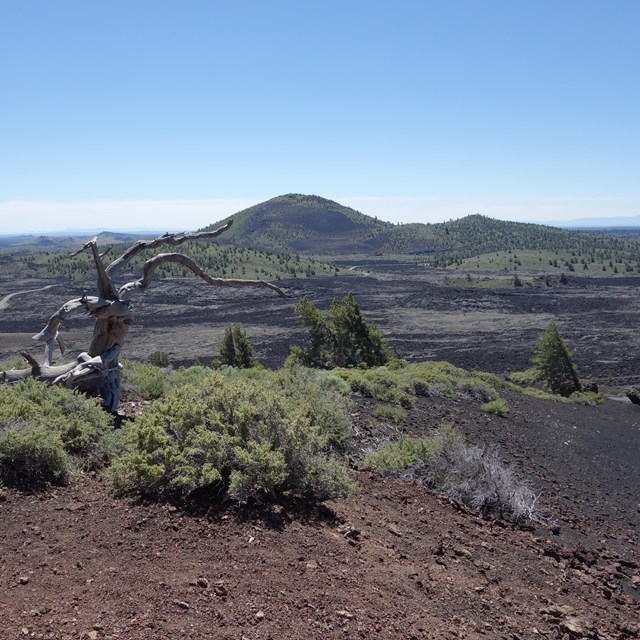
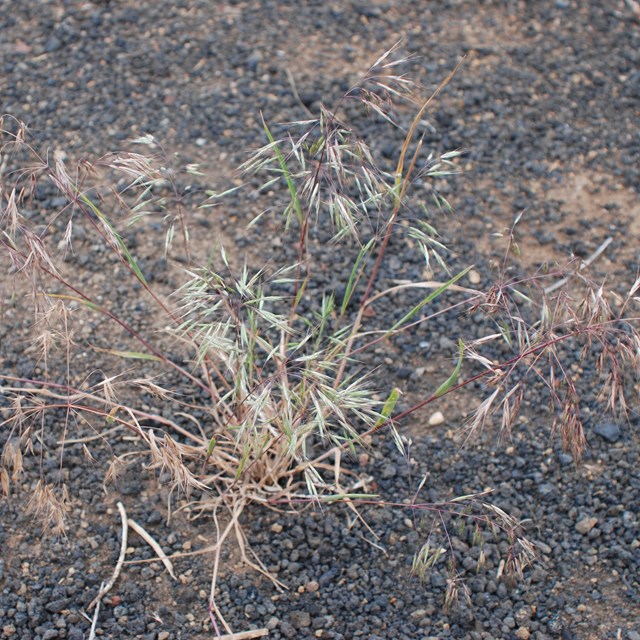
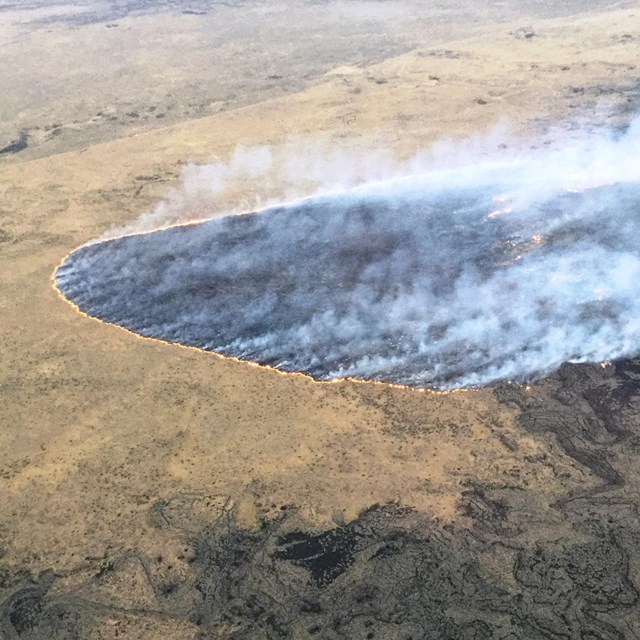
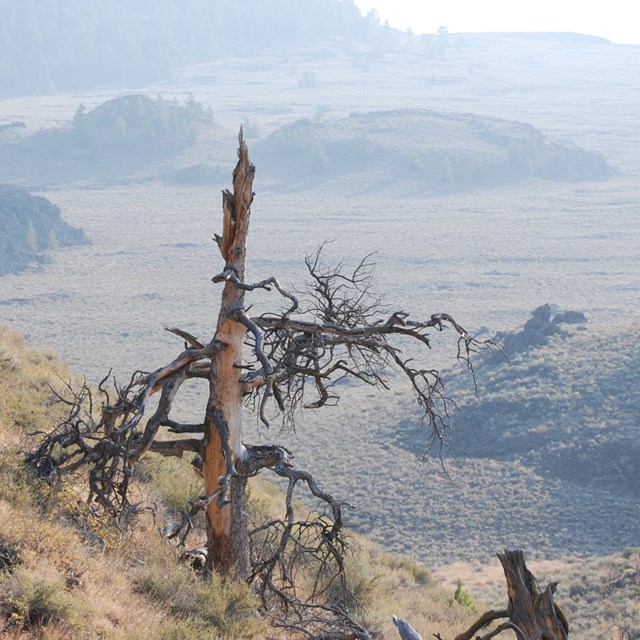
NPS Photo Although Craters of the Moon may appear lifeless and unchanging, the high desert ecosystem is continually changing. Weather, climatic shifts, fire and geologic processes, including volcanic eruptions, will continue to shape the landscape as they have for thousands of years. Settlement of the Snake River Plain brought about rapid environmental change, and as a result native animals such as bighorn sheep, bison, and the grizzly bear have disappeared from the area. More recently, human-caused factors such as air pollutants and invasive introduced species, have had an increasing impact on natural resources within the remote lava fields of the Great Rift. Clean, dry air traditionally afforded clear views of Great Rift landforms and the high mountain ranges surrounding the Snake River Plain and spectacular night skies. Emissions of air pollutants from distant sources are now being carried to the Snake River Plain and are beginning to obscure these views. Invasive, non-native plants and diseases have been introduced into North America from other continents. Lacking their normal complement of predators and disease, these plants and pathogens have spread widely across the Intermountain West, displacing native plants and reducing food for wildlife. The remote and undeveloped landscape of the Great Rift still provides an ideal place to study how various environmental factors affect desert ecosystems, and to help people predict what changes might take place in the future.
|
 |
|
Last updated: November 10, 2023