

NPS Photo Birds are some of the most noticeable animals at Craters of the Moon. To date, 223 species have been sighted on or over the monument and preserve! Birding at CratersBirdwatching is a fun activity for people of all ages and experience levels, and Craters has a unique collection of both residents and migrant species to look for! Craters ResidentsEven in the heat of a summer afternoon or the bitter cold of a January morning, birds can be found at Craters. Ravens, Clark's nutcrackers, and chickadees live here all year. Birds such as Brewer’s sparrow, sage thrasher, and sage grouse, are found in much higher numbers than in similar areas with more human activity. Limber pine, Rocky Mountain juniper, and Utah juniper stands growing in cinder gardens and kipuka areas offer habitat to woodpeckers, flycatchers, chickadees, nuthatches, warblers, sparrows, and finches. Even the seemingly barren lava flows provide shelter for mountain bluebirds, violet-green swallows, and rock wrens. Seasonal VisitorsCinder gardens and kipuka areas the midst of a vast sea of shrublands and barren lava flows are a beacon to many migrating birds, such as warblers, sparrows, and flycatchers, which reside here for brief periods in the spring and fall. During the long, cold winters that are characterized by blowing snow and temperatures well below freezing, birds are still found at Craters of the Moon. Mountain and arctic birds that stay for the winter include black and gray crowned rosy-finches, rough-legged hawks, northern shrikes, snow buntings, and in some years even snowy owls or gyrfalcons. Drawn to WaterSince water is a scarce resource in the high desert, birds are found in abundance where it does occur. Many small ponds and lakes formed by spring rains and snow melt provide temporary homes for a surprising number of waterbirds, such as ducks, geese, shorebirds, herons, and gulls. Even swans are sighted regularly during the spring migration north to Canada. A few small riparian areas and aspen clumps provide shelter for warblers, vireos, catbirds, orioles, woodpeckers, and more. Small marshes on the northern edge of the lava flow attract blackbirds, wrens, and herons. 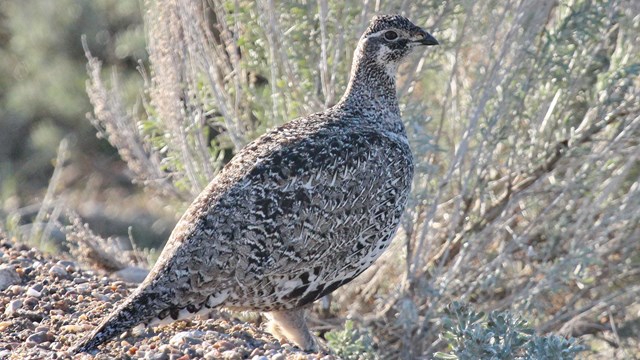
Greater Sage-Grouse
A species unique to the sagebrush steppe, famous for males' brilliant breeding displays. 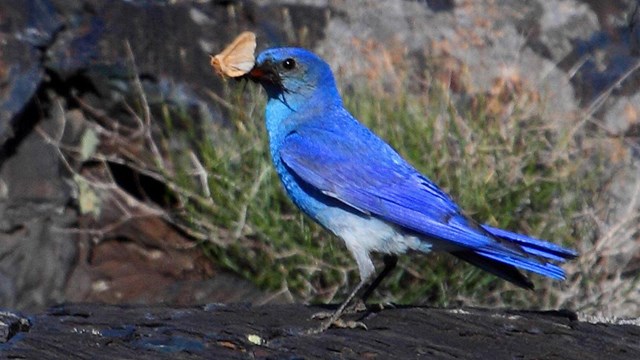
Mountain Bluebird
One of Craters' most vibrant and recognizable bird species. 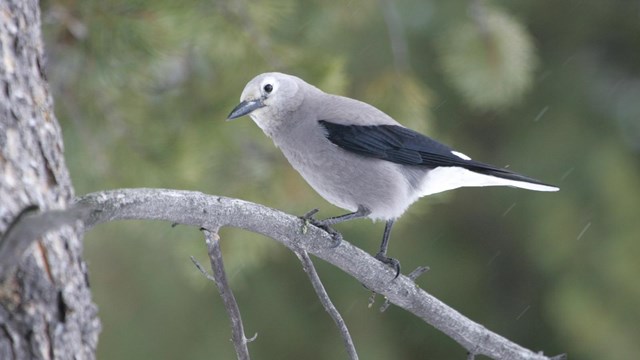
Clark's Nutcracker
A commonly-seen member of the jay family that collects and stores thousands of pine seeds each year. Select a Park:Select a Species Category (optional):
Search results will be displayed here.
|
 |
|
Last updated: January 6, 2023