




NPS Photo Situated in the northern Basin and Range province, the Reserve is a crossroads for many habitats, such as pinyon-juniper woodlands, aspen-riparian communities, sagebrush steppe, mountain mahogany woodlands and high elevation meadows. Extensive plant surveys have been conducted within the Reserve, documenting over 450 species. The most definitive inventory, Vascular Plants of City of Rocks: An Annotated Checklist, was published by Tom John in 1995. 
NPS Photo From March through October, blossoms and foliage of all colors beckon visitors to stop for a closer look. 100 common and showy herbaceous (soft-stemmed) wildflowers provides a sample of what can be seen while visiting the parks. There are 45 common woody plants; trees, shrubs and vines located in the park. 
NPS Photo Species Spotlight: Antelope Bitterbrush (Purshia tridentata) Antelope bitterbrush is one of the more abundant shrubs in the park, second only to sagebrush. Here, as in many other areas, it dominates communities immediately below pinyon-juniper woodlands, where the dry, open slopes and sandy, well-drained soils provide the perfect habitat. Bitterbush is a medium sized shrub with extensive branches and many small, three-lobed leaves, similar in appearance to sagebrush. These leaves will often roll inward as a protective response to heat, exposing the densely hairy underside to prevent water loss. Since bitterbrush is a member of the rose family, its blossoms exhibit a five-petal arrangement of numerous, small, cream-colored flowers that create a dramatic display in late spring. Aptly named, antelope bitterbrush provides critical winter browse for pronghorn, mule deer and other ungulates. The seeds are an important dietary staple for birds and small rodents. Land managers utilize bitterbrush to vegetate disturbed areas caused by erosion or wildfire. Many flowers are associated with bitterbrush, such as lupine, Arrowleaf Balsamroot, and Mule's Ear. 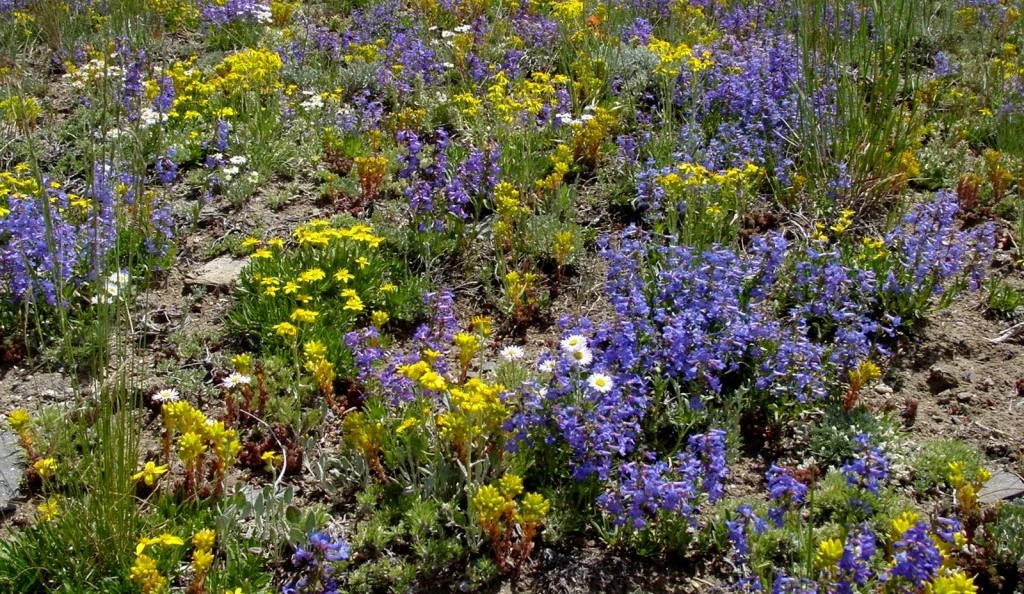
NPS Photo |
 |
|
Last updated: August 14, 2019