

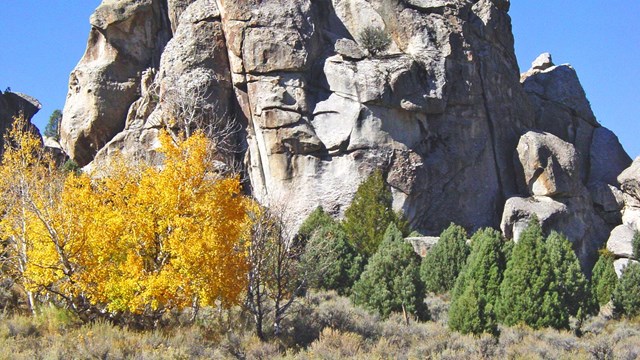
photo by Kris Hawkins City of Rocks, an extraordinary encirclement of granite rising out of the gently rolling sagebrush country in south-central Idaho, has attracted and intrigued people since they first entered this region. The Shoshone camped here as did the emigrants traveling along the California Trail. One of the reserve's most notable qualities is its large degree of biological diversity concentrated in a relatively small area. The great variety of textures, colors and shapes in the natural landscape contributes considerably to the reserve's scenic quality. City of Rocks was designated a national natural landmark in recognition of the nationally significant geological and scenic values of its rock formations. The landscape of City of Rocks has been sculpted from granite that was intruded into the crust during two widely spaced times. The granite that composes most of the spires is part of the 28 million year old Almo pluton. However, some of the spires are made of granite that is part of the 2.5 billion year old Green Creek Complex that contains some of the oldest rocks in the United States. The granite has eroded into a fascinating assortment of shapes and sizes. 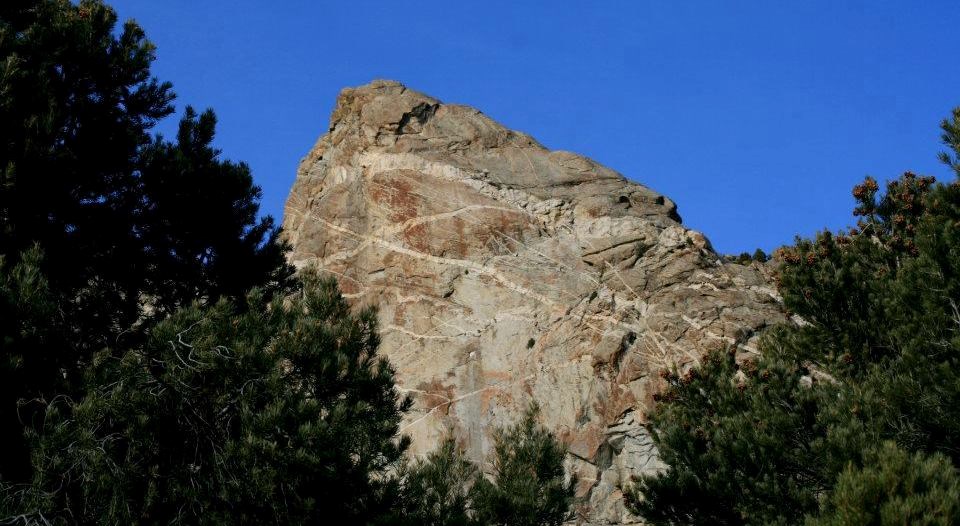
Photo by Kris Hawkins |
 |
|


Last updated: December 31, 2020