Skip to SearchSkip to NavigationSkip to BodySkip to Footer
National Park Service LogoU.S. Department of the InteriorNational Park ServiceNational Park Service
National Park Service:  U.S. Department of the InteriorNational Park Service Arrowhead
Cane River Creole National Historical Park tvancleave@nps
view map
text size: largest larger normal
printer friendly

A River and Its People

The Cane river region is home to a unique culture; the Creoles. The nearly three hundred year relationship between the Cane River Creoles and their homeland was shaped by the river. This relationship was tested by flood, drought, war, and numerous other obstacles. Luckily, their resiliency and resourcefulness has allowed the Creole culture to endure and thrive.

 
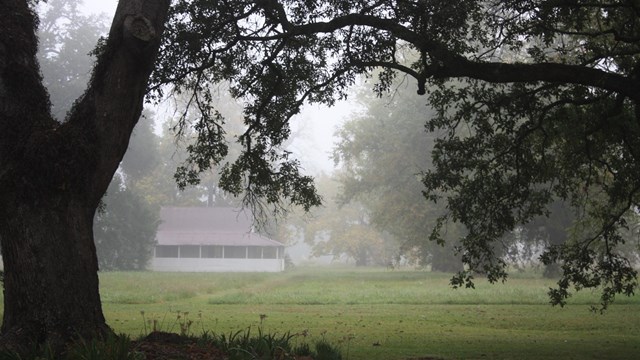
Oakland Main House

What Does it Mean to be Creole?

In colonial Louisiana the term "Creole" was used to indicate New World products derived from Old World stock, and could apply to people, architecture, or livestock. Regarding people, Creole historically referred to those born in Louisiana during the French and Spanish periods, regardless of their ethnicity. Today, as in the past, Creole transcends racial boundaries. It connects people to their colonial roots, be they descendants of European settlers, enslaved Africans, or those of mixed heritage, which may include African, French, Spanish, and American Indian influences.
 
Oakland and magnolia Plantations

Oakland and Magnolia Plantations

Oakland and Magnolia Plantations owe their physical integrity to the families that kept them intact for seven and eight generations. 

The French Prud'homme family began farming the land at Oakland in 1785. Magnolia traces its mid-18th century origin to the French LeComte family, and also to the German Hertzog family.

Descendents of the plantations' owners and descendents of the plantations' laborers remained on the land through periods of prosperity and depression, war and peace, and dramatic changes in governments, agriculture, technology, and labor systems. Today, descendents of the Prud'hommes and Lecomtes still own much of the historic acrerage that sits adjacent to the park.

 
Magnolia slave Cabins

African Mastery of a Strange Land


The skills and strengths of enslaved African-Americans are evident in the buildings they constructed on both Oakland and Magnolia Plantations. Descendants of many enslaved residents remained on the land as tenant farmers and sharecroppers. The vibrant African American communities in the Natchitoches region today trace more than two hundred years of cultural history to this fertile land surrounding the Cane River.


Write to

Cane River Creole National Historical Park
400 Rapides Drive
Natchitoches, LA 71457

E-mail Us

Phone

Oakland Plantation
(318) 356-8441

Fax

(318) 356-7285

Climate

The park is sunny and warm most of the year.  Summer: High humidity, and temperatures average 85 degrees fahrenheit. Winter: Generally mild, but can occasionally reach low 30's.
Visitors should be prepared with sunscreen, rain gear, etc.
Skip to SearchSkip to NavigationSkip to BodySkip to Footer

Last Updated: February 02, 2012 at 09:05 MST

CANCEL

You are exiting the National Park Service website

Thank you for visiting our site.

You will now be redirected to:

We hope your visit was informative and enjoyable.