
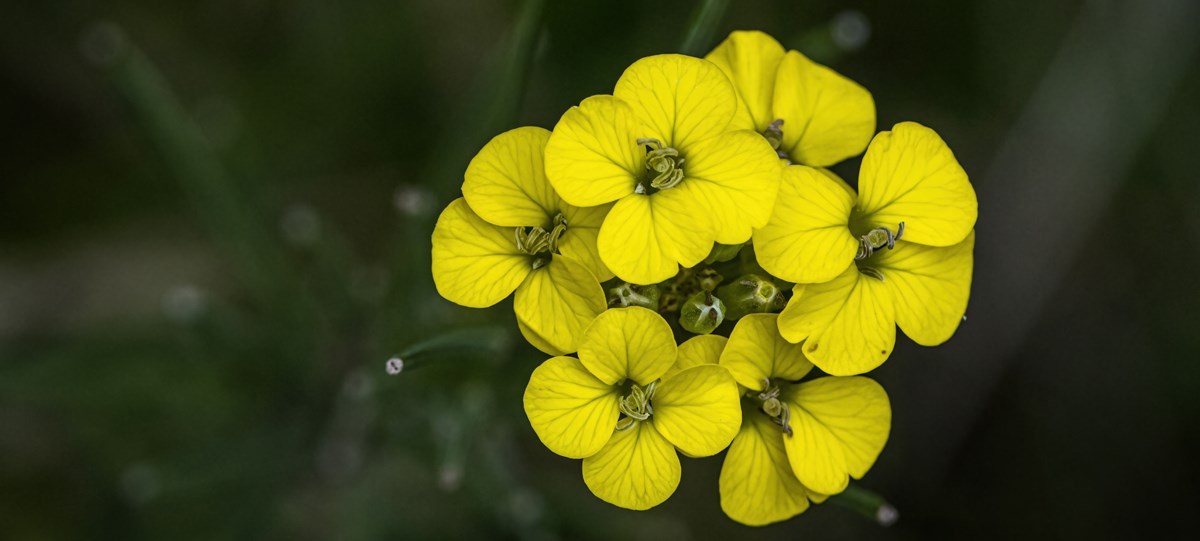
Western WallflowerErysimum capitatum var. purshii Common Names: Western Wallflower, Pursh's Wallflower General DescriptionA member of the mustard family, and a species which is very common through the drier regions of the western United States. You can recognize Western Wallflower by its densely clustered heads of bright yellow or orange four-petal flowers that each measure up to an inch long, and its erect, narrowly elongated fruit pods called siliques. The leaves are arranged around the stem in an alternating pattern.HabitatThe Western Wallflower has the greatest range distribution by elevation of any wildflower having been documented everywhere from 2,500 ft to 12,500 ft (800-4000m). Found in both the montane and alpine meadows of the Rocky Mountains and the desert canyons of the Great Basin and Colorado Plateau.Plant LoreIn Greek, Erysimum translates as “to help or save” in reference to the medicinal qualities of several species of these plants. Practitioners of European folk medicine have used wallflower poultices to relieve bronchial congestion and American Indians used dried leaves or seeds of Plains wallflower to make a tea for stomach cramps. Wallflowers are also important sources of food for wildlife, including caterpillars.Further ReadingU.S. Forest Service - Western Wallflower |
Last updated: April 30, 2023