




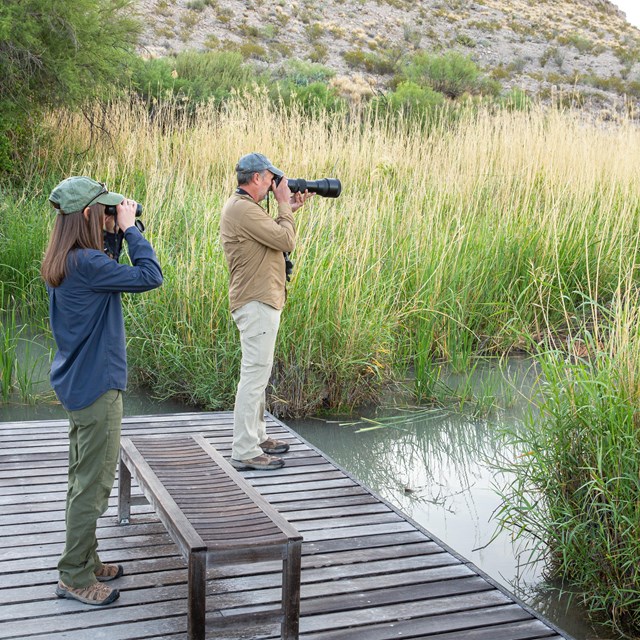
NPS/CA Hoyt Birding HotspotsWater is one of the primary resources needed to support birds in this desert park. In an otherwise arid landscape, the presence of seeps, springs and the river greatly concentrates bird life. The Rio Grande and its floodplain is the richest habitat for birds in the park. While some species specialize in dry habitats such as desert and grasslands, 75% of all bird sightings have been near water. The following locations are recommended for bird watching due either to their proximity to water, or based on unique habitat.
NPS/CA Hoyt Rio Grande VillageThe riparian corridor at Rio Grande Village offers some of the best year-round birding in the park. The principal locations to search include the Nature Trail in the southeast corner of the campground; the campground proper and mesquite thickets just across the roadway to the north; the cottonwood trees and floodplain behind the store; and the Daniels Ranch district which includes cottonwood groves, silt ponds and access to the river. 305 species have been reported for this area!
NPS/CA Hoyt and R. Negele 
NPS/CA Hoyt Chisos MountainsThe pine-oak-juniper woodlands of the Chisos Mountains attract many species of birds that would not otherwise be found in Big Bend. Strolling through the campground or hiking the moderately difficult Window Trail will reward you with a variety of birds. Birders in search of highland species should hike the trails up into the Chisos to destinations such as Laguna Meadow, and Boulder Meadow. In late spring and summer, a strenuous hike up to Boot Canyon will typically yield the Colima Warbler, one of Big Bend's specialty birds. 312 species of birds have been reported in the Chisos Mountains!
NPS/CA Hoyt and R. Negele 
NPS/CA Hoyt Cottonwood CampgroundBirding the campground and nearby river corridor yields a diverse array of habitats from cottonwood trees to mesquite thickets. Take a walk down to the river and scan the banks for wading and shorebirds in the winter and during migration. In late fall and winter, be sure to check out the weedy fields around Castolon and along the road to Santa Elena Canyon, where you are sure to spot numerous sparrows. 248 species of birds have been reported for this area!
NPS/CA Hoyt and R. Negele 
NPS/C. Ballou Dugout WellsThe spring and associated windmill create a year-round wet spot surrounded by desert. Picnic tables provide shaded places to sit and scan the surrounding cottonwoods and shrubs. This location can be particularly productive during spring migration. Dawn and dusk might even yield sightings of coyote, javelina, deer and other desert wildlife. 195 species have been reported for this location.
NPS/CA Hoyt and R. Negele 
NPS/CA Hoyt Sam Nail RanchFor birders who like to find a bench and sit and wait for feathered friends to happen by, Sam Nail Ranch is not to be missed. The combination of water provided by a windmill and plenty of trees makes this desert oasis an exellent location for birding. Nearby Cottonwood Creek sometimes holds water and a walk down the drainage will often yield unexpected species, especially during spring migration. 188 species have been reported for this area.
NPS/CA Hoyt, L. Benavidez and R. Negele 
NPS/T. Ehrman Blue CreekThis is one of the better bird watching places in the foothills habitat. Beginning at the historic Homer Wilson Ranch, follow the trail to the north, towards the mountains for a couple of miles. The turnaround point is up to you, but along the way you notice the change from desert, to grassland habitat, to forested slopes. In the spring and summer this is a great location in which to find another Big Bend specialty, the Lucifer Hummingbird. 135 species have been reported for this area.
NPS/CA Hoyt, L. Benavidez, R. Negele, and C. Negele
Visit our keyboard shortcuts docs for details
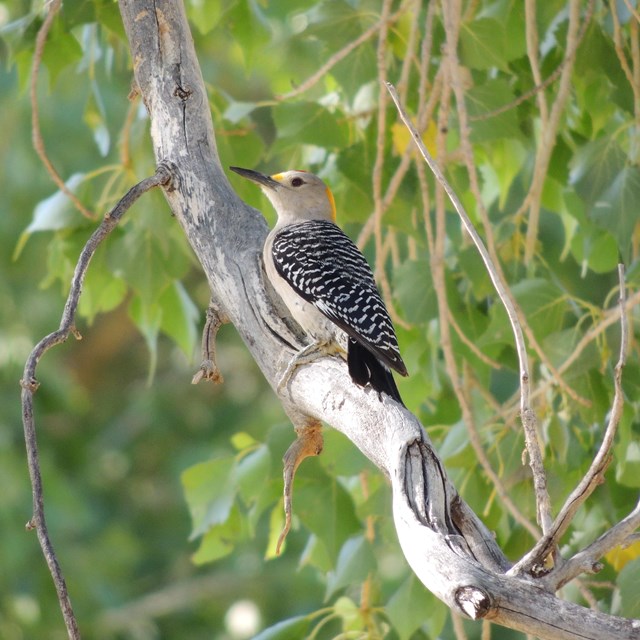
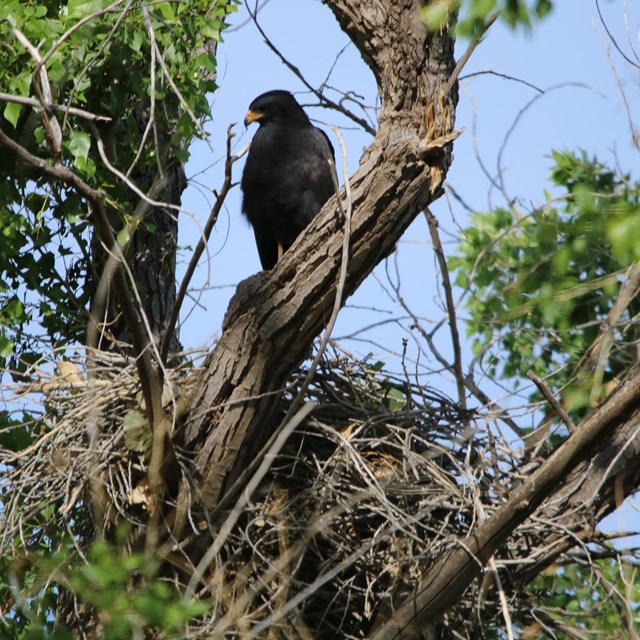
Big Bend National Park is a great place to observe a wide variety of bird life. With over 450 bird species documented in the park, there is always something new to discover. Bird Information
|
 |
|
Last updated: June 25, 2020