National Park Service LogoU.S. Department of the InteriorNational Park ServiceNational Park Service
National Park Service:  U.S. Department of the InteriorNational Park Service Arrowhead
Big Bend National ParkThe Pine Canyon pour-off can become a 200 foot waterfall after summer rains
view map
text size:largestlargernormal
printer friendly
Big Bend National Park
Hiking the Marufo Vega trail
The Rio Grande as seen from the Marufo Vega Trail
NPS/Big Bend National Park
The Rio Grande as seen from the Marufo Vega Trail

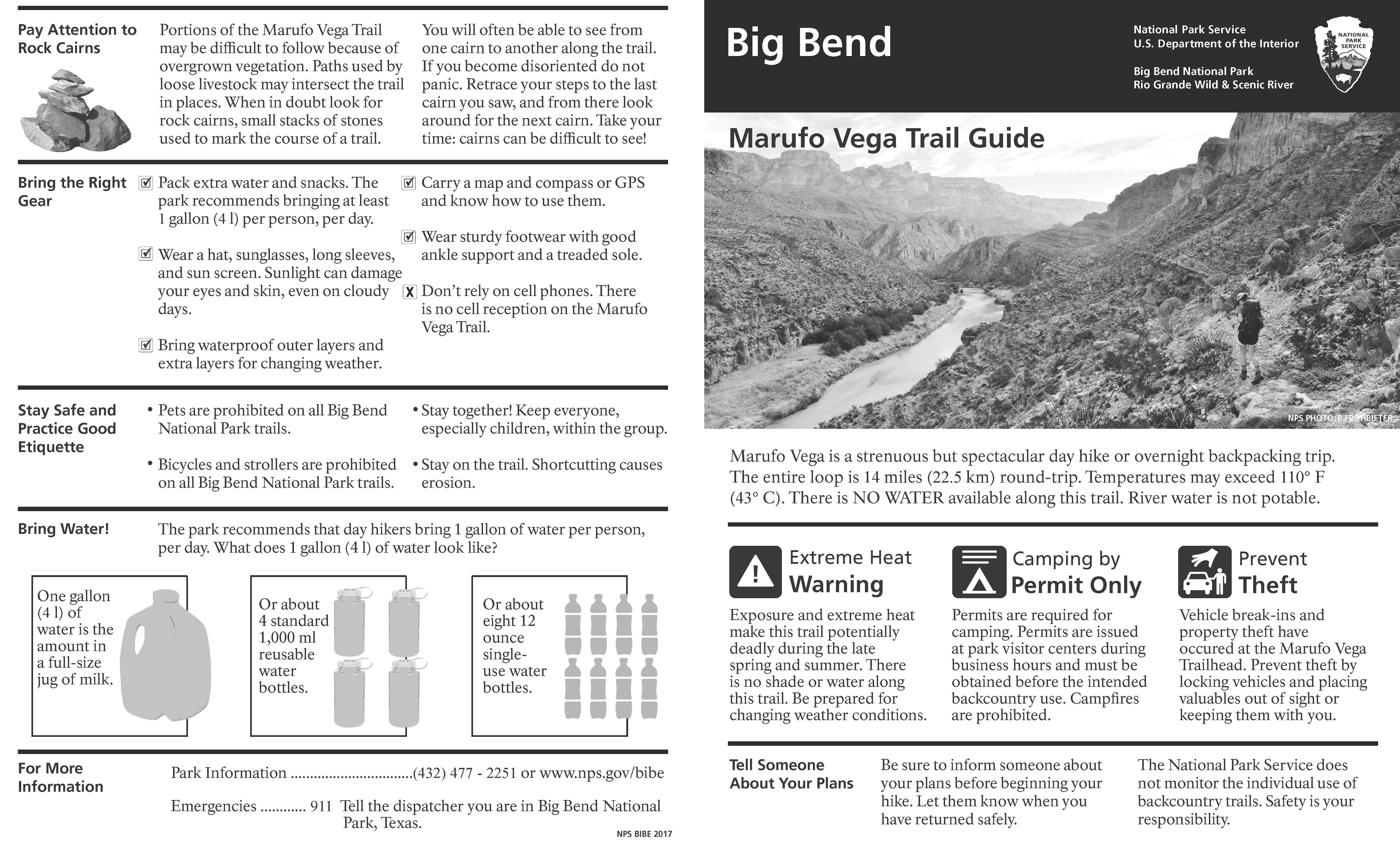
This is a strenuous, but spectacular day hike or overnight backpacking trip. The entire loop is a 14 mile round-trip. Temperatures may exceed 100°F. There IS NO WATER available along this trail—River water is not potable.

Once walked by the trail’s namesake, Gregorio Marufo, who grazed goats along the river, the route is poorly defined and overgrown with desert vegetation. Nevertheless, hikers use the cross country section today to join two ends of the popular desert trail to make a loop.

A hot hike
High daytime temperatures (as high as 110ºF during May!) and the absence of any drinking water or shade along the way make this trail and any desert hike potentially deadly during the late spring and summer. Wear a hat, take along plenty of water and salty snacks, and start early when temperatures are cooler.

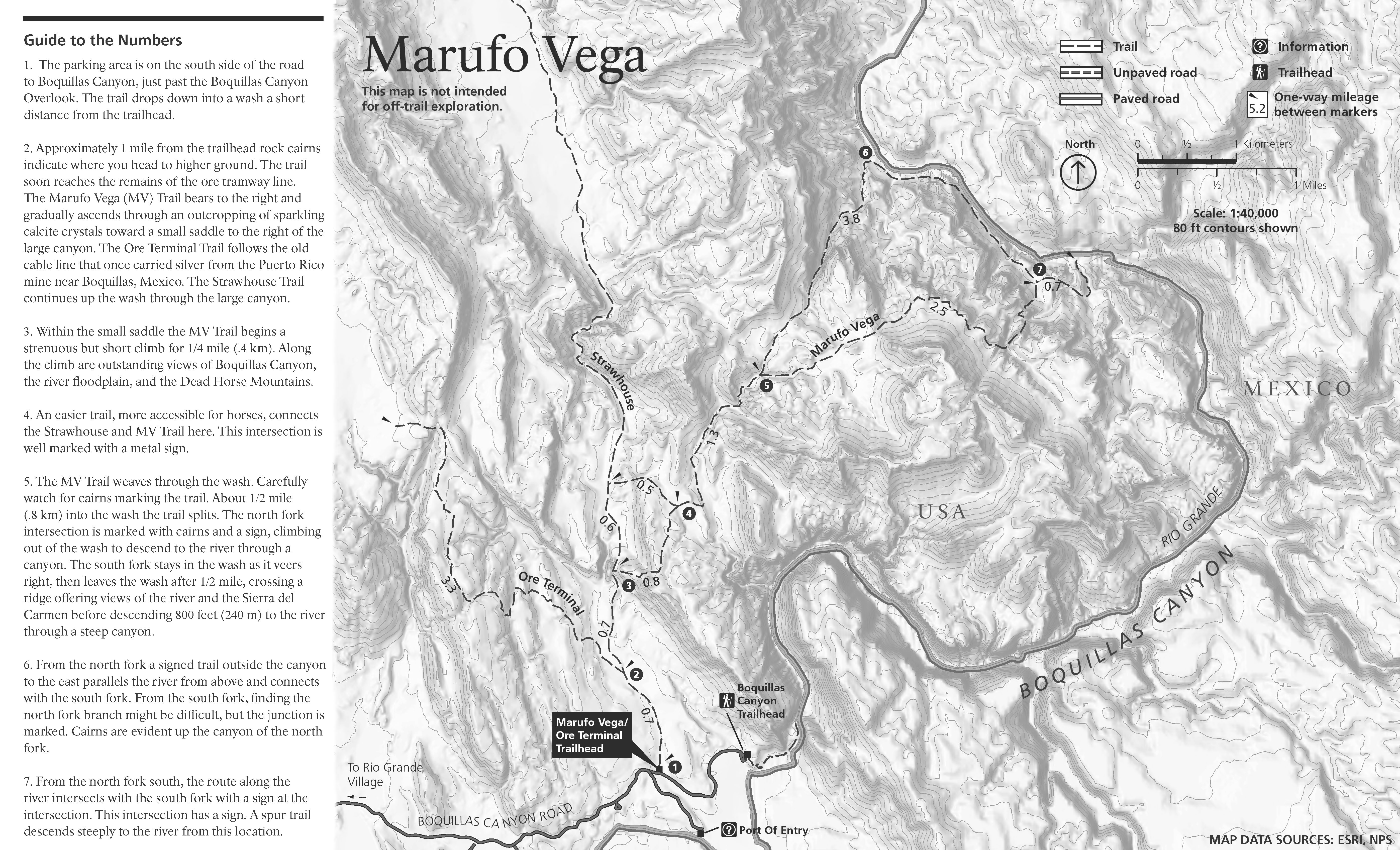
The basic online map of the Marufo Vega trail is no longer available as a free download. Due to the difficult nature of this hike and environmental dangers in the low desert, hikers are strongly advised to purchase the detailed topographic map of this trail from the park bookstore before heading out as the trail can be confusing and overgrown.

A high quality topographic map is currently available from the Big Bend Natural History Association bookstore. 

Some maps like the Marufo Vega trail are not listed on the online store, but are available to order by phone.

Tornillo Creek Bridge and Mission 66 Sign  

Did You Know?
As part of the Mission 66 development program, Big Bend National Park received $14 million dollars for improvements between 1958 and 1965. One Texas writer felt that these developments, such as paved roads and campgrounds, "will not sissify nor citify the wilderness...."
more...

Last Updated: April 21, 2009 at 09:39 EST