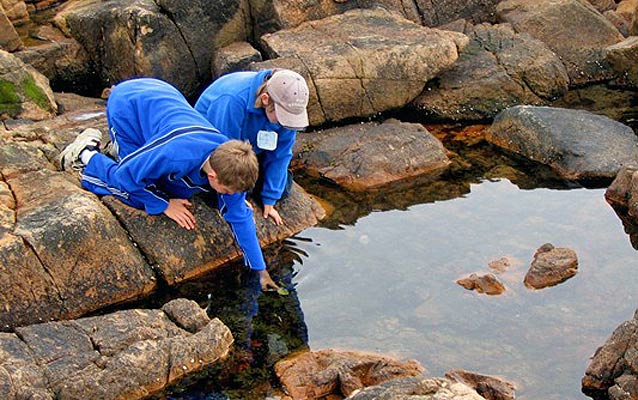
Acadia National Park protects around 60 miles of shoreline. There are many different types of shorelines including sand beaches, mudflats, pebbly or cobblestone shores, and big rocky coastlines. On this trip we'll be exploring a sheltered part of Acadia's shoreline called Otter Cove. Students discover who lives in the cove and how everyone and everything is connected in this shoreline habitat. Many animals call the shoreline home, but there are lots of challenges or stresses they must overcome to survive here. Fun visual metaphors help students understand the challenges in this ecosystem and the many adaptations that are a result.
Tides, sediments, animal and algae characteristics, and life cycle stages are observed and explained during hands-on group explorations. Tips for shoreline safety and etiquette are demonstrated and safe collection protocols are practiced. Students learn skills to safely explore the intertidal zone with the least impact to the environment.