



|
Canyoneering is an outdoor activity that combines route finding, rappelling, problem solving, swimming, and hiking. Zion National Park has become one of the premier places in the country to participate in this exciting activity. 
Canyoneering Permits
The Subway, the Narrows top-down, and all technical canyoneering trips require permits. Learn about reservations and permits here. 
Canyoneering Safety
Don't get carried away! Bring proper equipment, clothing, and skills for your route. 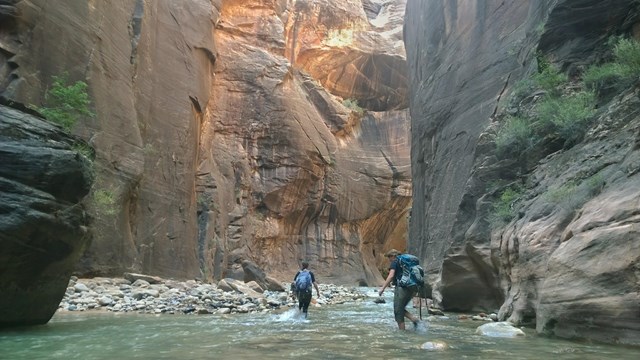
The Narrows
Know the flow before you go. Water can be fast, cold, and deep. 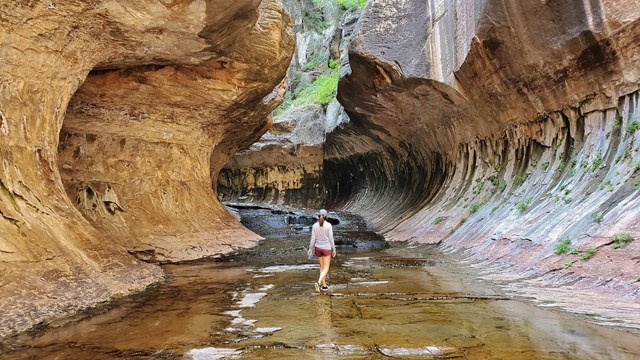
The Subway
Every hiker needs a permit to visit the Left Fork of North Creek (the Subway). 
Wilderness Regulations
Help keep Zion's backcountry beautiful. Follow the rules and regulations of wilderness areas. Common RoutesA short trip into the lower end of the Narrows is an outstanding way to receive an introduction to the slot canyons of the park without ropes or other special equipment. For those with expertise and experience, the Subway and Orderville Canyon offer route finding, swimming, and short rappels.Over 124,400 acres of Zion are designated wilderness. Please help preserve and protect these beautiful areas for future generations by following Leave No Trace principles and park regulations. 
Wilderness Information
Planning and permits for backpacking, canyoneering, and other Wilderness trips. 
Wilderness Transportation
Learn about options for reaching trailheads in Wilderness areas. |
Last updated: January 26, 2026