National Park Service LogoU.S. Department of the InteriorNational Park ServiceNational Park Service
National Park Service:  U.S. Department of the InteriorNational Park Service Arrowhead
Zion National ParkYucca baccata (Datil Yucca)
view map
text size:largestlargernormal
printer friendly
Zion National Park
Backpacking

Plan Carefully
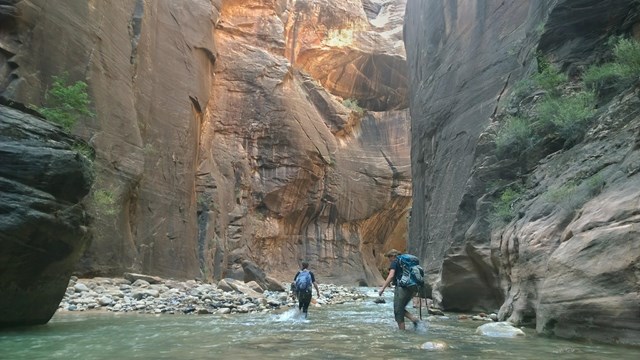
Zion National Park preserves a spectacular network of colorful canyons, forested mesas, and fascinating deserts. Trips into the Zion backcountry, even short ones, require advance planning. Summer weather is hot and dry, winter can be cold and icy, narrow canyons are subject to flash flooding, and there are cliffs everywhere. Many hikes involve walking in water. River flows vary greatly depending on time of year and weather conditions. Plan your trip carefully. Rangers at the Kolob Canyons and Zion Canyon Visitor Centers can help. Check the National Weather Service forecast before any trip, but especially before entering any canyon. It is posted daily in both visitor centers.

When planning your time, consider your interests. There is no "one best trail." Use the the 2008 Backcountry Planner, guidebooks, and topographic maps to plan "your best way" to make the most of your visit in the time you have.

Permits
Permits are required for overnight backpacking trips. Permits are issued at both visitor centers the day before or the day of your trip. Narrows permits are issued one day in advance of your trip. For backcountry desk opening times, please check Walk-in Permits.

Cost:
$10.00 - 1-2 people
$15.00 - 3-7 people
$20.00 - 8-12 people

Group Size
Large groups increase impacts on the backcountry.Group size is limited to a maximum of 12 people sharing the same affiliation (school, club, scout troop, family, friends) in the same drainage, route, or backcountry trail on the same day. The group size for all canyoneering trips other than the Narrows, Left Fork, Pine Creek, Orderville, and Keyhole Canyons is six people per day. This is strictly enforced; violators will be cited.

Camping Areas
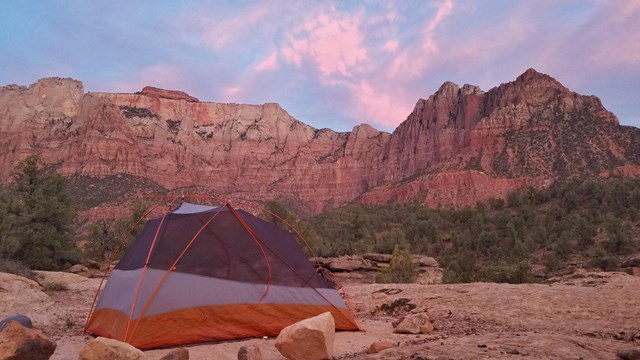
Camp in designated areas or assigned campsites and out of sight and sound of trails to preserve the feeling of wilderness. Camp at least 1/4 mile from springs. In narrow canyons, camp above the high water mark and at least 100 feet from water wherever possible. Springs and watercourses are easily impacted and are used by wild creatures and other hikers.

Be Prepared
All narrow canyons are potentially hazardous. Flash floods, cold water, and strong currents present real dangers that can be life threatening. Your safety depends on your own good judgment, adequate preparation, and constant attention. By entering a narrow canyon, you are assuming a risk. Your safety is your responsibility.

Pre-Trip Checklist
•Obtain a permit
•Tell someone where you are going and when  you'll be back
•Suitable map
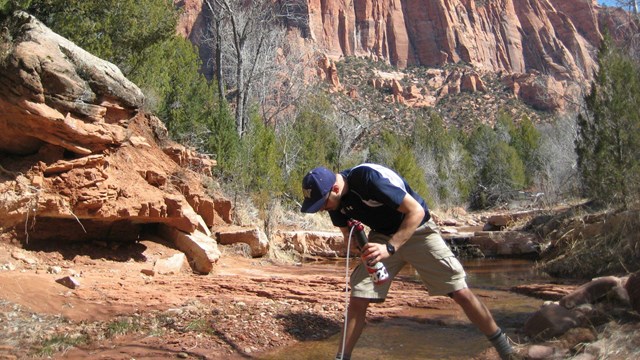
•Water: one gallon per person per day
•Food
•Rain gear and extra clothing
•Sunglasses, hat, and sunscreen
•First aid kit
•Flashlight
•Shelter: tent, tarp, or bivy sack

Click here to see the 2008 Backcountry Planner

Zion Canyon Shuttle System
Travel in Zion Canyon from early April through late October is by shuttle bus only. The buses have room for backpacks, climbing gear, two bicycles, and other equipment. Buses will run often throughout the day. You may get on and off as often as you like. The buses are free. Shuttles begin at the Zion Canyon Visitor Center and stop at Zion Museum (open in 2002 with new exhibits), Canyon Junction, Court of the Patriarchs, Zion Lodge, The Grotto, Weeping Rock, Big Bend, and Temple of Sinawava. Check the schedule at the Zion Canyon Visitor Center. If your hike ends at a trailhead in Zion Canyon, plan your trip so you will not miss the last shuttle bus of the day. Only the Zion Canyon Scenic Drive will be closed to private vehicles, all other roads in the park remain open.
more...


Return to Backcountry Main Page

Pa'rus Trail  

Did You Know?
Zion National Park has a trail where pets are allowed. The Pa'rus Trail winds along the Virgin River for 2 miles at the entrance to Zion Canyon and is also a bicycle path
more...

Last Updated: June 05, 2008 at 13:13 EST