
|
For thousands of years Alaska's indigenous people traveled extensively over the landscape, making a living through hunting, fishing, and gathering activities. In modern times, these activities became known collectively as subsistence, and both Alaska Natives and local rural users live off the land, relying on fish, wildlife and other wild resources. Alaska's abundance of natural resources forms the backbone of life and economy for many residents of the state. In Yukon-Charley Rivers National Preserve, local users are busy all year round, with nature's bounty providing sustenance for families living in the surrounding areas. Subsistence users have a unique connection to the land fostered by tradition and lifelong experience.
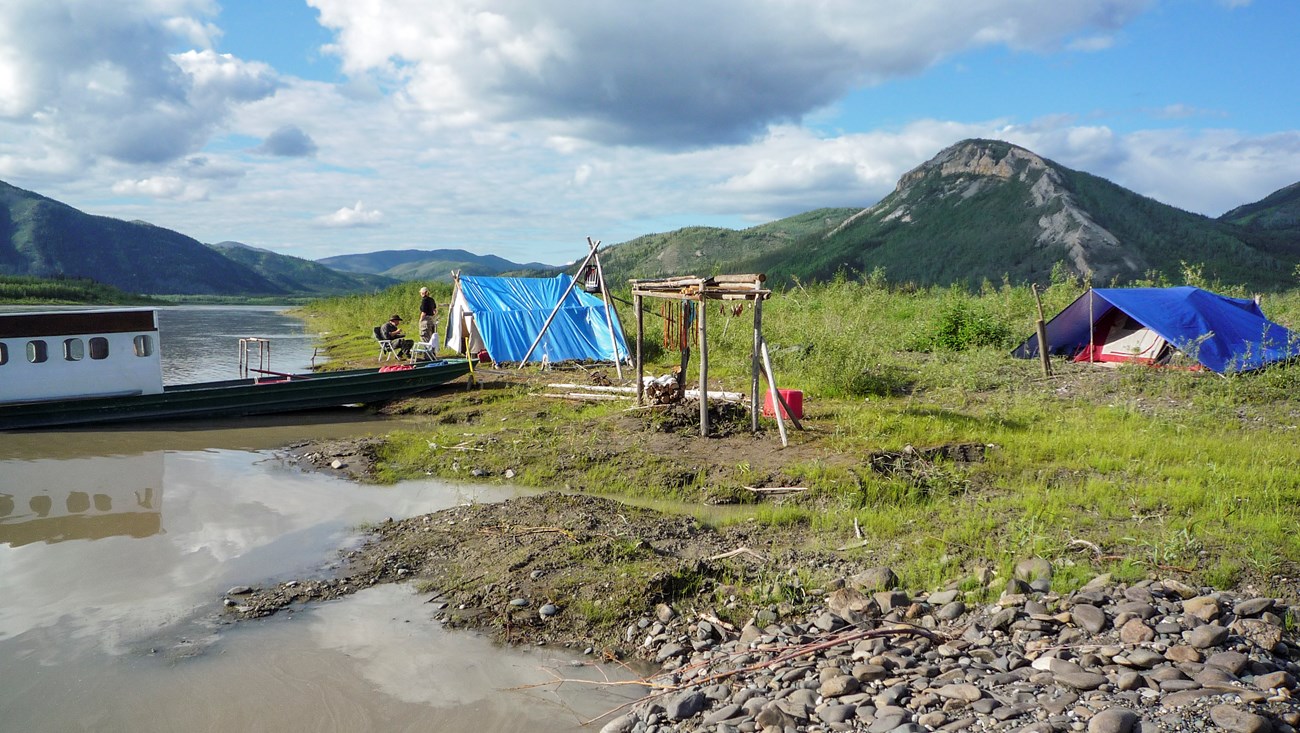
NPS/Josh Spice First Alaskans When Europeans first visited Alaska's shores, all the people they met were engaged in subsistence lifeways. As the population grew through the territorial days, many new and conflicting demands were placed on Alaska's natural and cultural resources. Development of various kinds, like the harvest of marine and inland mammals, commercial fisheries, mining operations, agriculture, the development of military bases, and the establishment of cities and towns impacted local resources and subsistence activities. By the time Alaska gained statehood in 1959, subsistence patterns in some of Alaska's more populated areas were greatly diminished. Subsistence Legislation In the years that followed, the pace of change accelerated and development abounded in Alaska's remote areas. In response, rural residents began to organize, and before long they petitioned government officials in hopes of retaining some protection for their land base and their subsistence way of life. In deliberations leading to the Alaska Native Claims Settlement Act of 1971, the U.S. Congress acknowledged the importance of subsistence hunting and fishing to Alaska Natives but provided no specific protection on federal public lands. In 1980, Congress formally recognized the social and cultural importance of protecting subsistence for both Native and non-Native rural residents when it passed the Alaska National Interest Lands Conservation Act (ANILCA). This legislation created millions of acres of new national park and national preserve lands in Alaska and helped to preserve subsistence use and a unique connection to the land fostered by tradition and lifelong experience. The new law defined subsistence as:
When Representative Morris Udall and others were writing ANILCA during the 1970s, they recognized the importance of people's connections to the land and their need to harvest subsistence resources. As a result, the architects of the lands act included Title VIII to protect subsistence needs for rural Alaskans. The wording of Title VIII reveals the unusual conditions of life in Alaska's rural areas: The Congress finds and declares that -

NPS Preserving Traditions In Yukon-Charley Rivers National Preserve subsistence users and sport hunters and fishers coexist. Local residents from Eagle, Eagle Village, Circle and Central, as well as those living on remote homesteads, enter the Preserve to hunt moose and caribou; to trap lynx, marten and wolf; and to catch salmon and other northern fish species. Visitors to the Preserve will likely see fish wheels floating near the river's edge and local residents boating to their favorite hunting areas. Living so far from major population centers makes these seasonal harvests important not only to put food on the table but also as a means of maintaining a relationship with the land and traditional ways. 
Fishwheels on the Yukon: A Timeless Piece of Technology The mighty Yukon River and its drainages have provided subsistence resources to all people who have passed through its stretches and to those who had the desire to stay. Resource harvesting equipment has changed throughout the years, but one type of technology that has persevered is the fishwheel. Learn more... |
Last updated: June 19, 2018