
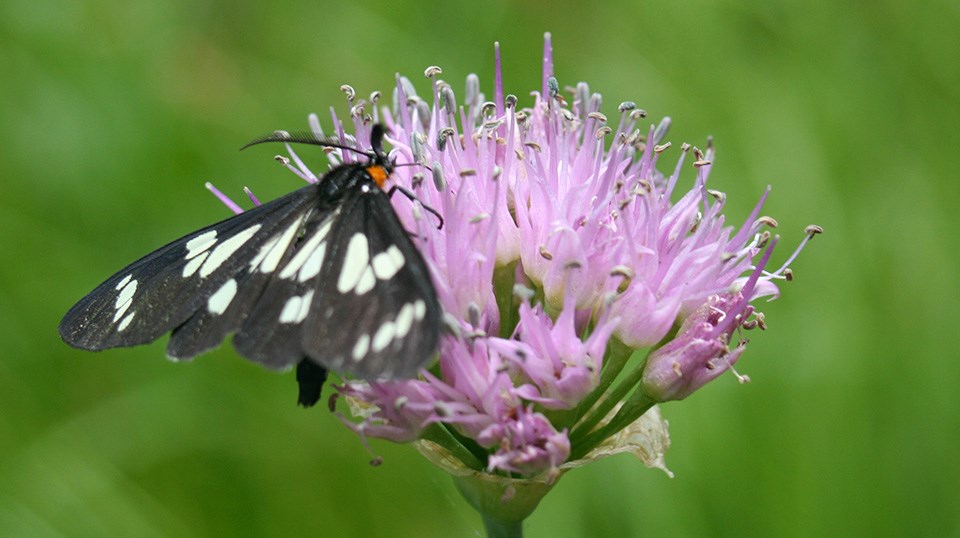

Jeff Holmquist/ UC From a bug’s eye view, Yosemite National Park is a good home for creeping, crawling, buzzing creatures to live, breed, and feed. Arthropods thrive here in high concentrations, outnumbering all other animals by the thousands. They are responsible, in part, for the overall biological diversity of the region’s native plants and wildlife. From a human’s eye view, some arthropods may be viewed as pests that might be parasitic, transmit disease, damage structures, or destroy agricultural produce. Humans do value some of these small creatures, however, for their products, like honey and silk. Insectivores, those that feed on other insects, may seem especially useful to people. Yosemite’s dragonflies, for instance, eat mosquitoes that tend to bother hikers. (Mosquitoes, which breed near standing water including snow melt, are noticeable especially in spring.) From a scientist’s perspective, arthropods are the most diverse group of animal on Earth with more than 1 million species–-more than half of all living organisms–-and 30,000 species residing in California. Arthropoda includes insects, spiders, scorpions, millipedes, ticks, crustaceans, and many other animals. The important role of insects is clear to scientists. Bees, flies, and other insects function as pollinators; others, such as beetles, break down dead plant and animal matter; still others, such as mosquitoes, offer themselves as food for bats and other hungry creatures. 
Jeff Holmquist / UC Where are all these insects? Entomologists have found that lower and wetter sites have higher insect abundances than higher and drier sites. Insects and other arthropods found in a sample from a Yosemite meadow might include ants (often the most abundant group), as well as mites, beetles, leafhoppers, flies, spiders, wasps, bristletails, true bugs, grasshoppers, caddisflies, moths, butterflies, and lacewings. One insect evades scientists statewide: the valley elderberry longhorn beetle, noted in Yosemite and the surrounding area, and listed as federally threatened. While new insect species, believed to exist nowhere else in the world, have been recently discovered in caves within Yosemite. Insects, in summary, remain one of the most important animal groups being studied by Yosemite’s scientists. Visitors, even those that do not naturally appreciate insects, can realize that the fragrant flowers they admire or the songbirds seen in quick flight might not be here if it weren’t for the thousands of insects supporting them. Insects serve as the base of the biological chain in terms of number and importance. More Information
References
Hatfield, R.G. & LeBuhn, G. (2007, August). Patch and Landscape Factors Shape Community Assemblage of Bumble Bees, Bombus Spp. (Hymenoptera: Apidae), in Montane Meadows, Biological Conservation. 139: 150-158. Holmquist, J. & Schmidt-Gengenbach, J. (2009, March). Interim Report: The Tuolumne River Below Hetch Hetchy Reservoir: Characterization of the Benthic Macroinvertebrate Assemblage and Response to an Experimental Spring Flood Event. University of California White Mountain Research Station report prepared for Yosemite National Park. 78 pp. [1.7 MB PDF] Holmquist, J. & Schmidt-Gengenbach, J. (2008, April). Effects of Experimental Trampling Addition and Reduction on Vegetation, Soils, and Invertebrates and Assessment of Current Conditions in Tuolumne Meadows. University of California White Mountain Research Station report prepared for Yosemite National Park. 87 pp. [3.8 MB PDF] Stillwater Sciences (2008, September). The Merced River Alliance Project: Final Report, Volume II: Biological Monitoring and Assessment. Report prepared for the East Merced Resource Conservation District in Merced, Calif., and the State Water Resources Control Board in Sacramento, Calif. 296 pp. [10 MB PDF] |
Last updated: August 21, 2019