National Park Service LogoU.S. Department of the InteriorNational Park ServiceNational Park Service
National Park Service:  U.S. Department of the InteriorNational Park Service Arrowhead
Yellowstone National ParkSeeing the park from horseback gives visitors a chance to cover ground off the beaten path.
view map
text size:largestlargernormal
printer friendly
Yellowstone National Park
Rubber Boa
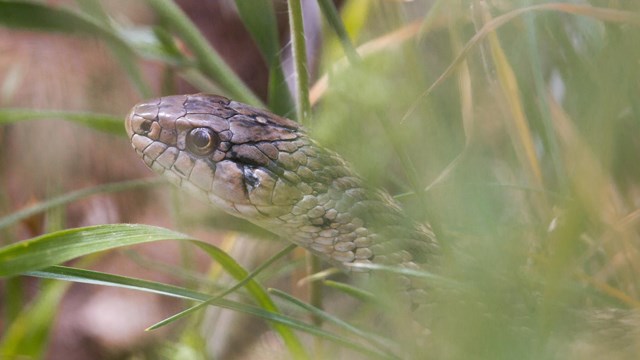
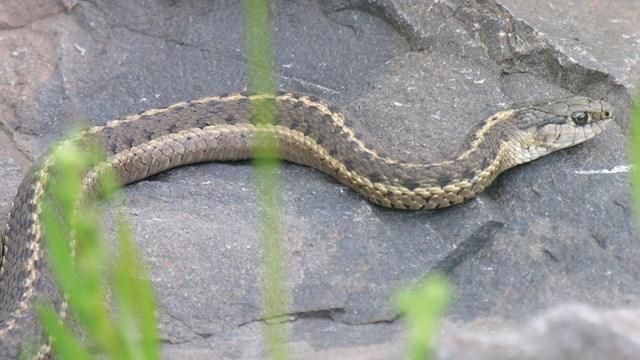
A rubber boa snake
Scientific name: Charina bottae

Identification
  • Infrequently encountered in Yellowstone, perhaps due to its nocturnal and burrowing habits.
  • One of two species of snakes in the United States related to tropical boa constrictors and pythons.
  • Maximum length of 24 inches.
  • Back is gray or greenish-brown, belly is lemon yellow; scales are small and smooth, making it almost velvety to the touch.
Habitat and Behavior
  • Eats rodents.
  • May spend a great deal of time partially buried under leaves and soil, and in rodent burrows.
  • Usually found in rocky areas near streams or rivers, with shrubs or trees nearby.
  • Recent sightings have occurred in the Bechler region and Gibbon Meadows.
Seventh Cavalry Ensignia Pin.  

Did You Know?
Prior to the establishment of the National Park Service, the U.S. Army protected Yellowstone between 1886 and 1918. Fort Yellowstone was established at Mammoth Hot Springs for that purpose.

Last Updated: June 11, 2009 at 10:43 EST