National Park Service LogoU.S. Department of the InteriorNational Park ServiceNational Park Service
National Park Service:  U.S. Department of the InteriorNational Park Service Arrowhead
Yellowstone National ParkRoosevelt Arch is at the park's North Entrance
view map
text size:largestlargernormal
printer friendly
Yellowstone National Park
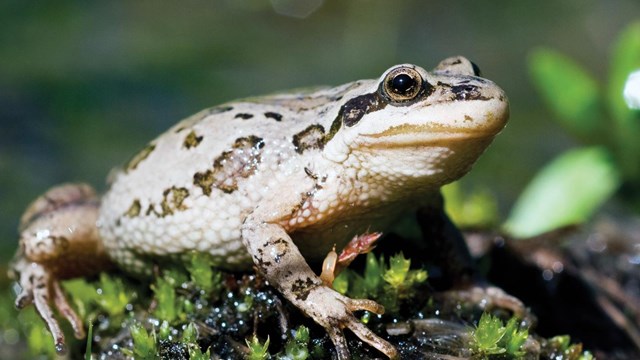
Columbia Spotted Frog
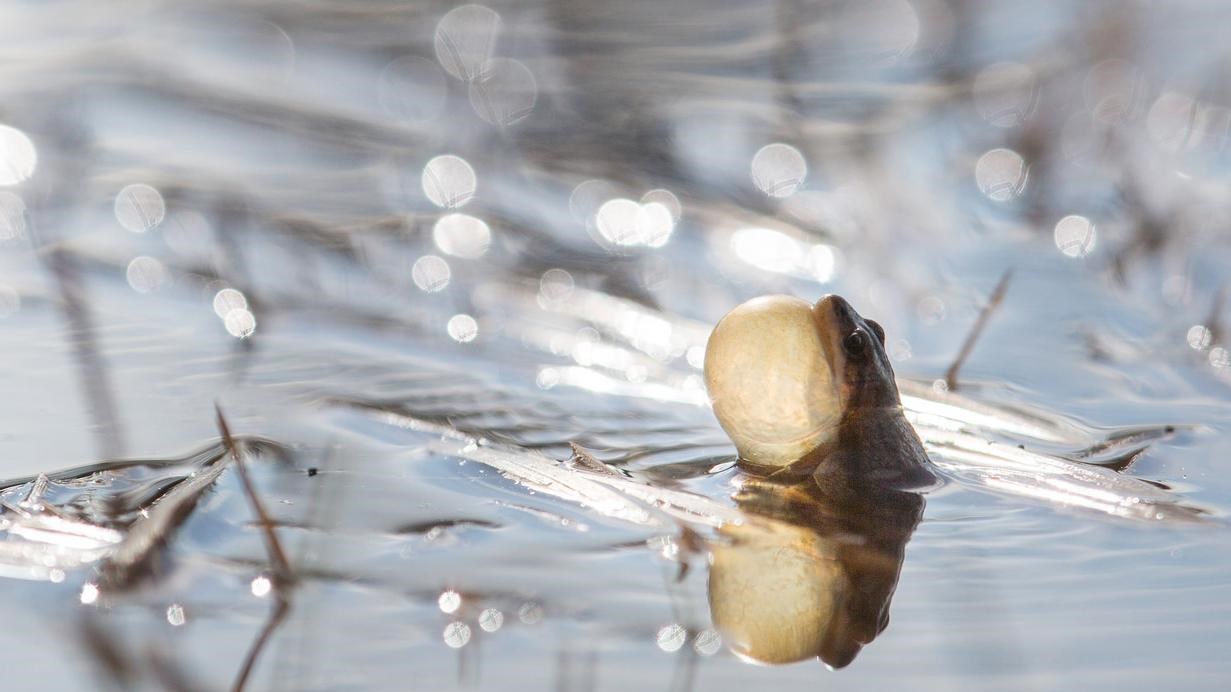
A Columbia Spotted Frog swimming
Scientific name: Rana petiosa

Identification
  • Abundant and best known amphibian in Yellowstone.
  • Maximum length is 3.2 inches; newly metamorphosed juveniles are less than one inch long.
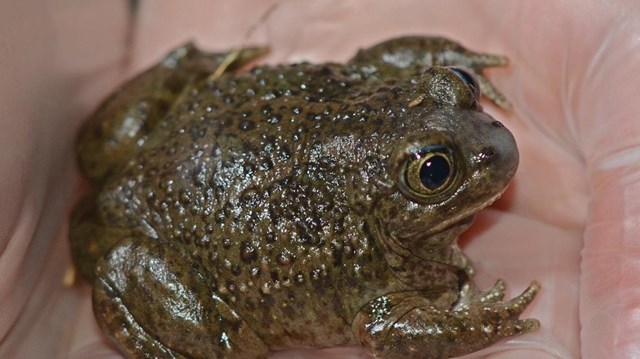
  • Upper surface of the adult is gray-brown to dark olive or even green, with irregular black spots; skin is bumpy; underside is white splashed with brilliant orange on the thighs and arms on many, but not all, individuals.
  • Tadpoles have long tales and may grow to 3 inches long.
Habitat
  • Found all summer along or in rivers, streams, smaller lakes, marshes, ponds, and rain pools.
  • Lays eggs in stagnant or quiet water, in globular masses surrounded by jelly.
Behavior
  • Breeds in May or early June, depending on temperatures.
  • Tadpoles mature and change into adults between July and September.
  • Tadpoles eat aquatic plants; adults mostly eat insects, but are highly opportunistic in their food habits (like many other adult amphibians).
Yellowstone Wolf.  

Did You Know?
There were no wolves in Yellowstone in 1994. The wolves that were reintroduced in 1995 and 1996 thrived and there are now over 300 of their descendents living in the Greater Yellowstone Area.

Last Updated: June 10, 2009 at 20:01 EST