 |
 |
  |
|
|
|
|
Yellowstone National Park
Bullsnake
|
|
|
|
|
|
 |
Scientific name: Pituophis catenifer sayi
Identification
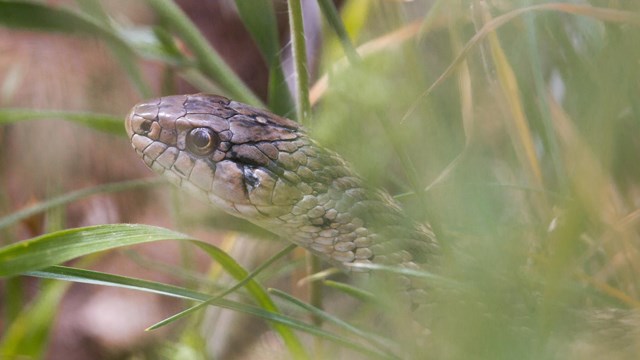
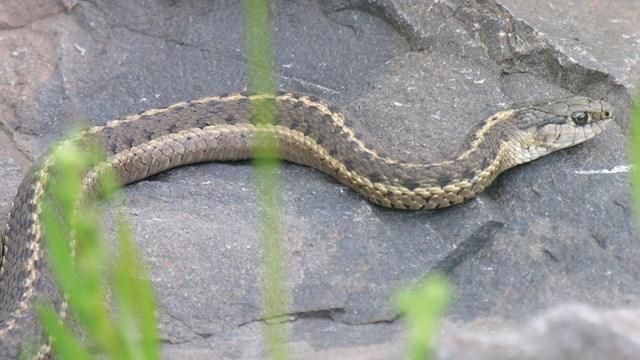
- A subspecies of the gopher snake, it is Yellowstone's largest reptile; ranges from 50 to 72 inches long.
- Yellowish with a series of black, brown, or reddish-brown blotches down the back; the darkest, most contrasting colors are near the head and tail; blotches are shaped as rings around the tail.
- Head resembles a turtle's in shape, with a protruding scale at the tip of the snout and a dark band extending from the top of the head through the eye to the lower jaw.
Habitat
- In Yellowstone, found at lower elevations, drier, warmer climates, and open areas such as near Mammoth.
Behavior
- Lives in burrows and eats small rodents; behavior that gave the gopher snake its name.
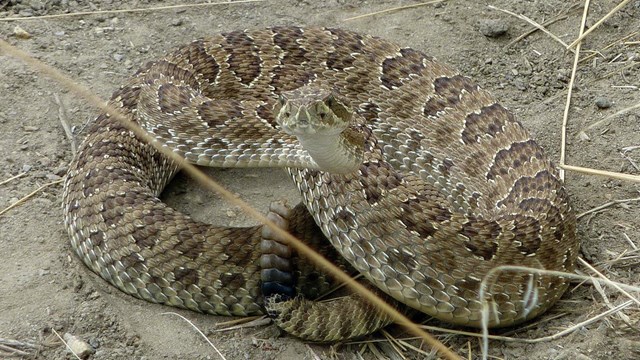
- Often mistaken for a rattlesnake because of its appearance and its defensive behavior; when disturbed it will coil up, hiss loudly, and vibrate its tail against the ground, producing a rattling sound.
|
|
 |
|
|
|
|
|
 |
|
Did You Know?
Some groups of Shoshone Indians, who adapted to a mountain existence, chose not to acquire the horse. These included the Sheep Eaters, or Tukudika, who used dogs to transport food, hides, and other provisions. The Sheep Eaters lived in many locations in Yellowstone.
|
|
|
|
Last Updated: June 11, 2009 at 10:36 EST |