



|
Brucellosis is a nonnative, bacterial disease that induces abortions in pregnant cattle, elk, and bison. Cattle brought brucellosis to the Yellowstone area in the early 1900s and transmitted it to local wildlife populations. The bacteria that causes the disease, Brucella abortus, can be transmitted between animals if they come into contact with infected birth tissues. While brucellosis has not had a substantial effect on wildlife populations, it poses a financial risk to ranchers because it can reduce the reproductive rate and marketability of their animals. Billions of dollars have been spent to eradicate brucellosis from cattle in this country. In the United States, Brucella abortus only persists in the bison and elk populations of the Greater Yellowstone Area. Rates of InfectionAbout 60% of adult female bison in Yellowstone test positive for exposure to the Brucella bacteria. However, testing positive for exposure does not mean an animal can transmit the disease. For example, anyone who received a smallpox immunization will test positive for smallpox antibodies even though they are not infected with the disease and cannot transmit it. The number of infectious female bison that could transmit live bacteria varies from 10% to 15% of the population. TransmissionThere have been no documented cases of bison transmitting brucellosis directly to cattle, in part due to efforts by federal and state agencies to maintain separation between these animals. There have been many occasions where elk transmitted brucellosis to cattle. In both cases, transmission is possible and the likelihood increases during late winter when bison, elk, and cattle are more likely to share low elevation grasslands along the river valleys outside Yellowstone. Prevention & TestingCurrently, there is no vaccine that’s 100% effective against brucellosis. Local cattle operations vaccinate their animals with the best available vaccine, but it doesn’t eliminate the potential for brucellosis infection from wildlife. The lack of an effective vaccine also makes it even more difficult to eliminate or suppress the disease in wild bison (which park officials studied in 2014). Testing for brucellosis also lacks certainty. Blood tests on live bison can only identify which animals have been exposed to the bacteria. To determine that an animal is truly brucellosis-free requires months to years of quarantine depending on an animal’s age, sex, and reproductive status. Quarantine is an alternative for bison management that the National Park Service studied and is implementing through its Bison Conservation Transfer Program. Risk to PeoplePeople can get brucellosis if they come into contact with infected animals or animal products contaminated with the bacteria. The most common way to be infected is by eating or drinking unpasteurized/raw dairy products. Brucellosis cannot be contracted by eating cooked meat from an infected animal. More information is available on the Centers for Disease Control and Prevention website. More Information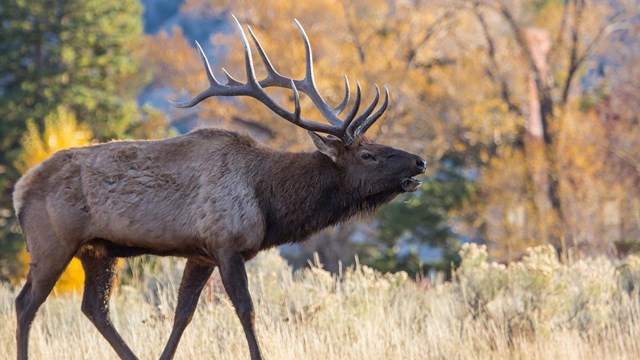
Elk
Elk are the most abundant large mammal found in Yellowstone. 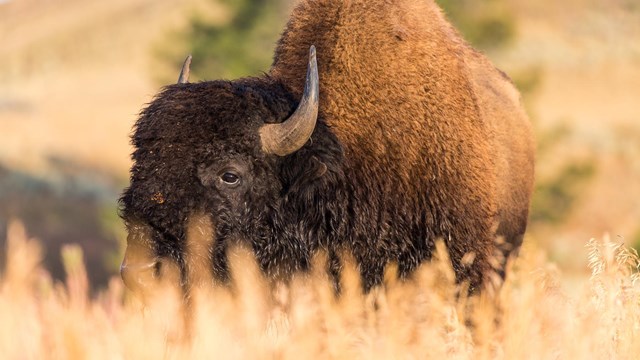
Bison Ecology
Learn more about North America's largest land-dwelling mammal. 
Science Publications & Reports
View science publications and reports created by Yellowstone's Center for Resources on a variety of park topics. 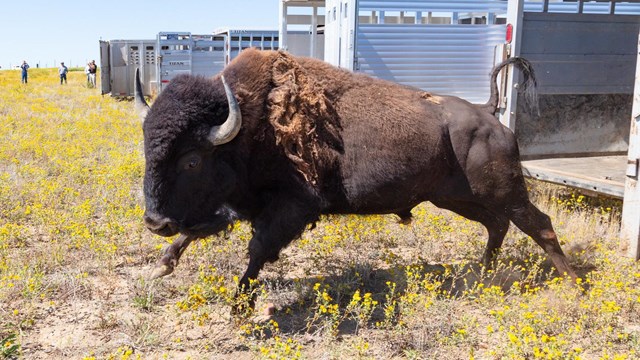
Bison Management
Learn how the park maintains a wild, migratory bison population in a modern landscape. 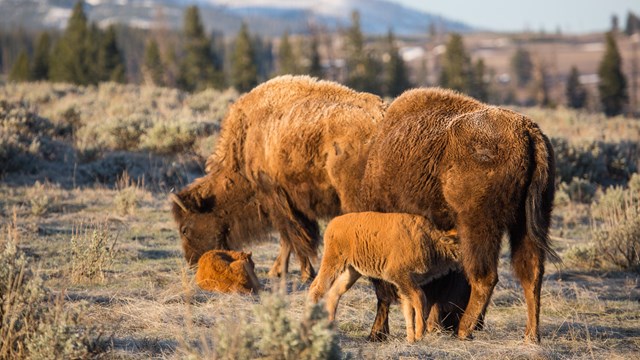
History of Bison Management
Learn about the history of bison management in Yellowstone. |
Last updated: April 17, 2025