



|
Although all three of Julian Alden Weir’s daughters demonstrated their own artistic abilities, it was Dorothy Weir Young who most fully identified herself as an artist. She listed her occupation as “artist” in the 1920 U.S. census. In addition to painting, she also experimented with various printmaking techniques, including linoleum-cut prints and Japanese inspired woodblocks. Known as the “keeper of the flame”, Dorothy worked hard to preserve her father’s legacy. She maintained the family farm and J. Alden Weir’s studio just as he had. Dorothy also spent hours transcribing her father’s letters, which later would become the backbone of her book The Life and Letters of J. Alden Weir. Thirteen years after her death, her unfinished draft was edited and published in 1960. It was her research and her preservation of the Branchville farm that paved the way for the creation of Weir Farm National Historic Site. 
NPS 
NPS Artistic Career (1890-1947)Dorothy Weir Young was the middle daughter of Julian Alden Weir and Anna Baker Weir. She was the only one of Weir's daughters who actually studied art under the direction of her father. "I think she shows a great deal of ability," he wrote as early as 1911, when she began her studies at the National Academy of Design. She worked in oils and watercolors and did woodblock prints as well. In 1917, she studied gardening for a week at Storrs College, but found that the subject did not interest her as art did. During the First World War, she was active in relief efforts. In addition to providing financial support for Belgian children, she trained with the American Red Cross and the Women's Navy League to become proficient at first aid and medical practices. In 1943, she made her home (the Weir House) available as a workspace for the Wilton branch of the American Red Cross. There they would make surgical dressings and clothes with them. Dorothy continued to pursue her career as an artist in the years following her father's death in 1919. Even while caring for her aging stepmother Ella Baker Weir, and managing the family property in Branchville and Windham, she made time for her art. In her lifetime, she won prizes for her Japanese inspired woodblocks as well as for some of her oil paintings. Today, most of her work can be found at the Museum of Art at Brigham Young University in Utah. 
NPS Marriage and Death (1931-1947)Early in 1931, after the death of her stepmother, Dorothy married Mahonri Young, a prominent sculptor whom she had known casually for several years before their friendship turned to courtship and marriage. Much of that marriage was spent at Branchville, where Young had a studio built in 1932 for his sculpture work. Dorothy managed the finances, the house and the farm. Some of their favorite activities included making cheese, painting, and partaking in mulled wine and persimmons for dessert after a Sunday feast. Dorothy's death at age fifty-seven from cancer was untimely, as she did not witness the preservation of her father's farm that she had helped inspire. During her life, like her father, she was almost universally adored. She was "a real lady…a smooth and perfected person…of strong character," said her stepson, "Everyone loved Dorothy." 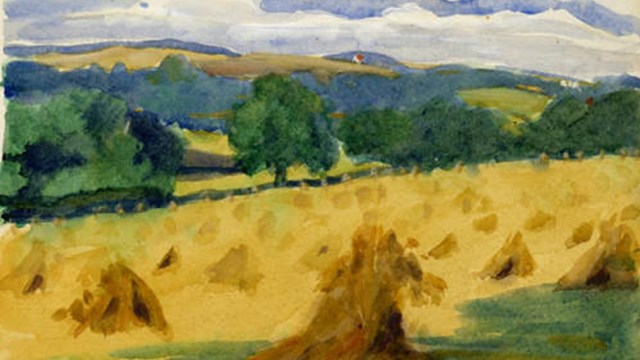
Dorothy Weir Young (1890 - 1947)
Weir’s daughter Dorothy studied at the National Academy of Design and was a member of the National Asso. of Women Painters and Sculptors. 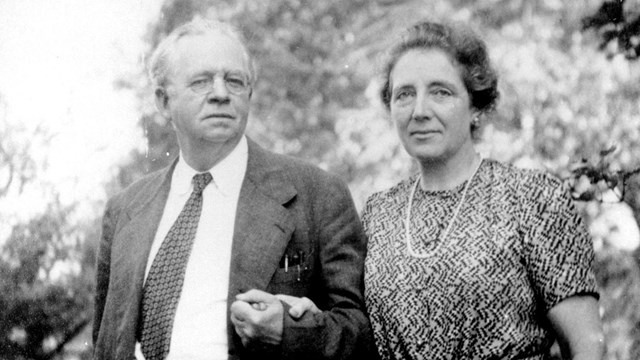
Mahonri Young (1877-1957)
Mahonri married Weir's daughter Dorothy and moved to the farm in 1931; he made his most famous sculptures in his Weir Farm studio. 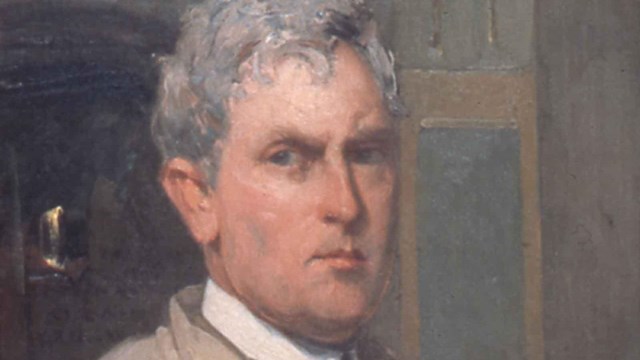
Meet the Artists
Learn about the prominent artists and their family members who lived and worked here. |
Last updated: June 29, 2024