
|
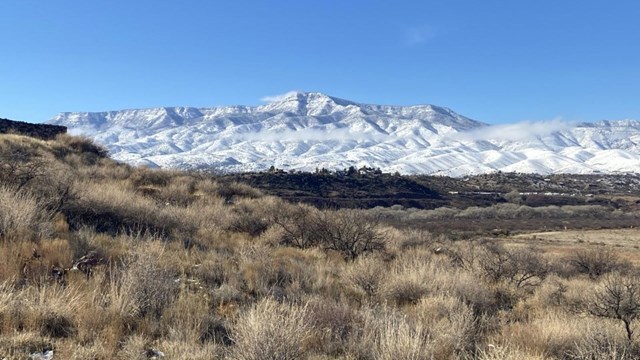
Because of the variety of landforms found in and around Tuzigoot National Monument, the area contains a high diversity of plant life. The riparian corridor along the Verde River hosts water-living species such as cottonwood, sycamore, willow, cattails, and the invasive tamarisk. Due to ongoing drought and lack of sufficient flood events in recent years, an ever-increasing amount of vegetation grows in what would normally be a boulder-strewn floodplain. These plants place an extra demand on the water flowing in the Verde River.
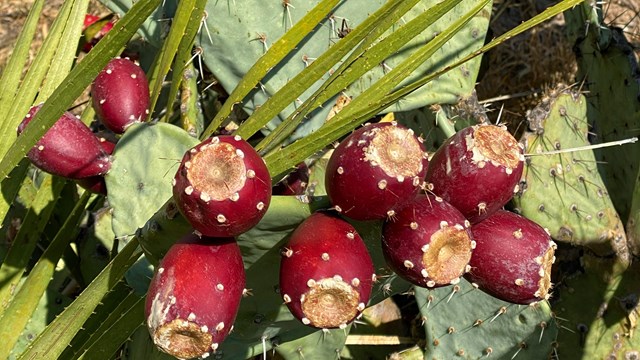
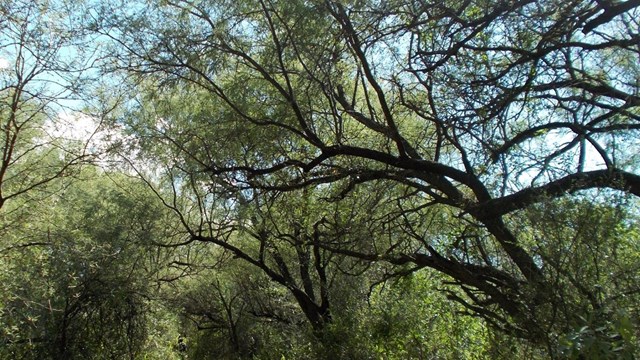
Above the riparian zone, on the benchlands subject to infrequent flooding, lies a mesquite bosque, an almost impenetrable thicket of trees winding around the south side of Tuzigoot. Plants that live on the windswept hillsides and ridgetop of Tuzigoot exhibit the unique adaptations that allow to live in a landscape of extreme aridity and intense heat. Cactus spines serve to protect the succulent plants from being eaten by animals and provide a limited shading effect on the pads and trunks of the plant. Most desert plants have shallow lateral root systems that allow the plant to quickly take in what little rain that falls. We partner with the Southwest Environmental Information Network, or SEINet, for inventories of the botanical resources of Tuzigoot National Monument, including a plant inventory. Check out our brochures, and see if you can find these plants on the trail: Plantas del Valle Verde (205 Kb) |
 |
|
Last updated: February 15, 2021