![]() |
|||||||||||||||||||
![]() |
![]() |
||||||||||||||||||
|
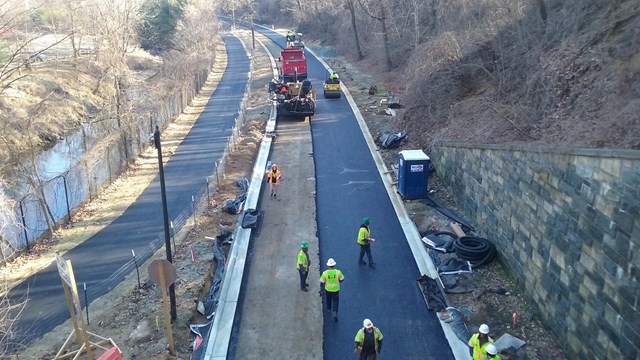
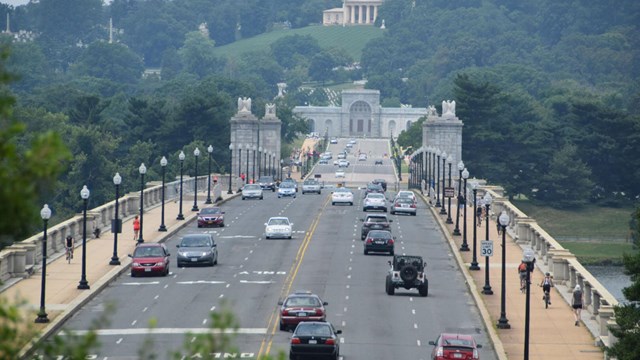
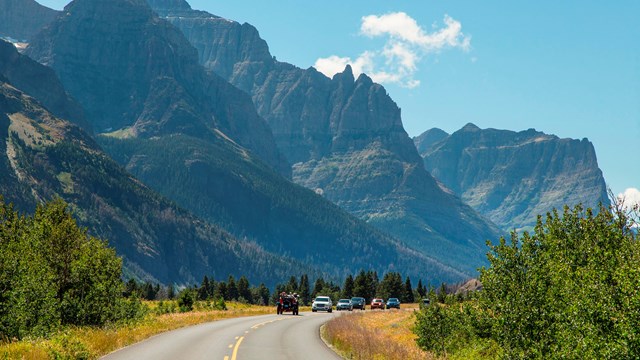
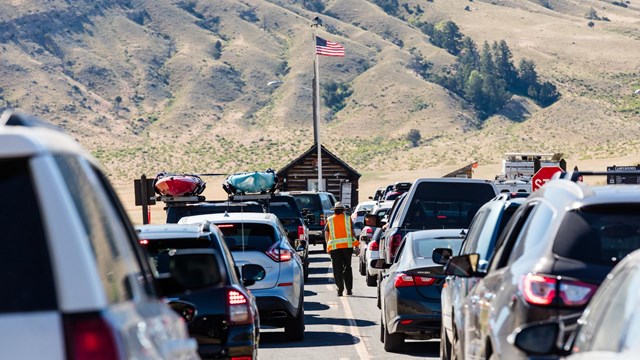
Who We Are 1997 Memorandum Of Understanding MEMORANDUM OF UNDERSTANDING BETWEEN SECRETARY OF TRANSPORTATION AND SECRETARY OF THE INTERIOR Purpose | Findings | Goals | Transportation Policy and Coordination | Transportation Technical Advisory Working Group | Personnel Exchange | Information Sharing | Interagency Project Agreements | General Purpose Many Federally-owned lands established for tourism and recreation are no longer able to meet the transportation demands placed upon them by the public. High visitation levels are causing problems due to the growing volumes of traffic and spiraling demands for visitor parking. This is especially true of many National Park units. The challenge of balancing stewardship of park resources against the pressure for more public access has become considerably more difficult in recent years. For the NPS to continue to fulfill the mandate of providing visitor enjoyment and conserving the unique resources found in the National Park units, a combination of improved facilities and transportation systems and visitor use management, with careful attention given to resource protection, will be required. Congestion in and approaching many National Parks is causing lengthy traffic delays and backups that substantially detract from the visitor experience. Visitors find that many of the National Parks contain significant noise and air pollution, and traffic congestion similar to that found on the city streets they left behind. In many National Park units, the capacity of parking facilities at interpretive or scenic areas is well below demand. As a result, visitors park along roadsides, damaging park resources and subjecting people to hazardous safety conditions as they walk near busy roads to access visitor use areas. On occasion, National Park units must close their gates during high visitation periods and turn away the public because the existing infrastructure and transportation systems are at, or beyond, the capacity for which they were designed. The existing NPS roads and bridges are rapidly deteriorating due to heavy traffic use and lack of funds for both maintenance and rehabilitation. An enhanced level of comprehensive, cooperative, and ongoing transportation planning is required to conserve our national resources yet provide for a meaningful, pleasant visitor experience in these times of sharp visitor increase. The NPS, in keeping with its statutory mission, cannot simply construct more roads and parking areas in environmentally sensitive areas to meet visitation demands. New methods to access and circulate visitors with less impact on park resources must be developed. This agreement is intended as the foundation for developing more comprehensive, intermodal, and financially efficient transportation systems to preserve the NPS's cultural and natural resources while providing gratifying experiences for future generations. The NPS through its range of recreation, conservation and cultural resource programs performs an essential national role in assisting public and private agencies throughout the country in protecting, preserving and making available resources for present and future generations. The DOT, through such programs as transportation enhancements, Congestion Mitigation Air Quality, the Campaign to Make America Walkable, and various research and funding opportunities, carries out a significant role in improving the quality of life throughout the nation. The goal of this MOU is to establish a mutually beneficial relationship to improve transportation in and approaching NPS facilities through the following activities: developing and implementing innovative transportation plans; III. TRANSPORTATION POLICY AND COORDINATION An interagency, multi-disciplinary team shall be established to help develop and coordinate transportation policy, guidance and coordination procedures for use by the DOI. The policy, guidance and procedures for coordination shall focus on the need to preserve and protect natural resources; promote energy efficiency; move people safely; and improve recreation, historical interpretation and tourism opportunities. The policy guidance and coordination procedures shall: Provide advice to NPS field units for more effective coordination of their transportation planning efforts with Federal, State, regional, local and tribal governments when NPS transportation planning issues affect, or are affected by, systems and facilities under the control of other governmental agencies. IV. TRANSPORTATION TECHNICAL ADVISORY WORKING GROUP The DOT shall establish an interagency, transportation technical advisory working group, comprised of Federal officials, to assist the NPS with transportation improvement initiatives. At the request of the NPS, the working group shall provide technical support to the NPS on transportation issues including, but not limited to, highway, traffic and transportation engineering, safety, transportation planning, Intelligent Transportation Systems (ITS) technology, transit technology and intermodal approaches to transportation system development and implementation. Technical support will include assistance in the development of contract standards for performance, service and maintenance, and equipment specifications. This working group shall establish an information base to assist the NPS with the selection and implementation of advanced technological transportation improvement products and procedures in the NPS field units. The goal of this initiative is to provide rapid response to requests for assistance on technical transportation issues from the NPS. It is mutually beneficial for the departments to share resources. The DOT and DOI shall develop a personnel exchange program. This exchange program shall make available and encourage the temporary interdepartmental assignment of individuals. As its resources allow, the DOT shall provide the DOI with skilled personnel, including but not limited to individuals knowledgeable in transportation discipline areas as requested by the DOI. As its resources allow, the DOI shall provide the DOT with skilled personnel, including but not limited to, individuals knowledgeable in alternative transportation and trails development and environmental discipline areas as requested by the DOT. The DOT and DOI shall exchange information concerning the skills and services available in each agency for use in (1) developing and implementing transportation improvement initiatives; (2) developing environmental policy, guidance, planning and technologies to accommodate environmental concerns; (3) and preparing and reviewing environmental compliance documents. The DOT shall also provide a comprehensive description of the various funding sources available for transportation improvement initiatives. Additional future information exchanges shall occur as organizational, technological and funding changes occur. VII. INTERAGENCY PROJECT AGREEMENTS The DOI and the DOT, and/or their respective agencies shall jointly enter project agreements to develop and implement transportation improvement initiatives on NPS facilities. These agreements shall establish interagency project teams to accomplish the requested work. These agreements shall include, at a minimum, a general description of the work to be performed, the roles and responsibilities of each department/agency, and the expected end products and services to be delivered by the project team. Accordingly, project agreements shall be developed for the demonstration projects listed below. Additional project agreements shall be identified and developed for other National Parks including, but not limited to, Acadia National Park, Golden Gate National Recreation Area, and the Alaskan National Parks.
It is mutually recognized and acknowledged that implementation of the provisions of this MOU will be subject to the availability of funds. This MOU shall take effect on the date of the last approving signature. APPROVED: The Secretary of Transportation Date The Secretary of the Interior Date |
||||||||||||||||||
|
|||||||||||||||||||