Menu Javascript Download by Vista-Buttons.com 4.1.1  
 
Image: Shadowed separation bar
Menu Javascript Download by Vista-Buttons.com 4.1.1


Connect with Us

  • Facebook
  • iTunes
  • Twitter
  • YouTube

  •  


    NPS Transportation

    America's national park system entices visitors from across the nation and around the world. Visitors enjoy scenic wonders, learn about important events in America's history, and visit monuments to our nation's heroes.

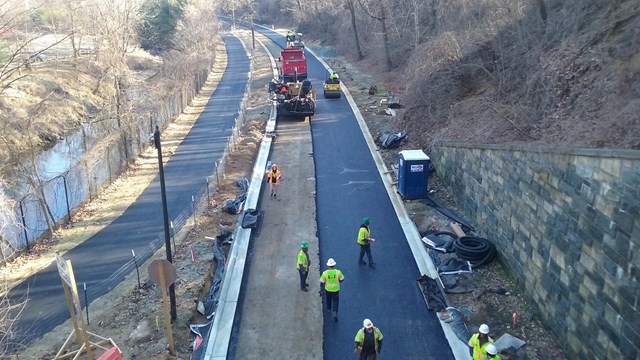
    An efficient transportation system comprised of roads, bridges, parking lots, and shuttles is pivotal to the "balancing act" between providing access for millions of annual visitors and protecting the natural and cultural resources of the currently 394 park units. This is the role of the Park Roads and Parkways Program (PRPP) within the National Park Service. Safe and efficient transportation systems add to visitors' enjoyment, but also help protect the natural and cultural resources of our national parks.

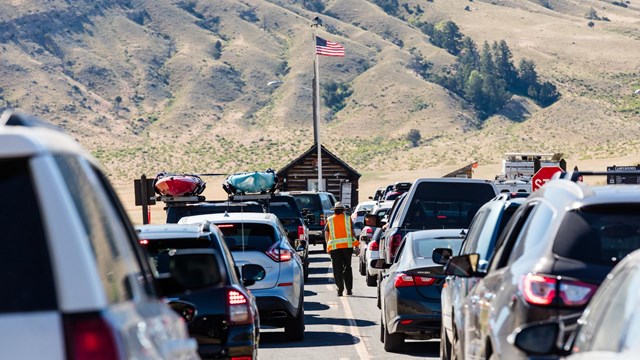
    Roads, parking lots, bridges, alternative transportation, and intelligent transportation systems-all are important components of the PRP program. The national parks have experienced explosive growth in visitation, rising from a few hundred thousand visits per year in the early 1900s to more than 270 million visits each year. The ever-increasing number of personal vehicles has overextended park roadways and parking areas well beyond their limits. Within the pages of this site you'll explore the magnitude of the existing challenges, and the methods and actions that will restore our national park treasures for future generations, while providing quality visitor experiences today.


    Carlsbad Caverns National Park — Rehabilitation Project

    The Bat Cave Draw and Visitor Center rehabilitation project, managed by the Denver Service Center (DSC), was a unique project affecting 1.75 acres that required years of collaboration and planning to develop. Carlsbad Caverns (CAVE) has been an important tourist site since the 1930s; early on, large parking facilities were developed around the cavern. A 1997 Infiltration Study determined that the primary parking lot, built directly above the main cavern approximately 80 years before, was adversely impacting the cave system.

    “Studies found that antifreeze, gas, and other pollutants were actually leaching down into the cave,” explains Jessica Brown, a landscape architect and horticulturist with the National Park Service in Denver, Colorado.

    “The National Park Service never would have done such a thing in later years, once a critical scientific approach was adopted into the management of resources such as the delicate Cavern environment,” said John Benjamin, Superintendent of Carlsbad Caverns National Park. “However, in those early days the only goal was to get tourists to see these spectacular underground wonders in the quickest and easiest way possible.”

    The Rehabilitation Begins
    An Environmental Assessment of the Reconstruction of Visitor Center Parking Areas and Rehabilitation of Walnut Canyon Road, completed in 2007, determined that removing the parking facility above the cave system and rehabilitating the area to its natural state using vegetation native to the region was the preferred solution. In 2010 construction began to remove the parking area and relocate it closer to the visitor center, and farther from the mouth of the cavern. A relatively level concrete walkway now provides easy access to the Bat Flight Amphitheater and the entrance to Carlsbad Cavern.

    The old parking lot asphalt was ripped out, and the site was rehabilitated with topsoil local to the region. One of the most intensive aspects of the project was replanting the site using Carlsbad Caverns National Park genetic plant material which was collected, salvaged, stored, and propagated over the course of three years prior to project implementation. The historic walls in the old parking area, constructed by the Civil Conservation Corps remain as reminders of the sites previous use. However, instead of being surrounded by vehicles, the walls are now surrounded by Chihuahuan Desert Plants. MORE >

    Kristie Franzmann

    Kristie Franzmann has been with the National Park Service for nearly 20 years.

    Unlike a lot of NPS staff, who came by way of work with other federal agencies, Kristie’s initial job after graduating with a Masters in Landscape Architecture from the University of Illinois was a job at the Denver Service Center (DSC). MORE >

    Secretary of the Interior announces Federal Lands Access Program (FLAP) Guidance Memorandum call for projects.
    CLICK HERE

    Funding Opportunity Bulletin: Federal Lands Access Program (FLAP) - The purpose of the FLAP program is to support access to Federal lands. National Park units can partner with State and local governments for projects eligible under this program. Click here to download the program bulletin.
    CLICK HERE

    Draft Fiscal Year 2013 to 2017 Federal Lands Transportation Program TIP Now Available

    The National Park Service’s (NPS) Federal Lands Transportation Program has released the Draft Fiscal Year 2013 to 2017 NPS Transportation Improvement Program (TIP) showing a multi-year proposed budget for road, bridge, and alternative transportation programs.
    MORE >

    Parks and Partners Receive Federal Transit Administration Funding

    On February 19th, the Paul S. Sarbanes Transit in Parks program awards were announced. Administered by the Federal Transit Administration in partnership with the Department of the Interior and the U.S. Forest Service, the program funds capital and planning expenses for alternative transportation systems. FY 2013 funding will support 17 National Park Service and partner projects, such as multi-use pathways, clean diesel fuel buses, the Acadia National Park Gateway Intermodal Center and trolley system improvements.
    MORE >

    NPS Releases Annual Visitation Report

    A report released by the NPS in late February shows that national parks continue to be important economic engines for local communities, with visitors generating $30.1 billion in revenue, and supporting more than 252,000 jobs nationwide in 2011. MORE >