An official website of the United States government
Here's how you know
Official websites use .gov A
.gov website belongs to an official government
organization in the United States.
Secure .gov websites use HTTPS A
lock (
) or https:// means you've safely connected to
the .gov website. Share sensitive information only on official,
secure websites.
Around the year 1085 CE, a series of eruptions—the only eruptions in the southwest that were indisputably witnessed by local people—brought the dormant San Francisco Volcanic Field back to life. Earthquakes, thunderclaps, and fountains of lava shook the ground. Billowing ash, falling cinders, and forest fires blackened both the landscape and the daytime sky, and at night the horizon glowed fiery red. The ash cloud and the glow in the sky were visible for hundreds of miles, and most people living in the southwest would have known that something very unusual was happening near the San Francisco Peaks.
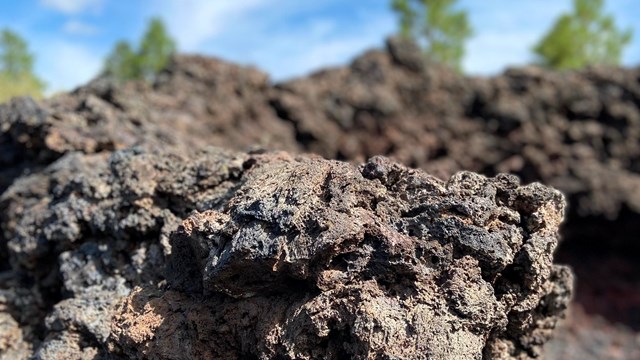
When the field again grew quiet, a classic example of a cinder cone, Sunset Crater Volcano, loomed over a dramatically altered land of lava flows and cinders. The eruption buried the surrounding terrain with a layer of cinders several feet thick, and filled in two small valleys with lava flows that are a hundred feet (35 meters) deep.
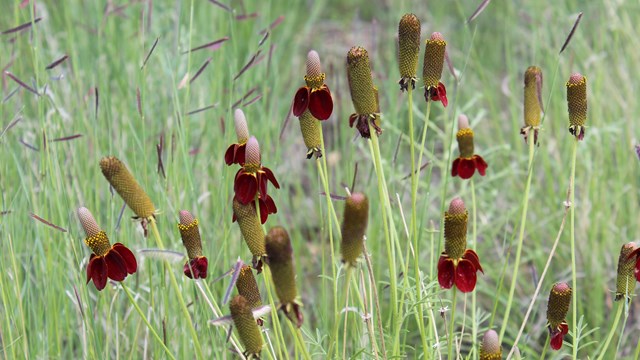
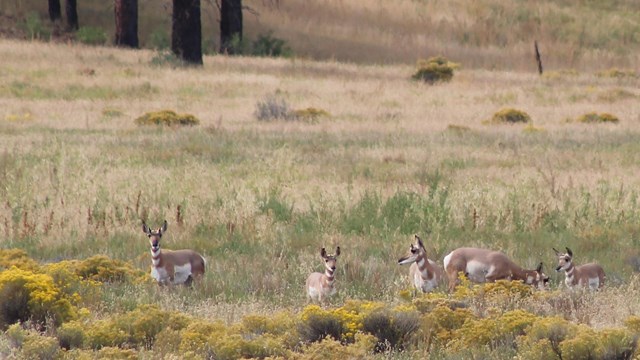
Today Sunset Crater Volcano National Monument protects 3040 acres around the Colorado Plateau’s most recent volcanic eruption. It is the youngest, least-eroded cinder cone in the San Francisco Volcanic Field. Much of the ground surface of the monument is covered by lava flows or deep volcanic cinder deposits. At first glance, the landscape still appears stark and inhospitable. But look again - within the dramatic geologic features are small islands of pine and aspen trees, desert shrubs, and wildflowers. These provide small but unique habitats for local wildlife as well. Slowly but surely, life returns.
The powerful geologic processes that formed the volcano profoundly affected the way of life of local inhabitants during the 11th and 12th centuries and forever changed both the landscape and the ecology of the area. This volcano and its relatively undeveloped landscape provide an unparalleled opportunity to study plant succession and ecological change in an arid volcanic landscape.